After Mamata's Win, a Fragile Opening on the Teesta
A third-term Trinamool Congress government in Kolkata removes a longstanding political obstacle to a Teesta water-sharing deal with Dhaka — but technical disputes, domestic farm politics, and upstream Sikkim remain formidable barriers.
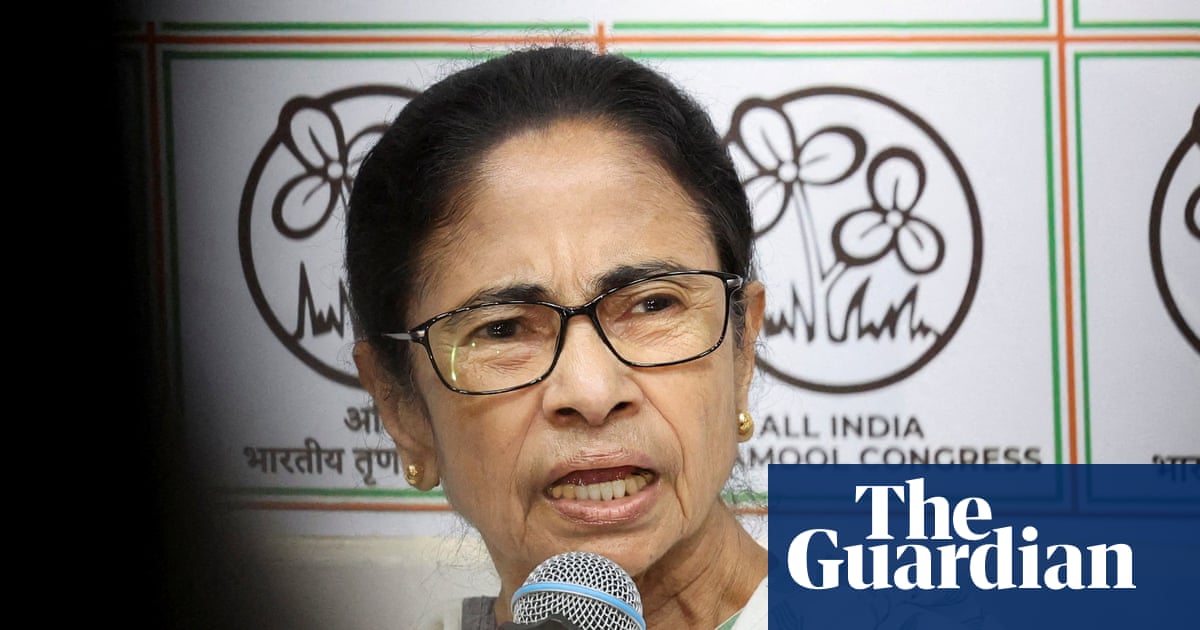
For more than a decade, the Teesta River has sat at the center of one of South Asia's most intractable bilateral disputes. Now, with Mamata Banerjee's Trinamool Congress securing a third consecutive term in West Bengal's legislative assembly, New Delhi and Dhaka are weighing whether the political conditions finally exist to revive a draft water-sharing agreement that has stalled since 2011.
The outline of that deal is not new. In December 2011, Indian Prime Minister Manmohan Singh and Bangladeshi Prime Minister Sheikh Hasina nearly signed an accord dividing the Teesta's flows: India would receive 55 percent, Bangladesh 42 percent, with the remaining 3 percent reserved for maintaining ecological flows. The agreement collapsed within hours when Banerjee, then an alliance partner of the Congress-led federal government, publicly opposed the terms. The chief minister argued the proposed allocation would deprive West Bengal's farmers of water they depended on. The deal never recovered.
Bangladeshi officials have renewed their public pressure in recent weeks. According to reporting by The Print, the prospect of a new government in Kolkata — one that no longer needs to be wooed as a coalition partner — has opened a narrow diplomatic window. Whether that window leads anywhere depends on resolving three overlapping disputes that have outlasted changes in government in both capitals.
The Hydrology Problem
The Teesta originates in Sikkim's Himalayas, flows through northern West Bengal, and enters Bangladesh near the border town of Hilli. In the dry season — roughly October through May — its flow drops sharply, concentrating downstream disputes over what remains. Bangladesh, which receives the river near the end of its 315-kilometer run, has historically received the smallest share of a diminishing resource.
Technical discussions between Indian and Bangladeshi hydrologists have produced competing flow models. Indian assessments have generally favored larger allocations for the Himalayan and sub-Himalayan reaches, citing water needs for irrigation in West Bengal's northern districts. Bangladeshi researchers counter that their country's eastern rivers — the Surma and Kushiyara — remain insufficient to compensate for Teesta shortfalls, making Dhaka reliant on whatever volume passes the border.
Sikkim adds a complicating layer. The state's government has proposed a series of hydroelectric projects along the upper Teesta that could alter downstream flow patterns. Environmental groups on both sides have raised concerns that cumulative hydropower development, if uncoordinated, could reduce the dry-season baseline in ways that render any sharing formula meaningless. No tri-lateral water management framework exists to govern these upstream decisions.
Dhaka's Domestic Constraints
For Bangladesh, the Teesta represents more than a technical negotiation. Sheikh Hasina's government has faced persistent criticism from opposition parties — particularly the Bangladesh Nationalist Party and the Jamaat-e-Islami — for what critics describe as an inability to extract meaningful concessions from India on shared rivers. The 2011 breakdown became a recurring reference point in Bangladeshi political discourse: a moment when Dhaka came close to a deal, only to watch it dissolve under pressure from a state chief minister who was not even a party to the federal Compact.
This domestic pressure has shaped Dhaka's negotiating posture. Bangladeshi officials have insisted that any future agreement include enforceable mechanisms for flow monitoring — ideally real-time data sharing — rather than relying on goodwill and periodic joint committee meetings. India has historically resisted binding transparency provisions, preferring diplomatic consultations over technical verification regimes. The gap between those preferences has blocked previous agreements on the Ganges and the Brahmaputra's Indian tributaries as well.
Kolkata's Calculated Leverage
Banerjee's return with an outright majority — her party won 29 of 294 seats in the 2026 assembly elections held on 19 March, defying exit polls that had projected a close finish — changes the political arithmetic without eliminating the underlying tension. The chief minister has consistently framed river-sharing agreements as a zero-sum calculation in which West Bengal's agricultural communities bear the cost of federal diplomacy. That framing resonates in a state where rice cultivation employs tens of millions of people across the Indo-Gangetic plain's eastern extension.
Her leverage, however, cuts both directions. As chief minister of India's fifth-largest state by population, Banerjee has used her role in federal coalitions to extract concessions on a range of issues — fiscal transfers, infrastructure investment, law-and-order deployments — that extend well beyond river politics. New Delhi needs a cooperative West Bengal government for a range of national priorities, including border management with Bangladesh and infrastructure connectivity along the Chicken's Neck corridor that links the northeast to the rest of India. That interdependence gives Kolkata more influence over the pace of any Teesta deal than a simple reading of the constitutional framework — water is a Union subject — would suggest.
The Upstream-Downstream Asymmetry
What the Teesta negotiation exposes is a structural asymmetry in South Asian river governance. Downstream states — Bangladesh in this case, but also Pakistan on the Indus system — face water insecurity that is genuinely existential: agricultural cycles, urban drinking water supplies, and dry-season fisheries all depend on river volumes they cannot control. Upstream states face a different political calculus: the same rivers support development ambitions, hydroelectric revenues, and domestic agricultural priorities that voters in New Delhi, Kolkata, or Dhaka all weight differently.
International water law has long recognized a "no significant harm" principle — upstream states should not cause substantial damage to downstream neighbors — but the principle lacks enforcement mechanisms outside voluntary compact frameworks. In practice, water-sharing negotiations between India and Bangladesh have relied on bilateral good faith, periodic diplomatic engagement, and a shared recognition that unmanaged river disputes risk destabilizing a relationship both countries need for trade, transit, and security cooperation. The Teesta sits within that broader context: a river deal that matters partly for its own stakes, and partly as a test of whether the two governments can manage shared resources at all.
What Remains Unresolved
The sources do not indicate that formal negotiations have resumed, nor that a new formula has been proposed. A senior Indian Ministry of External Affairs official, speaking on condition of anonymity, told The Print that no timeline had been set for renewed talks. Dhaka's High Commission in New Delhi declined to comment on specific negotiating steps.
What is clear is that Banerjee's electoral mandate removes one political excuse for delay — her opposition in 2011 was the proximate cause of the 2011 collapse — without resolving the substantive disagreements that have kept the river unshared. The farmers of West Bengal's northern districts, the hydroelectric planners in Sikkim, the hydrologists who dispute flow models, and the diplomats who must translate technical proposals into political agreements all still occupy the same terrain they have occupied for fifteen years. The window is open. Whether it leads anywhere depends on how many of those actors are willing to move at once.
This publication covered the Teesta revival prospects as a bilateral diplomatic story, rather than framing it primarily as a domestic Indian political narrative. The Print's reporting on the Kolkata angle anchored the story; Bangladeshi domestic sources were cited for context on Dhaka's negotiating posture.
Wire provenance
This editorial synthesis draws on the following public wire/social posts:
- https://t.me/theprintindia/22794
- https://t.me/theprintindia/22795