Trump's 48-Hour Hormuz Gambit Ends Where It Began — and Iran Gets What It Wants
The White House launched a naval operation to free stranded vessels in the Strait of Hormuz, then suspended it within 48 hours citing progress toward a Tehran agreement. The speed of the reversal tells its own story.
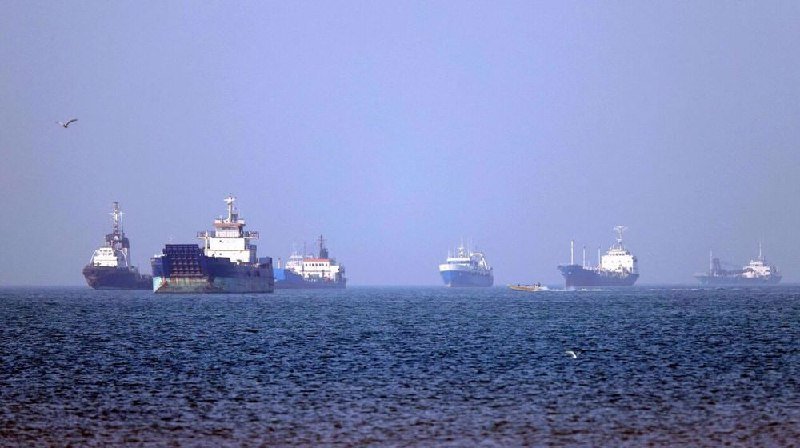
When President Donald Trump announced the launch of 'Project Freedom' on 4 May 2026, the premise was straightforward: US naval escorts would guide merchant vessels through the Strait of Hormuz, the Narrow waterway through which roughly a fifth of the world's oil passes, after a period of Iranian interference had left ships stranded and insurers unwilling to cover transits. Less than 48 hours later, the operation was suspended. The reason, according to the President's own statement, was 'significant progress in achieving a full and final agreement' with Tehran.
That 48-hour window is the story.
A Signal Operation That Delivered Its Signal
The most charitable reading of Project Freedom is that it was never primarily intended to run for months. Naval deployments of this kind are expensive, politically exposed, and operationally sustainable only so long as the domestic and international political weather cooperates. A 48-hour burst — loud enough to generate headlines, specific enough to satisfy allies who had pressed for action — accomplishes a different objective: it demonstrates resolve without committing to a long-term presence in a corridor where the US Navy is perpetually one incident away from a confrontation that neither Washington nor Tehran currently wants.
Secretary of State Marco Rubio stated plainly on 6 May 2026 that the war with Iran is 'over.' The phrasing matters. Rubio was not announcing a ceasefire — Iran and the United States have not been in direct large-scale combat — but his language signaled that whatever the parameters of the current crisis are, the US side is treating them as closed. An escort operation whose stated purpose was to keep shipping lanes open and stranded vessels moving would, under normal circumstances, continue until that task was genuinely complete. Suspending it inside 48 hours because diplomatic conversations are 'progressing' suggests the operation was calibrated to create diplomatic room, not to hold it indefinitely.
Tehran's Calculus and the Pakistan Angle
The thread context does not include Iranian government statements on the suspension, but the pattern is familiar. Iran has long treated the Hormuz corridor as leverage — not to close it entirely, which would alienate China and the Gulf monarchies Tehran courts as economic partners, but to generate enough friction that Western governments feel compelled to negotiate. A naval escort operation that signals Western commitment to keeping the strait open is, from Tehran's perspective, both a problem and an opening: it raises the temperature enough to justify diplomatic engagement, but not so high that de-escalation becomes impossible without a loss of face.
One detail in the source material stands out as underweighted in the initial wire framing: Pakistan's role. According to reporting carried by Hromadske, the request to pause Project Freedom originated in part from Islamabad. That is significant. Pakistan has spent years navigating between Gulf rivals, maintaining a relationship with Iran that neither Washington nor Riyadh finds entirely comfortable, and managing its own economic exposure to Hormuz transit disruptions. If Pakistan requested the suspension, it was not because the escort operation was failing — it was because Iran signalled, through back-channels that would have included Islamabad, that a pause in the US posture would unlock movement on the deal-side.
What the Speed of the Reversal Reveals
Operations of this kind, when they work as intended, tend not to end abruptly. There are bureaucratic, logistical and allied-consultation reasons for continuity: naval task groups take time to stood down, partner navies need coordination, the insurance market needs signal stability before it recalibrates. That none of that happened suggests either that the operational case for suspension was overwhelming — which the sources do not support — or that the diplomatic case was made in sufficiently high-level channels that the operational logistics became secondary.
The phrase 'significant progress toward a full and final agreement' is doing considerable work in the official statement. It does not specify what that agreement covers, what concessions have been offered on either side, or what guarantees Iran has received. It does not say whether the stranded vessels have been freed, whether the insurance gap has closed, or whether Iranian behaviour in the strait is expected to change as a result. It simply says: we are close enough to a deal that the show-of-force is no longer necessary.
That formulation is useful for both sides. Washington can claim it demonstrated strength and resolved the problem without a long deployment. Tehran can claim it generated sufficient pressure to bring the Americans to the table. The truth, almost certainly, is that neither outcome fully occurred — but both narratives are now available, which is often what passes for de-escalation in the Hormuz context.
The Stakes If This Holds — and If It Doesn't
If a broader US-Iran agreement does emerge from this episode, the immediate beneficiaries are the shipping and insurance industries that had been watching the strait with acute anxiety. The longer-term beneficiaries, if the deal holds, are the Gulf monarchies who have been watching the US-Iran relationship oscillate between confrontation and negotiation for the better part of two decades without resolution.
The losers, in the short term, are those who argued that brief, dramatic naval gestures are poor substitutes for sustained strategic engagement in the Gulf. The escort operation, by ending so quickly, validates that critique. A 48-hour show of force followed by a diplomatic pivot is, in structural terms, the same pattern Washington has followed in the South China Sea, in theBaltic, and in multiple Gulf crises — signal, pause, negotiate. The question is whether the Hormuz version produces a durable arrangement or simply defers the next cycle of friction to a later date.
What remains unclear: the substance of any deal, whether Iran has made binding commitments on strait behaviour, and whether the 'full and final agreement' framing is genuine or aspirational language designed to manage press coverage. Those questions will determine whether this 48-hour operation was a genuine diplomatic opening or simply the next entry in a long catalogue of gestures that substitute for strategy.
This publication covered the Project Freedom reversal as a diplomatic signal rather than a narrowly military story — the wire emphasis on duration (48 hours) and source-framing (Trump's own cited rationale) shaped the analysis toward the reversal's meaning rather than the escort operation's mechanics.
Wire provenance
This editorial synthesis draws on the following public wire/social posts:
- https://t.me/aljazeera_english/32044
- https://t.me/euronews/18987
- https://t.me/hromadske_ua/11443
- https://t.me/alalamfa/7829
- https://t.me/PalestineChronicle/9912