Trump's Casual Acceptance of $200 Oil Reveals a Worldview Built for Combat, Not Governance
Trump's suggestion that $200 oil would have been worth it exposes a transactional worldview that frames global economics as a lever to be pulled rather than a system that keeps billions of people fed, housed, and mobile.
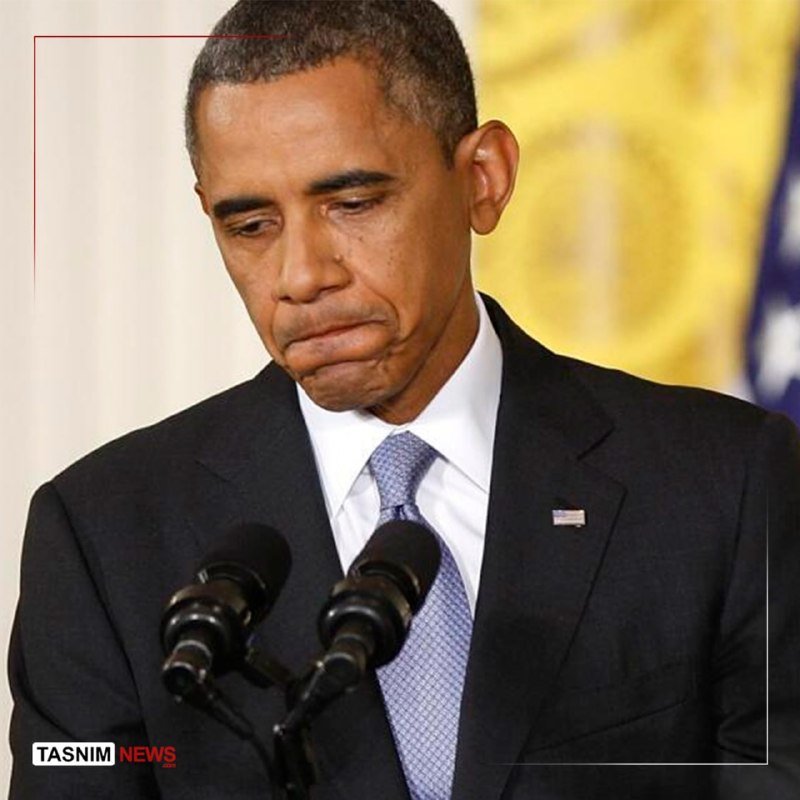
Donald Trump, speaking on May 6, 2026, offered a window into how he evaluates global economic catastrophe. "I thought oil prices would go to 200–250 dollars," he told reporters. "It's at 100 dollars now. Even if it went to 200, it would have been worth it." The comment landed without apparent awareness of its weight — a businessman running the numbers on a hypothetical, finding the math acceptable.
On the same day, Polymarket showed an 18 percent probability that Trump would order a federal review of AI model releases by month's end, and the former president was scheduled to attend a closed intelligence briefing at 3:30 pm. The oil comment, however, is the one that deserves unpacking — not because it is unusual for Trump, but because it is entirely consistent with a worldview that has shaped his approach to trade, energy, and foreign policy since he first entered politics.
The Price of Leverage
Trump's framing treats oil prices as a lever — something to be manipulated, with the downstream effects on global consumers treated as a cost of doing business. At $200 per barrel, the consequences for importing nations would not be abstract. Fuel costs ripple through agricultural supply chains, driving up food prices in countries where households already spend 30 to 40 percent of income on energy and food combined. The International Energy Agency has documented how price spikes in 2008 and 2014 pushed millions in the developing world toward energy poverty. A sustained $200 oil price would do the same, only more severely.
Trump, presumably, knows this. The question is whether he considers it a bug or a feature. "Worth it" implies a calculation in which the pressure applied to adversaries — presumably Russia and Iran, the two producers most exposed to a price-cap strategy — outweighs the harm inflicted on Pakistani smallholders or Egyptian commuters. That calculation, if it is being made at all, is one that a president of the United States should not be making casually in front of reporters.
Mixed Metaphors for a Combat Presidency
Also on May 6, Trump offered a second comment that has received less attention. "Khabib fought 29 fights, and I think he won 29 fights," he said, apparently invoking the retired UFC champion as a model of dominance. The statement, delivered in the same press availability, suggests a leader who thinks in sporting terms — in records, in winning streaks, in decisive outcomes.
Governance, however, is not a sport. The comparison matters because Trump's energy rhetoric has always borrowed from competition. Trade wars are "easy to win." Sanctions are "maximum pressure." The frame is zero-sum: for every winner, a loser. But energy markets are not an octagon. The people who cannot afford fertilizer because gas prices spiked are not opponents being outmaneuvered. They are collateral in a calculation they never consented to and cannot contest.
This is not a partisan observation. The structural problem exists regardless of which party occupies the White House: when leaders who excel at adversarial negotiation bring that instinct to global commodity management, they tend to treat human welfare as a variable rather than a constant. The difference with Trump is the degree of candor. Most politicians would not say $200 oil was worth it in public. He said it matter-of-factly, without apparent awareness that it might register as a moral failure.
The AI Variable
The Polymarket market on AI review — 18 percent as of May 6 — signals that Trump's administration is also tracking toward restrictions on artificial intelligence model releases. That policy, if it materializes, would represent a different kind of price extraction: restricting the flow of software, training data, and model weights to foreign entities. The calculus there is more defensible — AI export controls are already in place for certain military-adjacent applications, and the national security logic is legible.
But the thread connecting these three items — oil prices, combat metaphors, and AI restrictions — is a consistent philosophy. Trump sees global competition as a contest in which the United States should hold leverage, use it aggressively, and accept collateral costs as the price of winning. Whether that philosophy produces better outcomes than a more multilateral approach is a legitimate debate. The problem arises when the collateral costs are enumerated in human lives and dismissed as acceptable.
The People Who Cannot Contest the Math
Here is what the sources do not tell us, and what deserves acknowledgment: the sources do not specify which adversaries Trump believes would have been squeezed by $200 oil, or whether his team ran internal modelling on global poverty impacts. The comment was made in passing, in a press availability that covered multiple topics. It may not represent a settled policy position.
But it does represent a reflex — the reflex of a transactional mind that instinctively measures global suffering against strategic gain and finds the trade acceptable. That reflex is not unique to Trump. It is visible in the thinking of every great power strategist who has ever justified sanctions regimes, trade wars, or commodity interventions in terms of their effect on adversaries rather than on ordinary civilians in importing nations.
What is worth watching, in the weeks ahead, is whether the intelligence briefing on May 6 produced any shift in the energy posture, and whether the AI review materialises. If either does, the $200 oil comment will look less like a stray remark and more like a character note — a preview of the arithmetic a second Trump administration is willing to perform.
This publication covered the oil price quote, the MMA reference, the Polymarket AI market, and the intelligence briefing as concurrent signals from a single administration on a single day — rather than treating each as an isolated headline. The wire framing split these items; the structural frame above is Monexus's own.
Wire provenance
This editorial synthesis draws on the following public wire/social posts:
- https://t.me/ClashReport/18442
- https://t.me/ClashReport/18440