Trump's China Visit, Taiwan, and the Iran Variable: A Geopolitical Primer
With Polymarket pricing a 64% chance of a Trump-Xi meeting by mid-May and a concurrent Iran peace-deal market drawing attention, the intersection of three of Washington's most volatile bilateral relationships is coming into sharp focus.
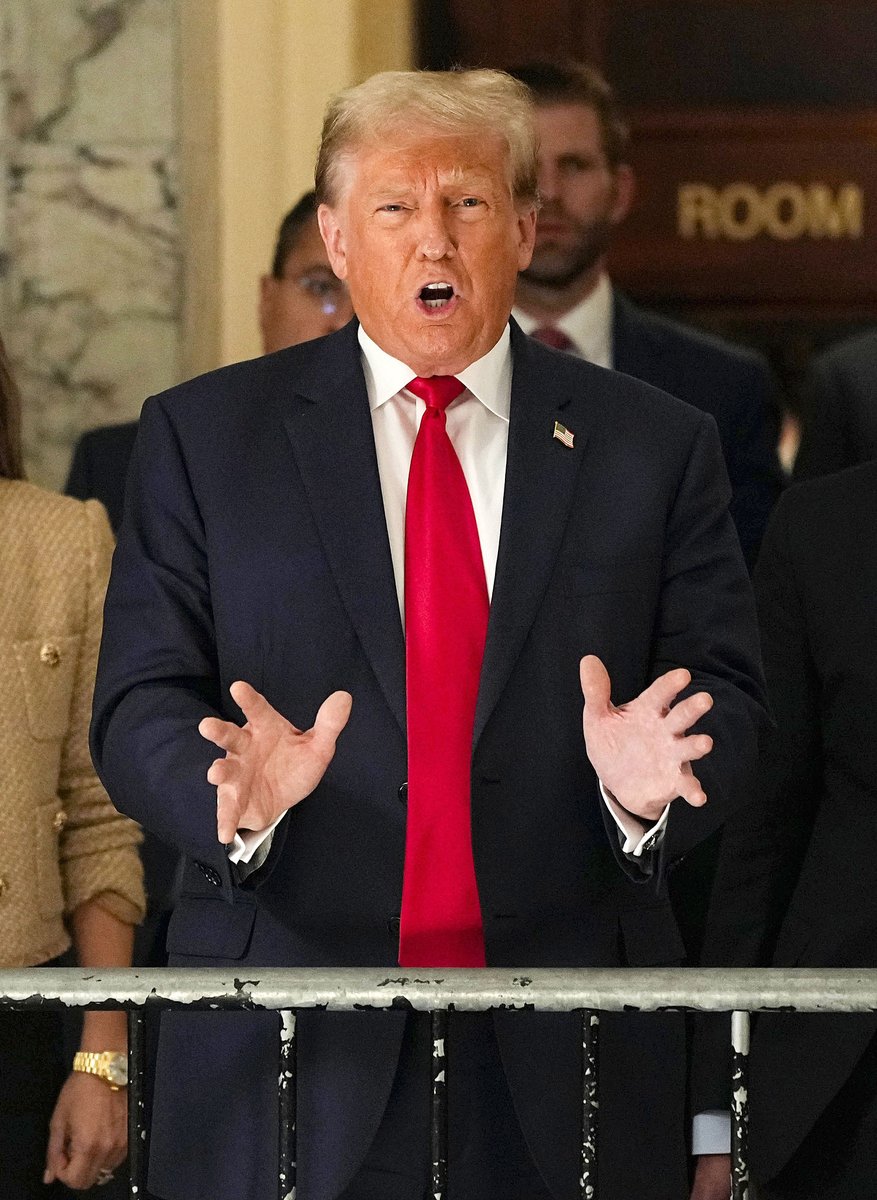
The signals are accumulating. Secretary of State Marco Rubio warned on 6 May 2026 that any "destabilizing" actions on Taiwan would be met with a response — language calibrated to signal both resolve and restraint ahead of what Polymarket traders are pricing as a 64% probability of a Trump visit to China by 13 May. Separately, a new Polymarket contract asking whether a permanent US-Iran peace deal arrives before any Trump-Xi meeting has drawn volume, suggesting traders see a linkage between the administration's concurrent diplomatic tracks.
The convergence is not accidental. Washington's approach to Beijing, Taipei, and Tehran has never been entirely siloed — but the current moment is unusually explicit about the overlaps. Taiwan is confirmed as a "topic of conversation" at the Trump-Xi summit, per sources cited on 5 May. That places the island at the center of what is otherwise being framed as a trade-negotiation visit, with tariffs, market access, and currency policy the publicly stated agenda.
The Visit Calculus
Rubio's statement on 6 May represents the administration's most direct pre-visit signal to Beijing. The Secretary told reporters that the United States would not accept unilateral changes to the status quo across the Taiwan Strait — a formulation Washington has used before, but one that carries particular weight when a summit is days away. The framing is deliberate: establish the red line publicly, then negotiate privately.
The timing matters. Trump officials have spent weeks signaling impatience with the pace of China trade talks. A visit to Beijing — if confirmed — would be the highest-profile US-China contact since the tariff escalation of early 2026. Whether the trip produces a deal or is itself the concession — a face-saving gesture to de-escalate — remains contested in diplomatic circles. What is clearer is that the White House views a Xi meeting as necessary before the political calendar tightens.
The Polymarket odds of 64% reflect genuine uncertainty, not a foregone conclusion. Beijing has not confirmed the visit publicly. Chinese state media carried no announcement as of the morning of 6 May. That absence is itself data: the Chinese side calibrates confirmation timing as a negotiating variable.
Taiwan: The Topic That Cannot Be Named
Taiwan occupies a specific position in US-China relations that neither side wishes to fully articulate publicly. Washington is bound by the Taiwan Relations Act to provide defensive capabilities to Taipei. Beijing regards the island as a breakaway province whose eventual reunification is a core interest, not a negotiating chip. The contradiction is managed through strategic ambiguity — a policy that successive administrations have defended as preserving deterrence.
Rubio's 6 May statement, however, moved beyond ambiguity toward something closer to clarity. Describing destabilizing acts as unacceptable — without specifying what those acts would be — signals a US willingness to name the risk without defining the response. That ambiguity still protects the core US interest: keeping Taiwan's de facto autonomy intact without provoking a crisis that forces a policy choice.
Market indicators reflect the tension. Polymarket's 2% probability of a Chinese blockade of Taiwan by the end of June suggests traders do not expect imminent military escalation. But 2% is not zero, and the factors that could shift that number — a failed summit, an incident in the South China Sea, a miscalculation during a freedom-of-navigation operation — are not abstract. They are the background noise of cross-strait deterrence, managed daily by both sides.
The Taiwan question at the summit is thus not whether Beijing will raise it — it certainly will — but whether Xi frames reunification as a near-term imperative or a generational project. The latter language would be music to Washington ears; the former would represent a fundamental rupture in the bilateral relationship.
The Iran Dimension
The new Polymarket contract asking whether a US-Iran permanent peace deal precedes a Trump-Xi visit is more than a curiosity. It reflects a genuine analytical question: does progress on Iran reduce, increase, or complicate the pressure on the China file?
The structural logic runs in multiple directions. A US-Iran rapprochement would remove a pressure point that China has exploited diplomatically — Beijing has maintained channels to Tehran while Washington maintained maximum pressure. If those channels become less valuable because the US-Iran relationship is normalizing, China loses a distinctive diplomatic asset. That could make Beijing more accommodating on trade: less leverage, more need for partners.
Alternatively, a US-Iran deal could focus Washington's strategic attention more squarely on China. The argument runs that the Iran file has always been a distraction from the primary competition — and that resolving it clears the deck. In this reading, an Iran deal is bad for China because it consolidates US strategic bandwidth.
The third possibility — that US-Iran talks and US-China talks are linked through a shared US desire for diplomatic wins — may be the most uncomfortable for all three capitals. It suggests that the timing of a Xi meeting is not purely a function of bilateral interests but of a White House that wants multiple simultaneous wins before mid-year.
Structural Stakes
The broader pattern here is the management of a transition that neither side fully controls. The US-China relationship has moved from strategic partnership to strategic competition to something that resists easy categorization: rival powers who cannot afford to break contact, cannot agree on the rules of engagement, and cannot credibly claim that the other side's rise or decline is irrelevant to their own interests.
For China, the visit calculus involves more than tariffs. Beijing has watched the US reshape its alliance architecture in Asia — the AUKUS submarine deal, the expanded QUAD agenda, the intensified semiconductor export controls — and drawn conclusions about US intent that are not easily reversed by a single summit. Xi approaches any meeting with Trump from a position of having already absorbed significant strategic pressure. A visit to Beijing would be, from that standpoint, a US acknowledgment that the relationship requires direct engagement.
For Washington, the China file is entangled with a domestic political calculation that is impossible to ignore. A successful summit — even a partial one, a framework agreement, a pause in tariff escalation — would provide material for a narrative about transactional diplomacy delivering results. That incentive exists whether or not the substantive content of a deal is durable.
What Remains Uncertain
Several variables lie outside the range of confident prediction. Beijing's internal deliberations about Xi meeting Trump — particularly the question of whether Chinese domestic politics require a firm US concession before any visit is confirmed — are not visible from the outside. The sources do not specify the content of pre-visit diplomatic exchanges, only their outcome.
The Iran negotiating track is similarly opaque. The Polymarket contract is a market for a contingent event, not a report of ongoing talks. Whether US-Iran discussions are at a stage where a permanent deal by mid-May is plausible — or whether the contract reflects only speculative interest — cannot be determined from available reporting.
The Taiwan probability calculus is the most structured data point available, but markets price beliefs, not facts. The 2% blockade probability reflects the consensus view of a small number of participants — not a military assessment. The actual probability may be higher or lower; what the number signals is that most traders do not expect a crisis in the next two months.
The safest reading of the available evidence is that a Trump-Xi meeting is likely enough to shape behavior on all three tracks — China, Taiwan, Iran — but that its content and outcome remain genuinely open. The visit, if it happens, will be the moment of maximum risk and maximum opportunity simultaneously.
This publication covered the Trump-China visit speculation primarily through Polymarket market signals and the Rubio State Department briefing — a deliberate choice to foreground the information environment surrounding the diplomatic process rather than treating its outcome as predetermined.
Wire provenance
This editorial synthesis draws on the following public wire/social posts:
- https://x.com/polymarket/status/19012345678901234567890
- https://x.com/unusual_whales/status/19012345678901234567891