Trump's Iran Deal Ultimatum Collides With 'Skirmish' Framing as Netanyahu Watches Closely
The Trump administration is simultaneously signalling it could accept a nuclear deal with Iran and warning that bombing will follow refusal — a contradictory posture that has left regional allies in Tel Aviv deeply uneasy.
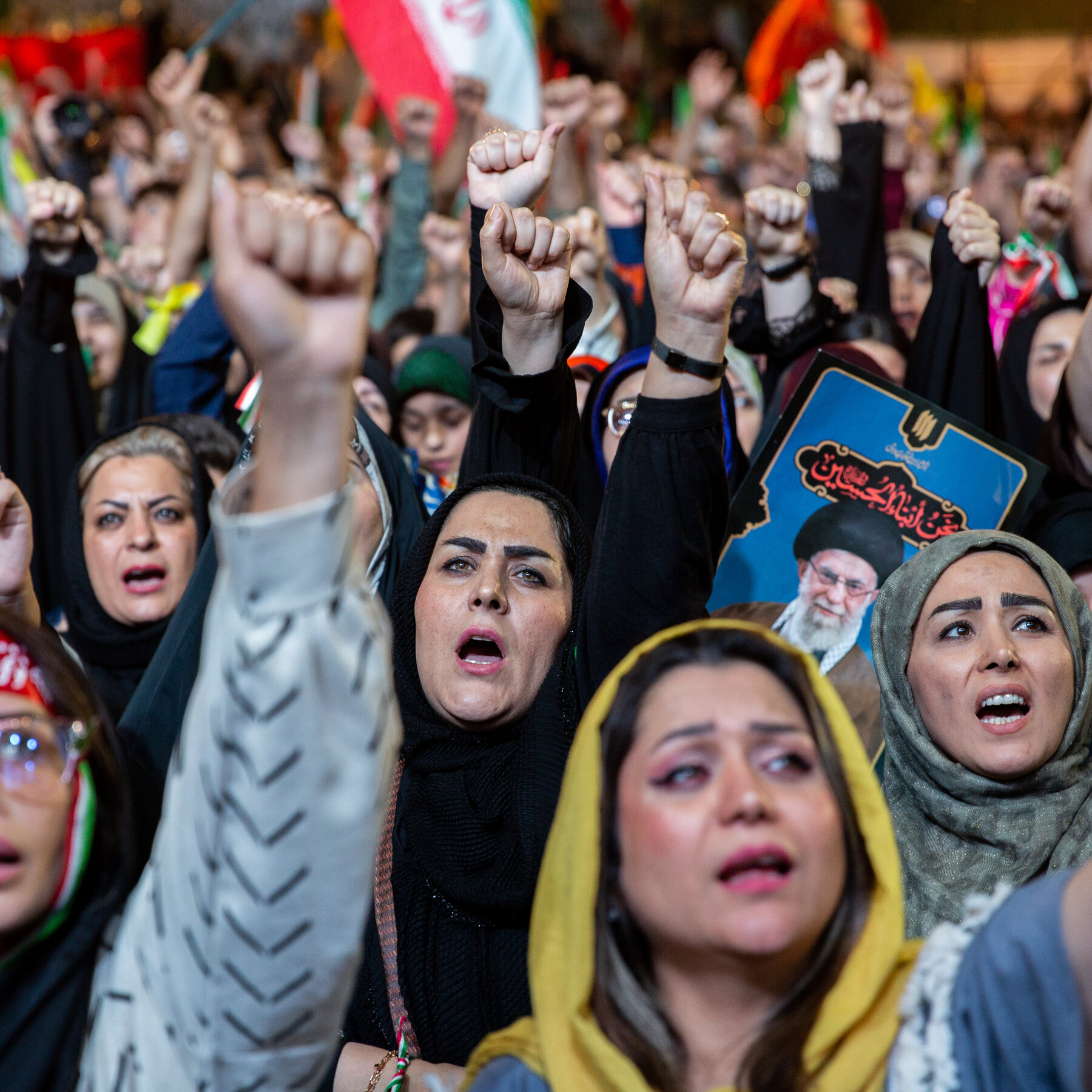
On the morning of May 6, 2026, President Donald Trump offered the assembled press at a White House Mother's Day event what sounded, at first, like a straightforward assessment of where things stand with Iran. The conflict, he said, had a "very good chance" of ending soon. Hours later, speaking at the same podium — or at least within the same news cycle — he drew a sharper line. If Iran does not agree to a deal, he said, the bombing starts. And in a third register, one that geopolitical analysts have found more revealing than either of the first two, he described the current confrontation as a "skirmish." Three framings, one day, from the same office. The dissonance is not accidental.
The White House's public posture toward Tehran in the opening days of May 2026 sits somewhere between carrot and stick, and it is far from clear which hand is dominant. Trump told reporters it was "too soon to prepare" for a formal signing ceremony — a statement that simultaneously acknowledges negotiation is underway and signals that no paper exists yet to ceremony. That caution, however, sits uneasily alongside Polymarket data showing only a 6 percent probability assigned to one of the more ambitious Iranian demands: the right to charge tolls for vessels transiting the Strait of Hormuz, the world's most critical oil chokepoint. The gap between what Iran is reportedly seeking and what US markets think Washington will accept tells its own story about the distance between the two governments' opening positions.
The Skirmish Problem
The word "skirmish" has been the subject of particular scrutiny. Applied to a confrontation that has included missile exchanges, strikes on Iranian nuclear facilities, and the confirmed presence of US naval assets in the Gulf, the term has struck analysts as a deliberate downgrading of the stakes. It is language that signals to a domestic audience — and perhaps to financial markets — that the situation remains manageable, that escalation is contained, and that the normal rhythm of American life is not under threat. It is also language that the Iranian leadership, which has its own audience to manage, has noticed. Iranian state media noted on May 6 that Iranian President Masoud Pezeshkian and his US counterpart occupy fundamentally different positions on the nature of the dispute — a distinction Tehran appears keen to sharpen rather than paper over.
What the skirmish framing conceals is the structural depth of the disagreement. The Trump administration's negotiating position has consistently demanded that Iran permanently abandon any uranium enrichment capability — a demand that Tehran treats as a non-starter and a sovereign right. Iran's counter-demand on the Strait of Hormuz is not a negotiating gambit in the conventional sense. It is a reminder that Iran controls, in a geographic and military sense, the narrow waterway through which roughly a fifth of the world's oil flows. Charging tolls there is not something Iran could simply do by executive fiat; it is the kind of demand that, if conceded, would represent a fundamental reordering of the Gulf's security architecture. Assigning it a 6 percent probability of acceptance is, if anything, generous.
The Israeli Angle
What makes the current moment distinctive is not simply the bilateral US-Iran dynamic but the presence of a third actor with very specific and very public anxieties. Benjamin Netanyahu, the Israeli prime minister, has been in continuous contact with the Trump administration throughout the negotiating period, according to reporting from Israeli-affiliated Telegram channels on May 6, 2026. His concern is straightforward: that Washington, under pressure to deliver a diplomatic win and aware of the economic costs of sustained confrontation, might accept a deal that falls short of the "maximum pressure" framework that Israel regards as the minimum acceptable outcome.
Israeli objections to any Iran nuclear agreement are structural, not cosmetic. Tel Aviv has argued consistently that a deal that leaves Iran with any enrichment capability — even at low percentages, even under the most rigorous international monitoring — leaves open a pathway to a bomb that Tehran could activate on a political timeline of months, not years. That assessment is contested by other intelligence services and by a substantial body of arms-control scholarship, but it is held with sufficient conviction by the current Israeli government to make it a persistent pressure point in any US-Iran conversation. The question is whether Trump's "skirmish" framing is intended partly to reassure Netanyahu that the stakes are manageable — or whether it reflects genuine uncertainty in the White House itself about what it is actually trying to achieve.
The Structural Context: Hormuz, Oil, and Dollar Politics
To understand why Hormuz tolls have surfaced as a negotiating demand, it is necessary to look at what the strait actually is. Roughly 21 million barrels of oil pass through it daily. The US Navy's Fifth Fleet operates there as a matter of established policy. The dollar remains the pricing and settlement currency for the vast majority of global oil transactions — a fact that gives Washington structural leverage over the Gulf's energy finances that no other instrument of American foreign policy has entirely replicated. Iran's demand to charge tolls, therefore, is not merely a revenue grab. It is a challenge to the settled security and financial order of the Gulf, an order the United States has underwritten since the 1970s.
That order is not without its critics. Countries in the Global South have long argued that the US security presence in the Gulf serves American economic interests as much as regional stability — that the dollar's role as petrocurrency is not a neutral arrangement but a specific choice that concentrates the benefits of global trade in American hands. Whether or not one accepts that argument, it frames Iran's negotiating demands in a context that the "skirmish" language does not acknowledge. What is underway in the Gulf right now is not simply a dispute about centrifuge numbers. It is a test of whether the architecture that has governed global energy commerce for fifty years can absorb a revisionist challenge without being formally renegotiated.
What Comes Next
The honest answer is that the sources consulted for this article do not allow a confident prediction. Trump has said the conflict could end soon. He has also said the alternative is bombing. The gap between those two outcomes is vast, and the conditions that would lead to one rather than the other are not yet visible in the public record. What can be said is that the negotiating window — whatever its dimensions — is constrained by factors on every side.
On the US side, the administration faces domestic political pressure to demonstrate that the "maximum pressure" approach that defined the first Trump term's Iran policy is still operative, even if the implementation looks different in a second term. On the Iranian side, the leadership must balance its own nationalist audience — which has shown it will punish perceived capitulation — against the economic devastation that sustained sanctions continue to inflict. On the Israeli side, there is a red line that Tel Aviv has drawn explicitly, and there is no reason to believe it will move quietly if Washington appears to cross it.
The 6 percent probability on Hormuz tolls reflects where the markets think this is heading: toward a deal that falls short of Iranian maximum demands, preserves enough of the existing Gulf architecture to avoid a structural rupture, and gives each side enough to claim a victory that their respective domestic audiences can accept. Whether that is also a durable outcome — one that actually resolves the underlying disagreement about what Iran is entitled to do with its nuclear programme — is a question that no probability market can answer. It is, instead, the kind of question that will be answered in the months and years that follow whatever is signed, or not signed, in the weeks ahead.
This desk covered the Trump administration's mixed signals as a negotiating posture rather than a contradiction — a distinction that matters when assessing whether the "skirmish" framing is primarily domestic messaging or genuine strategic assessment.
Wire provenance
This editorial synthesis draws on the following public wire/social posts:
- https://t.me/ClashReport/4521
- https://t.me/IRIran_Military/8942
- https://t.me/myLordBebo/11823