Trump's Iran Ultimatum Collides With the Arithmetic of Hormuz
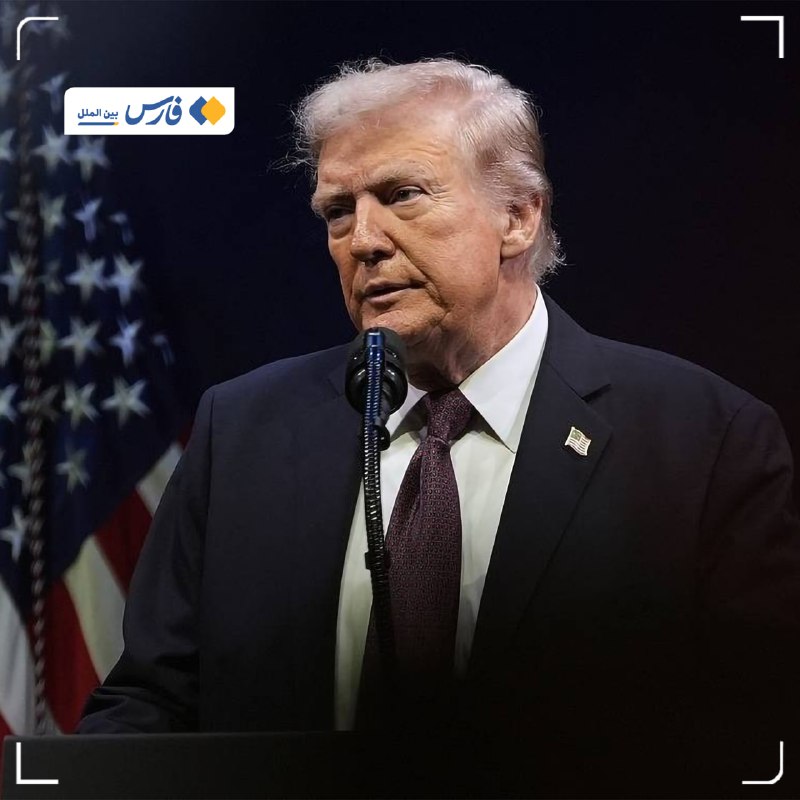
On 6 May 2026, Donald Trump told reporters that if Iran did not agree to a deal, the bombing would begin. Minutes later, at the same podium, he said it was too soon to prepare for a peace deal signing. Somewhere between those two sentences sits the entire problem with the administration's approach to Tehran — a problem that is less about any individual negotiating position than about the structural mismatch between Washington's preferred rhythm of pressure and the actual pace at which Hormuz geography imposes its own logic on everyone who must live near it.
The Polymarket market embedded in the conversation gave the proposition a "very good chance" of resolution — six percent odds on the specific demand, six cents on the dollar. That figure is not a forecast. It is a measure of collective uncertainty about what the administration itself actually wants, and whether the two positions Trump was expressing minutes apart reflected a negotiating strategy or simply the disorder that characterizes this White House's foreign policy output. Both interpretations have evidence behind them.
A ceasefire constructed on contradictions
The immediate context is one of those fragile pauses that periodically punctuate the US-Iran relationship. The administration has signalled a desire for a resolution — White House spokespeople have spoken of "mutual de-escalation" — while simultaneously maintaining a naval posture in the Gulf that any Iranian planner reads as an invasion option. The contradiction is not accidental. It is the point. Coercive diplomacy requires the credible threat of force to function; if the threat disappears, so does the leverage. But when the threat and the diplomatic signal operate simultaneously at maximum volume, they tend to cancel each other out rather than compound.
The ex-federal judge whose comments were circulated on Iranian state media on 6 May put the critique plainly: Trump's approach had produced no strategic gains while worsening domestic US inflation — a claim that maps to independent economic analysis of oil-price spikes following each of the administration's Hormuz-adjacent pressure cycles over the preceding months. Whether the judge was a credible independent voice or a deliberate instrument of Tehran's communications strategy is a legitimate question. The structural point about pressure and inflation holds regardless of the messenger.
The Polymarket market on Iranian tolls in the strait tells a sharper story. Six percent. The market gave a six-percent probability to the proposition that Trump would agree to allow Iran to charge tolls for transit through the Strait of Hormuz. That is not a commentary on the legitimacy of tolls — it is a commentary on the political impossibility for any US president of visibly legitimizing what would look, to any domestic audience, like paying protection money to a designated adversary. The market is not wrong about that constraint.
What Hormuz actually does to negotiating positions
The Strait of Hormuz is not merely a chokepoint in the geopolitical sense that phrase usually implies. It is a physical fact about the world that shapes the negotiating positions of every actor involved, including and especially the United States. Approximately 20 percent of global oil trade passes through the strait. A blockade — or the credible threat of one — does not require Iranian military superiority. It requires only a modest number of small boats, some sea mines, and the willingness to absorb the political consequences of being the actor who broke the flow. The US Navy has demonstrated, in multiple administrations, that it can keep the strait open by force. What it cannot do is keep it open cheaply, quietly, or in ways that do not generate blowback across the broader Gulf.
This asymmetry has defined US-Iranian strategic interaction since the revolution. Tehran's ballistic missile programme, its support for regional proxy networks, its enrichment activities — all of these are legible as attempts to construct a deterrent layer above the baseline deterrent that Hormuz geography already provides. The enrichment programme in particular is not primarily about nuclear weapons. It is about establishing a threshold of enrichment that makes any future military strike on Iranian nuclear facilities catastrophically costly, because the consequences of contamination in the Gulf would be borne by everyone, including American allies and American naval assets.
The current administration's pressure campaign has, according to the Iranian framing circulating on 6 May, produced the opposite of its stated intent — strengthening Tehran's negotiating position by demonstrating that US threats can be survived. Whether that framing is accurate or spin, the underlying structural logic is not new. Every administration since Carter has confronted some version of it.
The timing paradox
Trump's statement that it was "too soon to prepare for a peace deal signing" on the same day he said the conflict had a "very good chance" of ending soon is worth dwelling on. The phrasing suggests either that the administration is genuinely in a phase where the broad direction is known but the specific mechanics are not yet designed — which would be normal for complex negotiations — or that there is no unified plan and different officials are running different signals to different audiences.
The six-percent market on tolls provides one data point. If the administration were genuinely close to a deal, that probability would be moving. It is not. The market is telling us that the specific mechanism most likely to produce a durable settlement — some explicit acknowledgment of Iran's legitimate transit-security interests in exchange for verified caps on enrichment — remains, in the market's collective assessment, a long way from Washington accepting it.
The Polymarket odds do not reflect what is right or just. They reflect the configuration of domestic political incentives facing a president whose political coalition includes a substantial faction that reads any visible concession to Iran as weakness. Those incentives will shape the final deal, if there is one, more than the abstract merits of any particular framework.
The structural horizon
The question of what a Hormuz settlement looks like is not ultimately a question about this administration's preferences. The strait will remain a chokepoint regardless of who occupies the White House. Iranian strategic calculus will continue to centre on the deterrent value of transit disruption potential, regardless of what the current negotiation yields. The Gulf's littoral states — Saudi Arabia, the UAE, Kuwait — will continue to watch the American-Iranian dynamic with more direct stake in its outcome than Washington does, because they live in the neighbourhood.
What changes with any given negotiation cycle is the temperature — the likelihood of an incident that escalates beyond the controlled pressure-and-concession dynamic that has characterised the relationship for forty years. The current phase has seen more explicit threats of military action than most of its predecessors. That matters, because incidents on the water are asymmetric: a collision between a US warship and an Iranian patrol boat does not require a policy decision to become a crisis. It requires only proximity and a mistake.
The market is placing a six-percent probability on the most durable-looking settlement mechanism. That is a low number, but it is not zero. The alternative — sustained pressure, periodic threats, and the gradual normalization of a state of tension that both sides have navigated before — is the scenario that requires no agreement at all, and it is the one most likely to persist if the current diplomatic window closes without a framework.
This publication covered the administration's Hormuz ultimatum through a frame that foregrounds the structural asymmetry of the strait — a geography that constrains every actor's options, including Washington's — rather than treating the negotiating outcome as primarily a function of presidential will or diplomatic technique.
Wire provenance
This editorial synthesis draws on the following public wire/social posts:
- https://t.me/presstv
- https://x.com/unusual_whales/status/1920613371234578465
- https://x.com/unusual_whales/status/1920613371234578465
- https://x.com/Polymarket/status/1920654185240645941