Trump's Oman Gambit: The Deadline That Never Was and the Oil Price Reality Check
In Oman on 6 May 2026, President Trump declared a nuclear agreement with Iran achievable while rejecting any timeline, a stance that collides with both Tehran's stated red lines and the oil-price assumptions underpinning his negotiating posture.
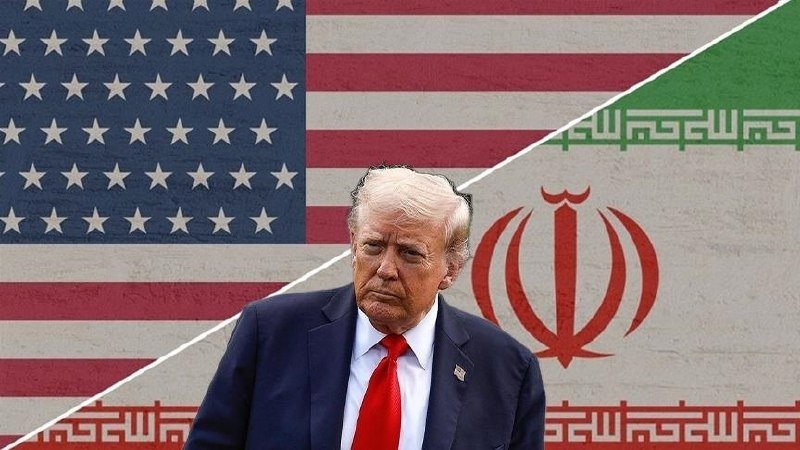
President Trump arrived in Oman on 6 May 2026 and left little doubt that he views a nuclear agreement with Iran as a realistic outcome. The talks over the preceding twenty-four hours had been, in his characterisation, very good. What he would not do — and this was the line he repeated, with visible irritation, when challenged by reporters — was accept any deadline for reaching that agreement. "An agreement will be reached, but there will never be a deadline," Trump told assembled journalists, according to transcripts carried by Tasnim News, an Iranian state news agency, and corroborated by multiple accounts on the ground.
That insistence on process without a timeline sits awkwardly with the price of a commodity that has become central to the entire enterprise. Trump told reporters he had anticipated oil would reach $200 to $250 per barrel as a result of the pressure campaign against Iran. Brent crude, as of 6 May, sat at $100. The gap between the projected leverage and the market reality is not a marginal detail. It defines the negotiating environment.
The Reporter's Challenge
The exchange that drew the most attention was not the prepared positioning but an unscripted confrontation with a journalist who pressed the President on Iran's apparent unwillingness to capitulate to American demands. "You are facing an opponent in Iran that has refused to submit," the reporter said, according to transcripts from Iranian state-adjacent outlets including Fars News International and the intelligence-focused Telegram channel rnintel. Trump pushed back sharply. "Why do you say they refuse to submit? You don't know what's going on," he responded. When the reporter noted that Iranian forces had fired at United States naval vessels several days prior, Trump did not disavow the characterisation but reframed its significance.
The exchange illuminates a genuine analytical gap between the Administration's public posture and the assessment of observers who note that Tehran has not moved toward the kind of comprehensive concessions the original maximum-pressure framework appeared to demand. Trump, by contrast, insisted the talks were productive without specifying what, if anything, Iran had offered.
Oil and the Leverage Calculation
The $100 oil figure matters in ways that extend beyond market commentary. The Trump Administration's approach to Iran has consistently implied that economic suffocation would produce diplomatic capitulation. That logic depends on oil prices climbing high enough to make Iranian revenues untenable and to signal to global markets that Iranian supply was at risk. At $100, that signal has not materialised. OPEC+ production decisions, alternative crude streams from other producers, and softer-than-expected demand in China have kept the market sufficiently supplied to limit the pressure Iran faces from price dynamics alone.
This does not mean the sanctions regime is ineffective — Iranian oil exports remain substantially constrained relative to pre-2018 levels — but it does suggest the Administration's public framing of economic pressure as the primary driver of negotiations may be running ahead of what the market is actually delivering. The President, in Oman, was not acknowledging that gap. He was instead recalibrating his language about the deal itself, positioning an agreement as near-inevitable rather than as conditional on economic collapse.
Tehran's Calculus
Iranian state media has carried the talks without the triumphalism one might expect from a government that believes itself to be under systematic economic siege. That restraint is analytically significant. Tehran's negotiating team has consistently held that any agreement must provide sanctions relief commensurate with verified nuclear constraints — a position that, if taken at face value, is not compatible with a one-sided capitulation scenario. The Pope, in a passage Trump referenced directly on 6 May, had appeared to suggest that Iran retained the right to a civil nuclear programme. Trump was emphatic that this was not his reading. "Whether I make the Pope happy or not, Iran cannot have a nuclear weapon. He seemed to be saying they can; I say they cannot," the President stated, according to the ClashReport wire.
The gap between the Pope's framing and the Administration's red line suggests that whatever deal eventually emerges will require careful legal language distinguishing between civilian nuclear activity and weapons-adjacent capability — a distinction that has proven, in previous rounds of negotiations, to be the point at which agreements have either held or unravelled.
What Comes Next
The refusal to set a deadline is, on one reading, a negotiating tactic — it removes a fixed point against which failure can be measured, and it gives both sides room to make concessions without an imminent public reckoning. On another reading, it reflects a recognition inside the Administration that the conditions for a quick deal do not currently exist. Iran has not signaled flexibility on its core interests. The oil market has not delivered the maximum-pressure signal the White House publicly anticipated. And the regional dynamics — including the naval exchanges Trump acknowledged — remain sufficiently volatile that a miscalculation on either side could unravel whatever groundwork is being laid in Muscat.
Oman has long served as a backchannel venue for precisely these kinds of conversations. The Sultanate's diplomatic history includes facilitating the initial secret contacts that led to the 2015 Joint Comprehensive Plan of Action. Whether the 2026 iteration produces an agreement — and on what terms — remains genuinely uncertain. What is clear from the record of 6 May is that the President wants a deal and believes one is achievable. Whether Iran wants the same deal, at the same price, is a question the Administration has not yet answered to its own satisfaction.
This publication's wire feed captured the Oman exchanges through multiple state-adjacent and independent Telegram channels. Western wire services had not yet published a full transcript of the exchange at time of filing; the version above draws on Iranian state-adjacent accounts, which should be read with the caveat that official framings from Tehran carry their own interpretive weight.
Wire provenance
This editorial synthesis draws on the following public wire/social posts:
- https://t.me/tasnimnews_en/89241
- https://t.me/ClashReport/19873
- https://t.me/JahanTasnim/11822
- https://t.me/tasnimnews_en/89239
- https://t.me/ClashReport/19872
- https://t.me/FarsNewsInt/12489
- https://t.me/rnintel/4781