Trump Pauses Hormuz Blockade Days After Launch, Iran Deal Hinges on Compliance
President Trump suspended the Hormuz naval operation on 6 May 2026, conditional on Iran honouring a previously negotiated framework — a move that sent oil prices lower and bitcoin above $83,000.
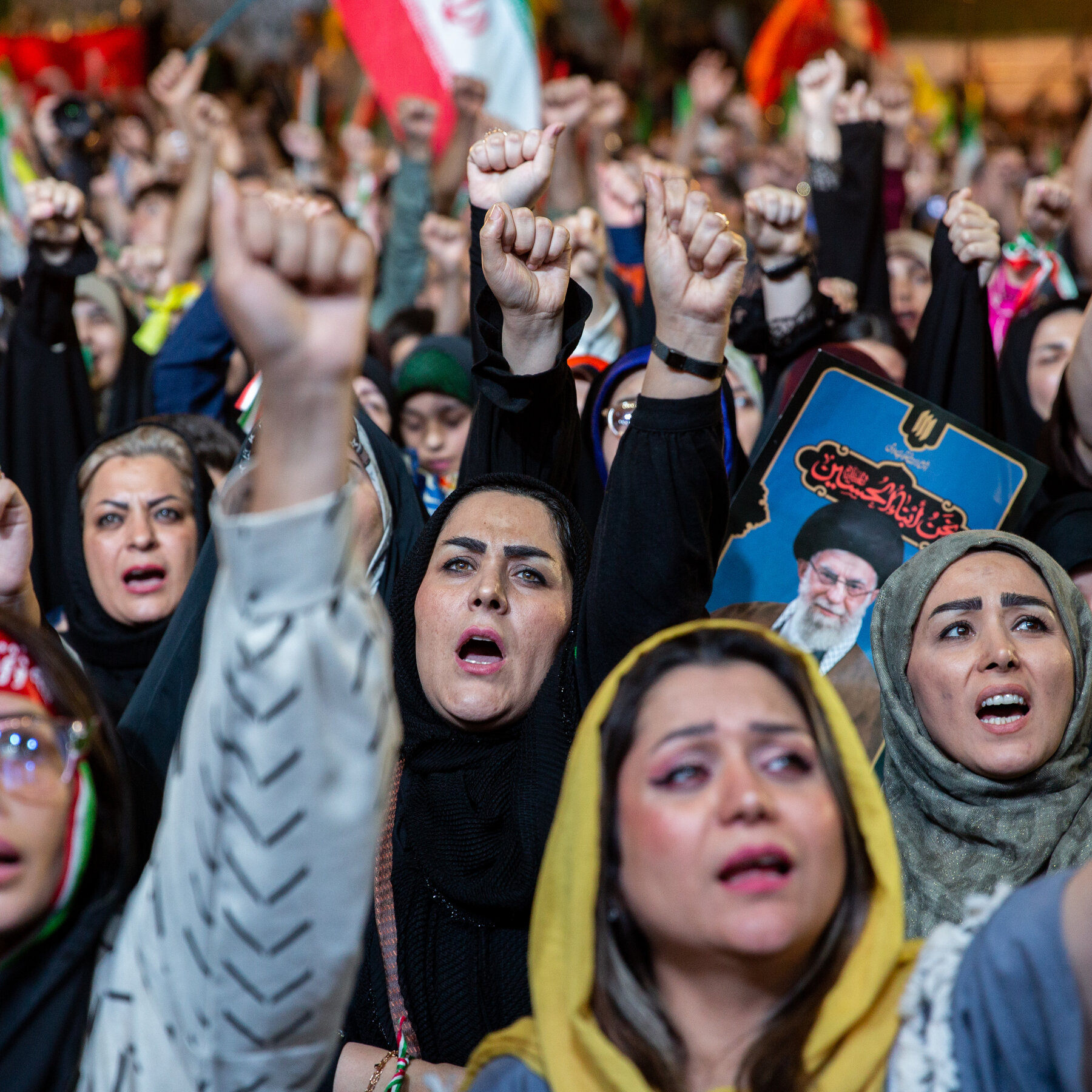
The Announcement
President Trump announced on 6 May 2026 that "Project Freedom," the US-led framework to secure the Strait of Hormuz, would be paused just days after its launch. In a post on Truth Social, Trump wrote: "Assuming Iran agrees to give what has been agreed to, which is, perhaps, a big assumption, the already legendary Epic Fury will be at an end, and the highly effective Blockade will all [be lifted]." The post made clear the alternative: "the bombing starts" if Iran does not comply. Trump framed the pause as a response to diplomatic requests — and, according to an OSINT report citing the White House, at the explicit request of Pakistan.
The Hormuz Calculus
The Strait of Hormuz handles roughly one-fifth of the world's oil shipments. Any military operation in or around those narrow shipping lanes immediately reprices global energy markets. The brief window in which Operation Epic Fury appeared active was enough to spike crude futures before the reversal. That market sensitivity is the leverage Washington uses — and the reason Tehran cannot afford to dismiss the offer entirely.
What Iran has been asked to agree to is not new. The sources do not lay out the precise terms in full, but the framing from the Trump administration describes it as a return to a previously negotiated framework — one that almost certainly involves caps or constraints on nuclear activity, verification mechanisms, and the partial relief of sanctions in exchange. That structure mirrors the 2015 JCPOA architecture, though the current administration has not publicly committed to restoring that specific agreement.
The conditionality is the whole point. By suspending military operations rather than abandoning them, the White House retains forward momentum without conceding the underlying posture. The blockade — which the sources describe as economic and financial pressure operating in parallel with the naval operation — remains in place as the enforcement mechanism that keeps Iran at the table.
Iran's Position
Tehran has signalled openness to cooperation, according to reporting from CryptoBriefing on 6 May 2026. That word choice matters: signalling is not acceptance. Iranian state media have not published a full response matching the specificity of Trump's post, and the sources do not include a direct statement from a named Iranian official confirming compliance. The gap between American conditional language and whatever Iranian response is in transit is where this deal either holds or fractures.
Pakistan's apparent role as an interlocutor adds a layer to the diplomatic geometry. Islamabad sits in a structurally difficult position — economically dependent on Gulf energy flows, politically tied to Sunni Arab partners, but with a government that has historically maintained pragmatic back-channels to Tehran. Whether that channel produces a durable agreement or merely buys time is not answerable from the current source base.
Markets React
The market response was swift and bifurcated. Bitcoin climbed above $83,000 as traders priced in reduced Strait disruption risk — the cryptocurrency market's implicit bet being that a Hormuz confrontation would have disrupted tanker insurance markets, freight routes, and the broader risk-off sentiment that tends to accompany military escalations. CryptoBriefing reported the price target on 6 May 2026.
Energy markets moved in the opposite direction: crude futures fell as the pause removed the supply-disruption premium that had briefly entered the market. The reversal was sharp because the operation had been brief — there was little fundamental change in supply, only a short-lived geopolitical shock that inflated risk premiums and then dissipated.
That price behaviour is itself a signal about global market fragility. A naval operation that lasted days and produced no shots fired was enough to move oil markets noticeably. It underscores how sensitive the Hormuz chokepoint remains — and why every diplomatic channel is activated when it comes under pressure.
What Remains Uncertain
Several questions the available sources do not settle. The precise terms Iran is being asked to ratify are not public. Whether Iranian Supreme Leader Ali Khamenei or the clerical chain of command has sanctioned a formal response is unclear. The timeline for Iran's reply — and what constitutes sufficient compliance to trigger the full lifting of the blockade — is unspecified in the current wire reporting. And the role of European intermediaries, who were active in earlier JCPOA diplomatic rounds, does not appear in these sources.
The sources are also not self-consistent on terminology. Some describe a naval blockade; others use "blockade" to describe the sanctions architecture operating alongside it. Those are meaningfully different mechanisms, and which one Trump intends to lift in exchange for Iranian compliance matters for the energy and financial landscape.
Structural Context
What this episode reveals, yet again, is the degree to which dollar-denominated financial architecture functions as a primary instrument of American statecraft. The blockade — whatever its exact form — operates through the dominance of the US dollar in global trade settlement and the reach of US regulatory enforcement into third-country banks and shipping intermediaries. That structural lever does not require a carrier group to be effective. The naval component adds coercive weight and credibility, but the actual pressure runs through the financial system.
The pause therefore accomplishes something beyond diplomacy: it tests whether financial pressure alone is sufficient to bring Tehran to compliance. If Iran agrees, the model holds. If Iran exploits the pause to rebuild financial resilience or accelerate nuclear activity, the resumed bombing campaign — or a more aggressive blockade — would be framed as Iranian bad faith, consolidating international support that might otherwise be divided.
The Strait of Hormuz is, in this sense, not primarily a military problem. It is a financial architecture problem, a diplomatic channel, and a test of whether coercive statecraft in the dollar era can function without the bombing option ever having to be exercised.
This publication covered the Hormuz pause as a bilateral US-Iran diplomatic development with market consequences. The wire split with mainstream financial desks that foregrounded the energy-price reversal; this article foregrounded the financial-architecture and conditionality dimensions that the sources also support.
Wire provenance
This editorial synthesis draws on the following public wire/social posts:
- https://t.me/LiveMint/87421
- https://t.me/CryptoBriefing/55102
- https://t.me/abualiexpress/88291
- https://t.me/ClashReport/66402
- https://t.me/insiderpaper/110882
- https://t.me/osintlive/44881
- https://x.com/polymarket/status/1957612348518416385
- https://t.me/Middle_East_Spectator/22911
- https://t.me/GeoPWatch/88291