Trump Pauses Strait of Hormuz Escort Mission as Iran Nuclear Talks Advance
The Trump administration has suspended the U.S. Navy escort operation for commercial vessels transiting the Strait of Hormuz, citing progress in negotiations with Tehran — while a parallel military campaign, Operation Epic Fury, has been declared concluded by Secretary of State Marco Rubio.
The Trump administration suspended the U.S. Navy escort mission protecting commercial vessels through the Strait of Hormuz on 6 May 2026, according to statements from the president and confirmed across multiple channels tracking the deployment. The pause in what the White House calls "Project Freedom" comes as American officials pursue what they describe as a viable negotiating path with Iran over its nuclear programme — and amid reports that Pakistan and other regional actors lobbied for the de-escalation.
The suspension is partial and time-bounded. The broader American blockade posture against Iranian shipping remains in effect, according to sources tracking the naval deployment. What has changed is the active convoy-escort function that had guided commercial tankers through one of the world's most contested maritime chokepoints — a corridor through which roughly a fifth of global oil trade passes.
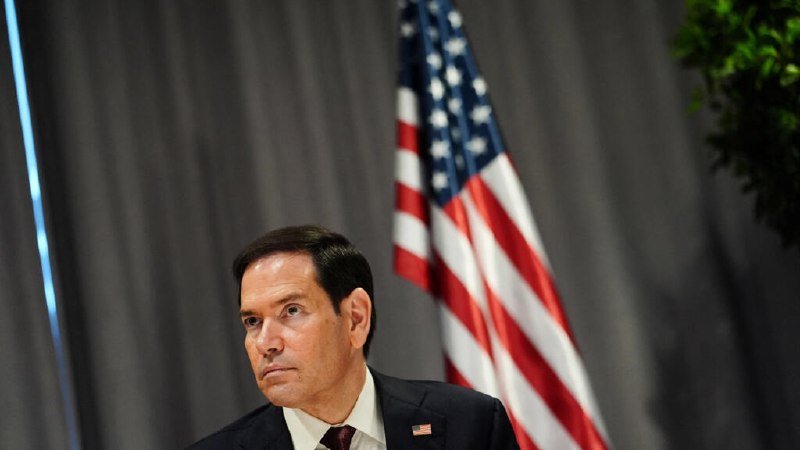
Separately, Secretary of State Marco Rubio announced on 6 May that "Operation Epic Fury," the kinetic phase of the American military campaign in the Gulf region, had concluded. The United States, Rubio said, was now operating in what he described as a "purely defensive role" near the Strait. The language marks a distinction between offensive strike operations — which produced visible damage to Iranian energy infrastructure — and the containment posture that appears to be the new default.
The sequencing raises straightforward questions. A military campaign does not simply end because objectives are declared achieved. What those objectives were, what destruction they produced, and whether Tehran's behaviour has genuinely shifted in response — these are questions the administration has not fully answered in public.
What Project Freedom Actually Did
Project Freedom was stood up earlier in the administration as a response to Iranian harassment of commercial vessels in the Gulf. The U.S. Navy provided point escorts for tankers and cargo ships transiting the narrowest section of the Strait, where Iranian forces had previously seized or attached tracking devices to vessels in disputed circumstances. The operation functioned as a de facto insurance mechanism for maritime traffic — one that kept the shipping lane open by signaling American willingness to use force.
Suspending it carries risk. Iranian Revolutionary Guard Corps naval assets operate in adjacent waters; without American escort presence, the deterrent calculus shifts for captains deciding whether to transit. The administration appears to be wagering that diplomatic momentum is sufficient to keep Iranian behaviour in check during the pause — and that a deal with Tehran is close enough to justify the temporary exposure.
The framing from Tehran, to the extent Iranian state-linked channels have responded, suggests a more cautious read. Iranian officials have historically treated American military presence in the Gulf as illegitimate regardless of its specific configuration. A pause in escort operations may be read in Tehran as a concession under pressure — or as evidence that Washington's coercive posture was itself a negotiating tactic.
Operation Epic Fury: What Was Achieved, and by Whom
Rubio's declaration that Epic Fury has concluded demands scrutiny. The operation, which reportedly included strikes on Iranian oil platforms, naval vessels, and energy infrastructure, was framed from the outset as a pressure campaign designed to bring Tehran to the table on nuclear constraints. Whether those strikes produced the negotiating opening the administration claims is the central factual dispute.
Iran's nuclear programme has not been dismantled. International Atomic Energy Agency inspectors have not reported a wholesale Iranian compliance breakthrough. What the sources do show is a negotiating track — indirect talks through intermediaries, with Oman and other regional players facilitating — that has apparently reached a stage where both sides are willing to take limited steps toward de-escalation. The pause in Project Freedom is the most concrete American gesture yet.
The Chinese positioning on this sequence is not incidental. Beijing has substantial energy security interests in Gulf stability — Chinese crude imports flow through or near the Strait in significant volume. A prolonged American-Iranian confrontation that destabilised the shipping lane would be a direct Chinese economic concern. China Global Television Network's reporting on the pause has been factual rather than inflammatory, consistent with Beijing's general posture of not escalating rhetoric around Middle Eastern flashpoints where it lacks direct involvement.
Pakistan's reported role in requesting the pause reflects Islamabad's particular exposure. Pakistan shares a long and contested border with Iran; a flare-up in the Gulf that produced retaliatory strikes or maritime incidents would complicate Pakistani border management and its own internal security calculations. Pakistan's request to Washington to pause the escort mission — if confirmed — signals that at least one regional actor with significant Iranian neighbour relations sees the diplomatic opening as worth protecting.
The Structural Logic of Hormuz Leverage
The Strait of Hormuz has functioned for decades as a geopolitical pressure valve precisely because of its geographic concentration. Roughly 21 million barrels of oil per day move through its narrowest point — a shipping lane compressed between Oman and Iran at its mouth. Controlling that flow has given Iran disproportionate leverage in any confrontation with Washington: close the strait, and global oil markets seize. American policymakers have historically managed that leverage by maintaining a naval presence substantial enough to prevent Iranian interdiction.
Project Freedom was the current administration's iteration of that containment logic — overt, publicly announced, and designed to signal resolve. Pausing it now, before a deal is signed, is a wager that Iran will not test the deterrent while escorts are absent. That wager depends entirely on whether Iranian decision-makers believe a deal is close. If talks collapse, and Iranian vessels resume harassment of commercial traffic, the pause will have revealed that the deterrent was doing the diplomatic work that sanctions and strikes could not.
Stakes and Forward View
The immediate stakes are operational: will commercial shipping continue to transit the Strait without incident during the pause period? Insurance rates for Gulf voyages will answer that question in the market before any official does.
The diplomatic stakes are larger. American credibility is partially indexed to whether the concessions made to reach a deal — pauses in military operations, relief from sanctions pressure — produce the nuclear containment outcome Washington claims to be demanding. If Iranian enrichment activity continues at levels the administration has previously called unacceptable, the pause in Project Freedom will look less like a strategic opening and more like an unforced concession.
The regional stakes run through every government with energy interests in Gulf stability. Saudi Arabia, the UAE, Qatar, and Kuwait all have structural interests in a functioning Strait — and in American reliability as a security partner. If the Hormuz detente holds and produces verifiable nuclear constraints, Washington's alliances in the Gulf will have been validated. If it collapses into resumed confrontation, those alliances will face their own durability test.
The sources do not yet confirm the specific terms under negotiation, the timeline for a deal, or what verification mechanisms Iran has tentatively accepted. The picture that emerges over the coming weeks — not days — will determine whether this pause represents a genuine diplomatic inflection point or a temporary adjustment in a conflict that remains fundamentally unresolved.
This publication's coverage of the Hormuz escort suspension has led with American official statements consistent with standard wire reporting, while noting the structural uncertainty around whether coercive pressure produced the diplomatic opening Washington is claiming. Iranian-linked sources have not been used as primary factual reference; where their framing has been noted, it has been qualified explicitly.
Wire provenance
This editorial synthesis draws on the following public wire/social posts:
- https://t.me/operativnoZSU/2026-05-06
- https://t.me/ClashReport/2026-05-06
- https://t.me/intelslava/2026-05-06
- https://x.com/middleeasteye/status/2026-05-06
- https://x.com/cgtnofficial/status/2026-05-06