Trump Pauses Project Freedom in Strait of Hormuz — and Oil Markets Breathe
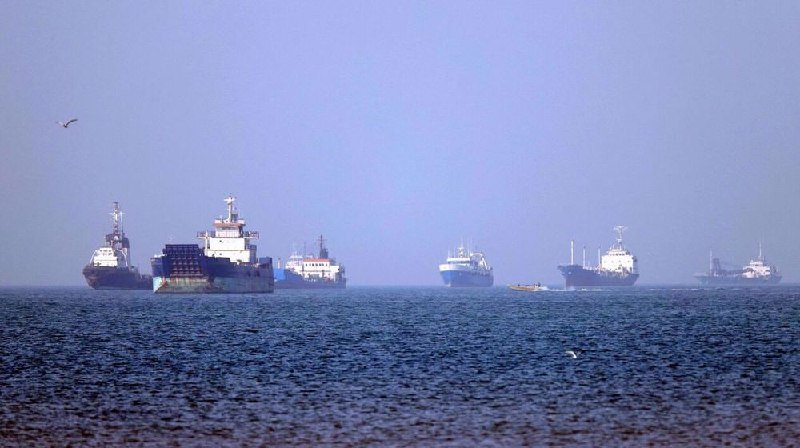
Oil prices slipped on Tuesday after President Donald Trump announced a temporary pause to Project Freedom, a naval operation in the Strait of Hormuz that the US had launched only days earlier. Trump said the suspension was intended to give Iran space to negotiate a new nuclear accord, a formulation that briefly lifted financial markets before traders recalled that the underlying dispute remains unresolved. The broader US blockade on Iran — a suite of sanctions and naval posturing designed to choke off oil revenue — stays in place. The pause is the most tangible signal yet that the White House and Tehran are exploring a negotiated off-ramp, though the distance between the two positions has not narrowed publicly.
The episode illustrates a pattern that has defined Trump's approach to Iran across both his administrations: simultaneous military pressure and diplomatic opening, calibrated to see which instrument yields concessions first. Project Freedom, whatever its precise operational scope, was designed to demonstrate that the Hormuz corridor — through which roughly a fifth of global oil shipments pass — could be made inhospitable to Iranian commerce. The pause signals that the administration believes talks might succeed where pure leverage has not, at least not yet.
Project Freedom and the Hormuz Backdrop
The Strait of Hormuz is not merely a shipping lane. It is one of the most consequential geopolitical chokepoints on earth, and any disruption to traffic — real or threatened — registers immediately in global energy markets. That is precisely why successive US administrations have used it as leverage against Tehran. The question this time is what Project Freedom was actually designed to do.
Reports from multiple outlets, citing brief official statements, have not settled the operational picture. Some accounts described it as a convoy-escort mission — US warships accompanying commercial vessels through contested waters. Others, including Iranian state-linked coverage, described it as a more aggressive interdiction operation. The ambiguity appears to have been deliberate. What is clearer is the context. Washington had spent weeks escalating its maximum-pressure campaign: expanded sanctions targeting Iranian oil exports, intelligence assessments shared with allied governments suggesting Iran's enrichment programme was advancing faster than anticipated, and a series of public statements suggesting the administration was losing patience with diplomatic progress. Iran, for its part, had resumed enrichment activities at the Fordow facility and publicly rejected any framework that did not include permanent sanctions relief — positions that successive administrations have deemed non-starters.
Hormuz as Leverage
The strategic logic of using the strait as pressure point is straightforward. Iran depends on oil exports for fiscal stability. The Hormuz corridor is the dominant exit route for that oil. Interdiction or the credible threat of interdiction therefore translates into economic leverage that sanctions alone cannot replicate. Trump has used this arithmetic before. His first-term withdrawal from the Joint Comprehensive Plan of Action — the 2015 nuclear agreement — was accompanied by a 'maximum pressure' campaign that included restored sanctions and the targeted assassination of General Qasem Soleimani in January 2020. That campaign did not produce a new deal. It produced an accelerated Iranian enrichment programme. Tehran moved from 3.67 percent purity — the level permitted under the JCPOA — to,巴勒维 enriched uranium at levels approaching weapons-grade within two years.
What is different this time, at least in the administration's calculus, is that Iran's economic position is weaker, its regional standing has been degraded by sustained conflict with Israel, and a new set of tariff tools gives Washington leverage over countries that continue to purchase Iranian oil. Whether that combination is sufficient to force a different outcome is the central question. The Iranian leadership has shown, across multiple administrations, that it can absorb significant economic pain before agreeing to terms it considers humiliating. The pause in Project Freedom is, at minimum, an acknowledgment that the current pressure track was not generating the desired result quickly enough.
Precedent and What It Tells Us
The 2015 nuclear agreement offers the most recent template for what a comprehensive deal might look like. It involved verified, permanent caps on enrichment and stockpiling, matched by phased sanctions relief. It collapsed because the US withdrew and restored maximum pressure — a sequence that Tehran cites as evidence that American commitments are conditional and reversible. Any new agreement would need to address that credibility gap. The Trump administration and its partners are understood to be seeking guarantees that go beyond what the JCPOA provided: not just temporary caps, but irreversible reductions in enrichment capacity and verifiable limits on weapons-grade stockpiles. Whether Iran will accept constraints that permanent, in exchange for sanctions relief that is reversible, remains deeply uncertain.
What Comes Next
The pause buys time. It does not resolve the underlying conflict. Iran will want assurances about what sanctions relief looks like before it makes concessions on enrichment. The Trump administration wants the reverse. Domestic political dynamics in Washington complicate the picture further: any deal struck with Iran will face scrutiny from lawmakers who view engagement with Tehran as capitulation, and from allies — particularly in the Gulf — who worry that an American retreat would create a power vacuum. On the Iranian side, Supreme Leader Ayatollah Khamenei has not publicly endorsed negotiations, leaving open the question of whether Tehran's current diplomatic posture reflects a genuine strategic shift or a tactical delay.
The stalemate has a clock on it. Iran's breakout capacity — the time needed to produce enough weapons-grade material for a nuclear device — is believed to have shortened considerably since the JCPOA's collapse. The window for a diplomatic resolution is not infinite. The pause in Project Freedom is a genuine opening. Whether it leads somewhere depends on whether both sides are prepared to accept terms the other finds tolerable. The sources reviewed for this article do not yet indicate they are.
This publication covered the pause as a geopolitical development in the Hormuz corridor, alongside its implications for energy markets and nuclear diplomacy. Wire coverage has focused primarily on the oil-price response and the diplomatic framing; this analysis foregrounds the structural leverage calculus and the historical precedent for US-Iran negotiating cycles.
Wire provenance
This editorial synthesis draws on the following public wire/social posts:
- https://t.me/BBCWorldoffl/2479
- https://t.me/ClashReport/8912
- https://t.me/IndianExpress/12308
- https://t.me/BBCWorldoffl/2478
- https://t.me/presstv/5591