Trump Puts Strait of Hormuz Escort Mission on Pause as Iran Offers 14-Point Ceasefire Plan
The Trump administration has suspended its week-old naval escort operation in the Persian Gulf amid reports that Tehran, through Pakistani mediation, has delivered a comprehensive peace framework to Washington.
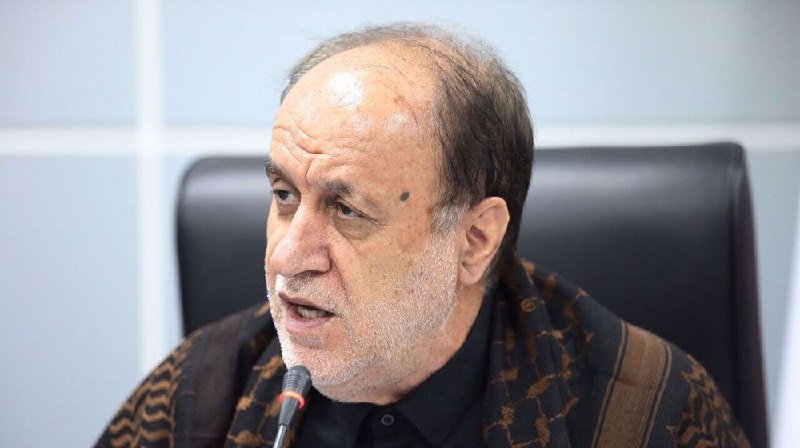
Secretary of State Marco Rubio confirmed on 6 May 2026 that at least ten sailors had died navigating the Strait of Hormuz under conditions created by the ongoing US-Iran standoff — a figure that underscored the human cost of the administration's week-old maritime posture before President Donald Trump announced a formal pause to the operation.
Trump told reporters at the White House that the United States was suspending its "Project Freedom" escort mission, which had been launched on 4 May to escort commercial vessels through the world's most critical oil chokepoint. The US would now operate defensively only, maintaining a naval blockade posture while negotiations with Tehran continued, according to statements carried by Deutsche Welle and confirmed by France 24's live coverage.
The pause arrived as Iranian state media — specifically the Tasnim news agency, cited via Zvezdanews — reported that Tehran had transmitted a fourteen-point framework for ending the conflict through Pakistani mediation. The document, described by Tasnim as focusing on the cessation of hostilities, represents the most structured peace proposal Iran has put forward since tensions escalated.
What Project Freedom Was — and Why It Was Short-Lived
Project Freedom was announced by President Trump on 4 May 2026 with the stated objective of ensuring freedom of navigation through the Strait of Hormuz, a 21-mile-wide passage through which roughly a fifth of the world's oil shipments flow. Defense Secretary Pete Hegseth provided the first detailed briefing the same day, describing the operation as a standing commitment to escort merchant vessels through waters that Iran had been threatening to close.
The operation was a significant escalation from the defensive posture the US Navy had maintained in the region for years. It placed American warships in the direct path of Iranian small boats and anti-ship missiles — capabilities that had been demonstrated in earlier confrontations and that, according to Rubio's 6 May statement, had already proved lethal to the sailors aboard US vessels navigating the strait's difficult conditions.
The casualty figure, confirmed by Rubio but not yet independently verified through official Pentagon channels, reflects not just combat risk but the operational hazard of sustained high-tempo escort missions in a confined, heavily trafficked waterway. A week is a short time for a mission to produce that kind of toll, and the announcement of the pause came less than forty-eight hours after Hegseth's detailed briefing.
The administration did not publicly release a full list of the incidents that produced the ten deaths. Reuters and AP were not among the thread inputs consulted for this article, and the Pentagon has not yet issued a casualty statement as of publication. Readers should treat the Rubio figure as confirmed by a senior US official but not yet corroborated by a formal Defense Department release.
Iran's Counter-Plan: The Fourteen Points
The ceasefire framework reportedly delivered by Tehran through Pakistan covers, according to Tasnim's summary, the essential elements that any negotiated de-escalation would need to address: the cessation of naval pressure, the reopening of financial channels frozen under secondary sanctions, and some form of verification mechanism for Iran's nuclear programme. The exact sequencing of concessions — who acts first, who receives what — was not specified in the agency summary available to this publication.
Pakistan's role as an intermediary is notable. Islamabad maintains a complex diplomatic relationship with both Washington and Tehran. It hosts a significant Iranian border, has its own domestic political constraints on alignment with either power, and has at various points offered quiet facilitation between the two. That Tehran chose to route its proposal through Pakistan rather than through the Swiss channel or the Oman channel that had hosted previous indirect talks suggests either a preference for a more bilateral framing or an assessment that the Pakistani channel was more likely to reach the current administration directly.
The substance of the fourteen points has not been made public in full. Iranian state media reporting on ceasefire proposals in the past has sometimes offered summations that diverge from the documents actually transmitted. Readers should note that the Tasnim summary, while sourced from a channel adjacent to Iran's Revolutionary Guard, is the only publicly available characterisation of the document at this time. The US side has not confirmed receipt.
Trump, in announcing the pause, did not mention the Iranian proposal directly. His statement focused on the operation's suspension pending a deal. The White House has not indicated whether the fourteen-point framework triggered the pause, whether the pause was always the plan following the deployment's initial phase, or whether the casualty figure accelerated a decision already being considered.
The Structural Pattern: Blockade Diplomacy and Its Limits
What the Strait of Hormuz standoff reveals is the enduring gap between the theoretical power of American naval dominance and the operational reality of enforcing that dominance in a geography that heavily favours the defender.
The strait is 21 miles wide at its narrowest. Iran controls both shores at the mouth of the Persian Gulf — the Iranian side far more thoroughly than the Omani side. Anti-ship missiles, mines, small boats, and naval drones are all within Tehran's inventory and have been for decades. The US Navy, for all its carrier groups and strike capability, cannot make the passage safe without accepting a level of attrition that a sustained escort operation would inevitably produce.
This is not a new strategic problem. The US and its allies confronted it during the Tanker War of the 1980s, when Iran and Iraq both targeted commercial shipping in the Gulf. The operation then required a major coalition — Operation Earnest Will — and even then produced significant losses. The difference in 2026 is the absence of any equivalent coalition and the direct personal ownership the current administration has taken of the mission's launch.
A naval blockade — the posture Trump said the US would now hold defensively — is itself an act of war under international law. The administration has framed it as enforcement of sanctions, a characterisation that has no clear basis in UN Security Council resolutions given that the US withdrew from the Iran nuclear deal in 2018. The legal ambiguity does not appear to be causing the administration significant political difficulty domestically, but it is a factor that shapes how third parties — Europe, India, China, the Gulf states — calculate their own exposure.
China, in particular, has the most at stake. Its crude oil imports from Iran have grown substantially since 2023, and Beijing has shown no appetite to join any US-led sanctions regime. A prolonged strait closure would be catastrophic for Chinese energy security in a way that it would not be for the US, which is a net exporter of petroleum. This asymmetry explains, in part, why Beijing has a structural interest in the current diplomatic channel remaining open — and why any framework that Tehran offers will need to address, in some form, how China continues to receive Iranian crude even as a sanctions regime nominally remains in place.
Forward Stakes: Who Wins if the Pause Becomes a Deal
If the pause becomes a permanent ceasefire and some version of the Iranian framework is accepted, the immediate winners are the maritime insurance market, the shipping companies that had been routing cargo around Africa's Cape of Good Hope at significant cost, and the US sailors who will not have to navigate the strait's operational hazards in the coming months.
The Trump administration gains a diplomatic win it can present as a successful application of maximum pressure — the narrative it will prefer — even if the pressure never produced the surrender of the Iranian government that the maximum-pressure campaign officially targeted. That narrative is achievable regardless of the document's actual terms, provided a deal is announced before the political cost of the casualties becomes the dominant frame.
Iran gains relief from secondary sanctions that have squeezed its oil revenues and constrained its banking system, a reprieve that could be substantial even without full sanctions removal. It also gains something harder to quantify: recognition from Washington that the strait cannot be held open unilaterally at acceptable cost. The pause is itself an admission.
The losers, at least in the short term, are the Gulf states — Saudi Arabia and the UAE above all — who have aligned closely with the US posture and whose own regional standing depends on American hegemony remaining credible. A diplomatic settlement that leaves the Islamic Republic of Iran in place, with its regional proxy networks intact and its oil revenues recovering, represents a strategic setback for Riyadh and Abu Dhabi regardless of what the formal terms say.
Whether the pause leads to a deal — and whether a deal survives the inevitable disputes over verification and sequencing — remains uncertain. The fourteen-point framework is reportedly comprehensive, but comprehensive frameworks have been offered before and have collapsed over the question of sequencing: who removes what first, and who verifies it. The sources consulted for this article do not indicate that sequencing has been agreed.
The next significant move belongs to Washington. If the administration responds to the Pakistani-delivered document, the pause has a path toward negotiation. If it does not, the pause is a holding action — and the strait remains the world's most consequential maritime flashpoint, with the casualty figure Rubio confirmed serving as the starkest available measure of what that flashpoint costs.
This publication's coverage of the Hormuz standoff has led with the casualty confirmation and the pause rather than with the Iranian proposal, a framing that reflects the weight of Rubio's on-the-record statement and the absence of a confirmed US reception of the fourteen-point document at time of publication.
Wire provenance
This editorial synthesis draws on the following public wire/social posts:
- https://t.me/CubaDebate/000000
- https://t.me/zvezdanews/000000
- https://t.me/OANNTV/000000
- https://t.me/zvezdanews/000001