Trump's Strait of Hormuz Operation Stalls as Saudi Arabia Withholds Base Access
An ambitious White House plan to reopen the Strait of Hormuz to commercial shipping has collapsed after Riyadh denied the US military access to Saudi bases and airspace, leaving more than 1,600 vessels trapped in Iranian-adjacent waters.
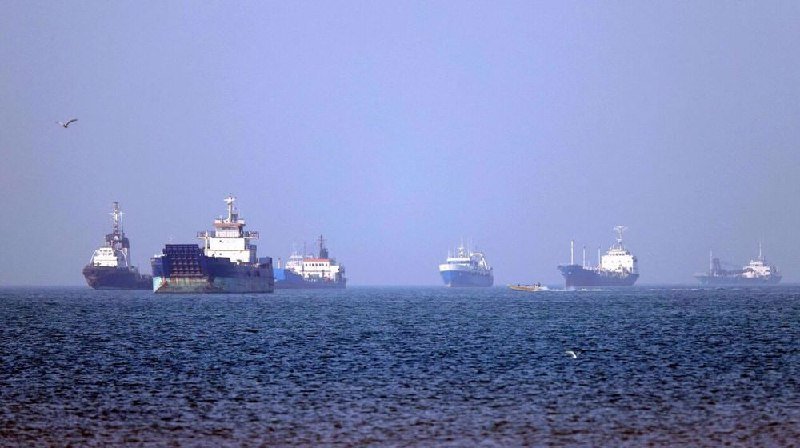
The Trump administration has suspended an active military operation designed to reopen the Strait of Hormuz to commercial shipping, after Saudi Arabia refused to permit the United States from using its territory as a staging ground, according to reporting by NBC News on 6 May 2026. The operation, internally designated Project Freedom, had managed to escort just two vessels out of a reported 1,600 waiting to transit the strategic waterway — a ratio that even administration allies privately described as inadequate.
The suspension marks a swift reversal for a White House that had presented the initiative as a signature assertion of American naval power in the Gulf. Within days of the announcement, Saudi Arabia declined to extend the use of its bases and airspace — the precise infrastructure the operation required to function at scale. No alternative regional partner has yet stepped forward to fill that logistical gap.
The Operational Failure
Project Freedom was designed to address a bottleneck that had developed as Iranian-aligned maritime interdiction campaigns intensified in the lower Gulf. Commercial vessels, wary of seizure or harassment, had largely ceased booking transit through the strait. The economic stakes were immediate: roughly 20 percent of the world's oil supply moves through the Hormuz corridor, and the backlog had begun to compress tanker rates and create scheduling chaos at ports from Fujairah to Singapore.
By early May 2026, the operational reality had diverged sharply from the public framing. CNN reported that Project Freedom had succeeded in clearing only two ships out of an estimated 1,600 vessels awaiting passage — a success rate of 0.125 percent. The disparity between ambition and outcome prompted critical coverage from wire outlets, with multiple reports noting that the operation had failed to generate the deterrence signal its architects had promised. The administration's internal assessment, as characterised in the NBC reporting, acknowledged that the initiative could not proceed without the airspace and base access Riyadh controlled.
The sources do not specify precisely when the Saudi decision was communicated to Washington, nor the exact level of prior consultation between the two governments on the operation's contours. What is clear is that the decision arrived after an unspecified suspension of the US military's access had already occurred — leaving the US side scrambling to explain a plan that had effectively unravelled.
Riyadh's Calculus
Saudi Arabia's refusal to extend base access to a US operation targeting Iranian maritime activity reflects a diplomatic posture that has been hardening for years. Riyadh and Tehran have been engaged in a cautious rapprochement process, accelerated by the Chinese-brokered normalisation agreement of 2023. That diplomatic opening has given Saudi Arabia room to manoeuvre between Washington and Beijing in ways that were unavailable during the earlier period of maximal US-Gulf security cooperation.
The kingdom has also grown more sensitive to the domestic and regional costs of being seen as Washington's designated launchpad for operations targeting fellow Gulf states. Public opinion surveys across the region consistently show that Gulf populations — including Saudi Arabia's own citizenry — harbour deep reservations about foreign military presence. A Saudi government willing to offer quiet intelligence cooperation may be structurally unwilling to provide the visible operational support that an American military presence in Saudi territory would require.
There is a further dimension: the economic. OPEC+ production coordination has given Riyadh a lever over global energy pricing that is, in the view of many regional analysts, more valuable than any security guarantee Washington can offer. That leverage depends partly on the perception that Saudi Arabia controls the terms of its international partnerships rather than simply executing a Western agenda. Granting blanket base access for a Hormuz operation would undercut that positioning.
The Structural Pattern
What the Project Freedom collapse reveals is not simply a bilateral misunderstanding but a deeper shift in how Gulf security architecture functions. For decades, the US alliance system provided a layer of deterrence that gave Saudi Arabia and its neighbours the option of outsourcing hard-power projection. That arrangement had costs — the political exposure of hosting foreign troops, the diplomatic constraint of alignment — but it was legible and predictable.
The current moment is different. Washington still maintains significant naval assets in the region and still commands substantial leverage through sanctions and military sales. But the operational ceiling — what the United States can actually execute without a cooperating regional ally — has dropped. A strait operation requires basing, overflight rights, intelligence sharing, and often some degree of local naval participation. Without those, even a carrier strike group has limited utility against a maritime interdiction campaign that relies on small boats, sea mines, and electronic warfare rather than conventional naval engagements.
This is the pattern visible across multiple flashpoints: Libya, where the US dependence on local partners limits sustained air operations; the South China Sea, where allies are reluctant to be publicly named in American-led containment strategies; and now the Gulf, where a close security partner has simply said no. The common thread is that American hard power remains formidable in isolation but increasingly depends on a regional ecosystem that is no longer reliably available.
Forward Stakes
The immediate losers are the shipping companies and energy traders who had factored Project Freedom into their routing and insurance calculations. A continued Hormuz bottleneck will sustain elevated freight premiums and add volatility to already stressed energy markets — costs that tend to accumulate at the consumer end over a twelve-to-eighteen-month horizon.
The longer-term losers may be the broader US posture in the Gulf. If the United States cannot execute an operation of this kind — small by historical standards, focused on a single maritime corridor — then the credibility of extended deterrence commitments requires recalibration. Regional partners will adjust their own security planning accordingly, with predictable consequences for arms procurement, diplomatic alignment, and the role of non-Western security partners in Gulf decision-making.
The sources do not indicate whether the administration intends to renegotiate terms with Riyadh, seek an alternative regional partner, or wind the operation down entirely. What the 6 May 2026 reporting makes clear is that Project Freedom, as conceived, no longer exists in operational form.
What Remains Uncertain
The precise sequence of the Saudi decision — whether it was a response to administration pressure, a prior condition that was never formally met, or a unilateral recalculation by Riyadh — remains contested in the available reporting. The NBC and CNN accounts do not specify what alternative diplomatic channels Washington pursued before the suspension was announced, nor whether the Saudis offered any private explanation for their position. The operational data on vessel numbers — 1,600 awaiting transit — comes from CNN's reporting and has not been independently corroborated by the sources available to this desk. The broader question of whether Iran adjusted its maritime posture in response to the operation or simply allowed it to fail through inaction also remains open in the public record.
This publication's wire coverage of Project Freedom foregrounded operational mechanics and Saudi agency. CNN led with the failure-to-deliver statistic; NBC led with the diplomatic rupture. Both framings are accurate, but neither fully captures the structural shift in Gulf security cooperation that the suspension implies.
Wire provenance
This editorial synthesis draws on the following public wire/social posts:
- https://t.me/wfwitness/13428
- https://t.me/rnintel/8921
- https://t.me/rnintel/8919
- https://t.me/FarsNewsInt/7651