The Strait of Hormuz Crisis: How Trump's 48-Hour Operation Became a Strategic Gift to Tehran
Iran has seized control of the narrative at the Strait of Hormuz after a US operation lasting barely two days collapsed under the weight of commercial resistance and diplomatic isolation. The episode reveals not just a planning failure but a structural shift in who actually controls the world's most critical oil chokepoint.
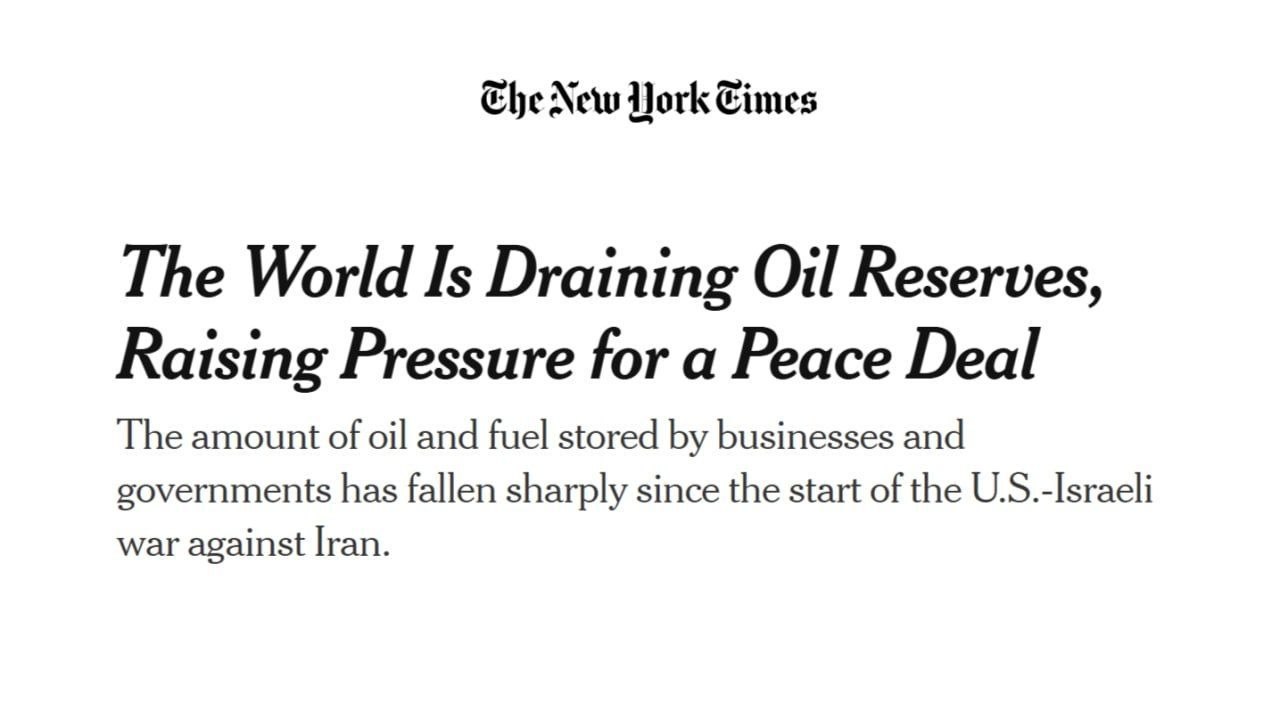
On the morning of 6 May 2026, Iran announced the creation of a new maritime authority with its own website and mandate to oversee traffic through the Strait of Hormuz — the 34-kilometre-wide passage through which roughly a fifth of the world's oil flows. The timing was not accidental. Twenty-four hours earlier, a US naval operation called Project Freedom had effectively been shelved after 48 hours, having guided precisely two vessels through a waterway where more than 1,600 ships had been waiting for clearance.
The gap between those two numbers — two and 1,600 — tells the story of how thoroughly Tehran converted a policy reversal into a strategic win. What began as a show of American resolve ended, within a single weekend, as a demonstration of Iranian capacity to shape the operational environment in the Gulf at a pace and on terms the United States could not match.
The operation and its rapid collapse
Project Freedom was announced as a coordinated commercial and naval effort to escort tanker traffic through the Strait of Hormuz following heightened Iranian inspection activity that had effectively frozen southbound tanker traffic. The operation was framed by the White House as a decisive response to what it described as unlawful Iranian interference with freedom of navigation.
By the morning of 6 May, however, the operation was over. CNN reported that the initiative had produced minimal results, guiding only two vessels through the passage. The gap between the stated ambition — re-establishing unimpeded tanker flow — and the operational outcome was stark. Shipping sources tracking vessel movements through the Gulf confirmed that Iranian inspection protocols remained in effect for the vast majority of vessels awaiting transit.
The rapid collapse of Project Freedom was not primarily a military failure. US naval assets in the region are substantial and capable. The problem was commercial and diplomatic: the world's major shipping insurers, classification societies, and flag-state operators proved unwilling to associate themselves with a US-escorted transit that Tehran had declared would carry consequences. The calculus for a tanker operator is straightforward — an Iranian interdiction that damages a vessel, costs far more than the marginal premium charged for passage. Without commercial backing, a naval escort is largely symbolic.
Iranian state media framed the outcome in exactly those terms. PressTV reported on 6 May that Iran had consolidated its diplomatic and military leverage precisely as the White House announced the operation's suspension, noting that the episode had demonstrated the limits of coercive pressure when applied without allied commercial cooperation.
A new authority and the question of legitimacy
The announcement of Iran's new Hormuz oversight authority — complete with its own public-facing website — represents a more durable development than the short-lived American operation. Tehran has effectively established a bureaucratic and operational framework for managing transit through the Strait that did not exist a week earlier. The authority's stated intention to charge ships for what it describes as safe passage is, in effect, an attempt to normalise a toll-taking regime at one of the world's most critical maritime chokepoints.
The New York Times reported on 6 May that Iran had launched the website and authority as a signal of its intent to charge vessels for safe passage. The publication's sourcing, attributed to Western and regional officials familiar with the planning, suggests the initiative had been in development for several weeks — predating the specific tensions that triggered Project Freedom. That timing matters: Tehran was not reacting to American pressure; it was advancing a longer-term agenda that the US operation inadvertently accelerated by creating the operational space for Iran to declare its authority and dare shipowners to test it.
The legal basis Iran is claiming for these charges is contested. Freedom of navigation through the Strait of Hormuz is well-established under international maritime law and has never been subject to unilateral toll requirements. The US and its allies have made clear, repeatedly, that such demands have no legal standing. But legal standing and operational reality have diverged sharply in the Gulf. Vessel operators who paid Iranian inspection fees in the preceding months did so not because they accepted the legal basis but because the alternative — detention, delay, or confrontation with Iranian coast guard assets — carried greater cost. The new authority extends and formalises that logic.
The structural reality beneath the diplomacy
The Strait of Hormuz episode exposes a structural dynamic that has been building for years but rarely surfaces in diplomatic communiqués. The passage is narrow, its shipping lanes congested, and its surrounding waters contested. Any state with functional coast guard and Revolutionary Guard naval assets in the northern Gulf can impose costs on tanker traffic without firing a shot. The mechanism is not military blockade — it is inspection regimes, paperwork delays, escort demands, and the slow accumulation of commercial uncertainty that makes the passage less reliable.
The United States cannot eliminate this dynamic through naval presence alone. American carrier groups in the Gulf are powerful but irrelevant to a tanker captain calculating whether a given transit is worth the insurance premium the following month. What matters is the operational environment — the rules of the road, the response of flag states, the behaviour of classification societies, the stance of Lloyd's underwriters. On all of those dimensions, Tehran has been more effective over the past eighteen months than Washington has recognised publicly.
The episode also reveals something about the limits of coercive signalling in the Gulf. The Trump administration appears to have expected that announcing an escort operation would change commercial calculations — that shipowners, seeing American naval backing, would treat Iranian interference as a risk worth taking. The commercial world disagreed. This is not new: the same dynamic constrained American pressure on Iranian oil exports during the maximum pressure years of 2018 and 2019, when waivers and unofficial tolerances proliferated precisely because the cost of full compliance with American sanctions exceeded the enforcement risk. The Strait, in this light, is the same problem at smaller scale: the gap between stated policy and commercial incentive runs in Iran's favour.
Precedents and their limits
The Hormuz situation echoes episodes in other contested waterways but does not map cleanly onto any of them. The analogy most frequently invoked — the Strait of Hormuz as a new Suez Canal after Egypt's 1956 operation — misleads more than it illuminates. The Suez crisis involved state actors with full territorial control over a passage and a clear willingness to close it. Iran's position is different: it does not own the Strait and cannot close it unilaterally without triggering a response it cannot sustain. What it can do is impose costs on traffic that fall short of full closure but exceed what the market will tolerate.
A closer historical parallel might be the various choke-point management strategies employed during the Cold War — not blockades in the formal sense but the slow, structured accumulation of inspection rights, transit permissions, and commercial dependencies that gave the Soviet Union leverage over shipping lanes without requiring direct military confrontation. The mechanisms were less visible and more durable than a naval blockade. Tehran appears to have studied that playbook.
The bitcoin market reaction — briefly touching $83,000 as the operation was paused — illustrates how sensitive financial markets remain to Gulf disruptions, even brief ones. That spike compressed quickly once the operation's suspension was confirmed, suggesting traders read the news as a de-escalation rather than a new crisis. The follow-on effect, however, was less reassuring: Iran's announcement of the new authority arrived against a market backdrop still sensitive to Gulf instability, which Tehran likely calculated when timing its own announcement.
Stakes and the road ahead
The immediate stakes are commercial. Every tanker operator currently evaluating a transit of the Gulf faces a new variable: the Iranian authority's fees, and the question of whether paying them normalises a regime that the United States considers unlawful. Flag states, classification societies, and insurers are being asked to take positions on a question the US has not fully answered — whether a toll demanded by Iran, even if paid under protest, constitutes constructive acceptance of Iranian authority over the passage.
The longer-term stakes are structural. The Hormuz episode has demonstrated that Tehran possesses both the operational reach and the institutional patience to establish facts on the water — and that American responses predicated on the assumption of commercial cooperation will continue to fail unless that assumption is rebuilt from the ground up. Rebuilding it requires either offering shipowners meaningful guarantees that the US will absorb the cost of confrontation, or finding a diplomatic off-ramp that reduces the premium Iran can charge on passage. Neither option is straightforward.
What is clear is that the narrative has shifted. A week ago, the story was about American resolve and Iranian overreach. As of 6 May, the story is about an Iranian authority with a website, a fee schedule, and 1,600 ships making their own calculations. That shift did not happen because Tehran manufactured a crisis. It happened because an American operation wither quickly enough to hand Tehran the framing it needed.
The Strait remains open. It is, however, less predictable than it was a month ago, and that change is not going to reverse on its own.
This publication covered the Strait of Hormuz operation as an unfolding commercial and strategic story, prioritising shipping-industry sources and the gap between stated US policy and the operational realities governing tanker traffic. Wire coverage from CNN and the New York Times set the initial frame around the operation's failure; Iranian state media framed it as leverage consolidation. The framing here treats both sources as partial and uses the operational evidence — two ships escorted versus 1,600 waiting — as the more durable fact.
Wire provenance
This editorial synthesis draws on the following public wire/social posts:
- https://x.com/SpectatorIndex/status/1921548212347895944
- https://x.com/unusual_whales/status/1921512345678901234