Trump's Strait ultimatum: the Hormuz crisis and the arithmetic of coercion
With US bombers poised over the Gulf and an emerging diplomatic deal already fracturing, the Strait of Hormuz has become the fulcrum on which global energy markets and the Trump administration's credibility both pivot.
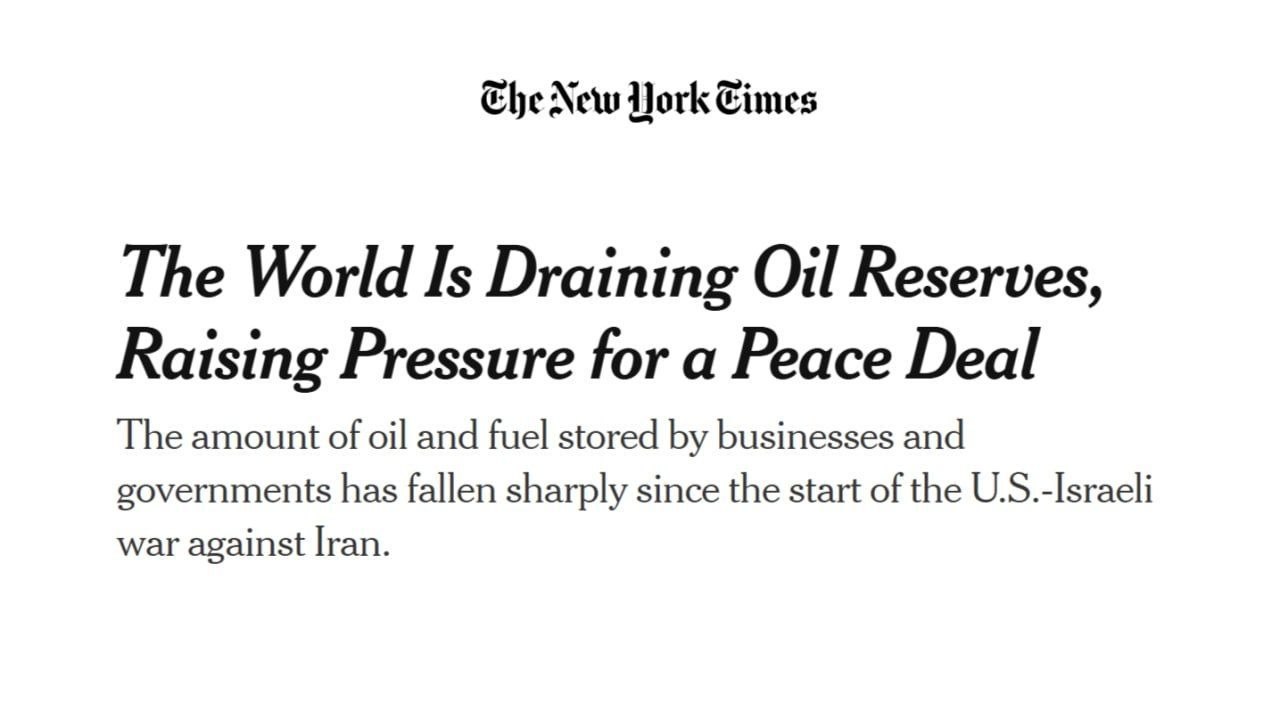
The aircraft were already airborne on the morning of 6 May 2026 when President Donald Trump posted a warning that left little room for diplomatic interpretation. If Iran did not reopen the Strait of Hormuz, the United States would begin bombing — at a level and intensity, Trump wrote, far exceeding any prior strikes. The message arrived alongside market indicators that were telling a parallel story: Polymarket, the decentralized prediction platform, placed the probability of Washington agreeing to let Tehran charge transit tolls at just 6 percent. The gap between those two data points — a public ultimatum and near-zero diplomatic flexibility — encapsulates a crisis that is less about naval geometry than about the durability of coercive leverage when the coercer faces mounting domestic cost.
The immediate trigger is familiar. Iranian forces have controlled access to the Strait of Hormuz since their navy began boarding and redirecting commercial vessels in early 2026, part of a broader escalation that followed the reimposition of sweeping US sanctions. The strait, through which roughly a fifth of the world's oil trade passes daily, is not merely a shipping lane. It is a pressure valve for global commodity markets, and when it narrows, prices reflect the squeeze. American drivers have watched gasoline pump prices climb for eleven consecutive weeks. Trumpeter support — the base that carried him through two elections — is showing fractures, according to polling cited by The Cradle Media on 6 May 2026, with over 60 percent of US citizens now agreeing that the war on Iran has done more harm than good.
An agreement in reach, then out of reach
The paradox at the heart of this crisis is that a deal appeared possible. Reporting from Axios and other outlets had identified the broad outlines of a negotiated ceasefire in the days before Trump's ultimatum. Iran would scale back its naval interdiction operations; the United States would ease, though not lift, the sanctions regime; and some formula for resumed oil flows would be constructed. The terms were contested — Iran wanted formal sanctions relief and guarantees against future secondary sanctions, while the Trump administration insisted on verifiably restored commercial transit — but negotiators on both sides acknowledged that a framework existed.
What changed was the politics of timing. Iran's negotiating position hardened after public expressions of domestic support for a posture that refused to concede tolling rights, which Tehran framed as sovereignty over its maritime approaches. The notion that Iran might charge fees for passage — effectively converting the strait into a toll road — was always a non-starter in Washington. The 6 percent Polymarket figure reflects the reality that no official in the administration was prepared to endorse such an arrangement publicly, even privately. When Iran declined to ratify the emerging terms, the bombers Trump had already positioned over the Gulf became the instrument of last resort.
The arithmetic of coercion
To understand what happens next, it helps to separate two questions that get conflated in most coverage: whether the United States has the military capacity to reopen the strait by force, and whether doing so serves American interests at any cost the domestic political audience will bear.
The first question has a straightforward answer. The US Fifth Fleet, operating from Bahrain, and carrier strike groups already deployed in the Arabian Sea have the assets to clear Iranian naval interdiction if ordered to do so. The strait is narrow — roughly 33 kilometers at its narrowest point — but those dimensions cut both ways: they make it defensible by Iran's anti-ship missile batteries, but they also concentrate shipping in a corridor where US airpower could, in theory, establish temporary dominance.
The second question is harder. Iran has invested heavily in anti-access/area-denial (A2AD) capabilities over two decades, precisely to complicate the calculus for an adversary considering force. The Islamic Revolutionary Guard Corps Navy operates a distributed network of fast attack craft, naval mines, and shore-launched missiles that would make a US offensive operation costly in ways that the public casualty figures may not fully capture. More critically, any military engagement that disrupts even temporarily the flow of oil through Hormuz would push Brent crude prices into territory that would add significant friction to an economy already absorbing the inflationary drag of tariffs. The political cost of that scenario — at the pump, in heating bills, in the broader goods supply chain — is the variable Trump cannot fully control.
Global South perspective: sovereignty as leverage
The framing that dominates Western coverage — Iran as the transgressor violating freedom of navigation — obscures a dimension that matters to a much larger slice of the world's population. From Tehran's standpoint, and from the standpoint of governments across Asia, Africa, and Latin America that have watched US economic statecraft operate for decades, the Hormuz question is inseparable from a larger argument about who controls the infrastructure of global trade and on whose terms.
The United States has, since the Nixon administration, maintained a security umbrella over the Gulf's shipping lanes that Washington presents as a global public good. The counter-argument, articulated regularly in capitals from Beijing to New Delhi to Brasília, is that this arrangement functions as a subsidy to American strategic overreach: it allows the US to impose sanctions with extraterritorial reach because it controls the payment rails and the sea lanes through which goods travel. When Iran, a sovereign state controlling one shore of an international strait, asserts the right to regulate passage, it is making a claim that international law treats as legitimate — and that claim becomes more attractive to others the more they chafe under a financial architecture they had no voice in designing.
The broader global South repositioning that analysts have tracked for years — the drift toward alternative payment systems, bilateral currency agreements, commodity pricing in non-dollar terms — finds its physical expression in moments like this one. If the strait dispute ends with Iran extracting any form of fee or revenue-sharing, it sets a precedent that other transit chokepoints will notice. Suez, the Malacca Strait, the Bab el-Mandeb: all are governed by norms that assume American preponderance. That presumption is what the current crisis is quietly testing.
Domestic pressure: the political floor beneath the ultimatum
The polling data cited by The Cradle Media on 6 May 2026 is the variable that domestic American coverage handles with notable restraint. Over 60 percent of US citizens, according to surveys cited in that reporting, now believe the war on Iran has done more harm than good. The number matters not because public opinion is dispositive — it rarely is, quickly, in foreign policy — but because it defines the political floor beneath which any administration must calibrate its military risk.
The fuel price effect is the mechanism through which Hormuz translates into electoral vulnerability. Americans do not consume news about the Strait of Hormuz abstractly. They consume it at the pump. Eleven weeks of consecutive price increases have moved the needle in the way that abstractions about geopolitics often fail to do. Trump's threat to bomb at higher intensity is simultaneously a message to Tehran and a message to a political base that is watching its pocketbooks, not the strait's nautical charts.
What remains genuinely uncertain — and what the sources do not resolve — is whether the administration's threat represents a genuine red line or a negotiating posture designed to extract maximum concession before a face-saving agreement. The Polymarket odds of 6 percent on tolling rights suggest the markets assign very low probability to a formal Iranian victory. But markets have mispriced political risk before, and the distance between what Washington signals publicly and what it will accept privately is exactly the kind of information that remains opaque until after the fact.
Stakes: who wins, who loses, over what horizon
If the strait remains closed — or is only partially restored under terms that satisfy neither side — the winners are straightforward in the short term: Iran preserves the leverage that a chokepoint provides; oil prices stay elevated, which benefits petrostates and produces fiscal stress for energy importers; and the global logistics system absorbs a risk premium that becomes structural rather than transitory. The United States, in this scenario, absorbs the political cost of failed coercion — the signal that threats do not reliably produce compliance — at a moment when the administration's broader tariff and trade posture depends on a reputation for unpredictability delivering results.
If the strait reopens under terms that include some form of Iranian revenue participation, the win for Tehran is larger and more durable. It establishes, in practice, a precedent that a non-aligned state controlling a critical waterway can extract value from its position without US veto. That precedent ripples outward across every government that has considered similar assertions of maritime sovereignty.
The worst outcome for global markets — a military exchange that closes the strait for an extended period — remains possible but has been assigned a probability that most analysts consider lower than the public posture suggests. Both sides have incentives to find an off-ramp. The question is whether the domestic political arithmetic on both sides can produce an agreement before the bombers get their orders.
Monexus framed this story around the Polymarket odds and the polling data from The Cradle Media — a pairing that most wire coverage has treated as secondary to the military posturing. The structural argument about chokepoint sovereignty and dollar architecture was present in the Global South wire but rarely made it into the primary narrative of Western outlets, where the framing defaulted to freedom-of-navigation orthodoxy. This piece attempts to hold both registers simultaneously.
Wire provenance
This editorial synthesis draws on the following public wire/social posts:
- https://t.me/thecradlemedia/14281
- https://t.me/thecradlemedia/14282
- https://t.me/WarMonitors/19847
- https://t.me/osintlive/29458
- https://t.me/operativnoZSU/15891