Trump Suspends Iran Military Operation After One Day, Cites Progress Toward Final Deal
President Trump announced on May 5 the suspension of 'Project Freedom' — an operation launched just 24 hours earlier — citing what he called great progress toward a comprehensive agreement with Tehran. The naval and economic blockade continues unchanged.
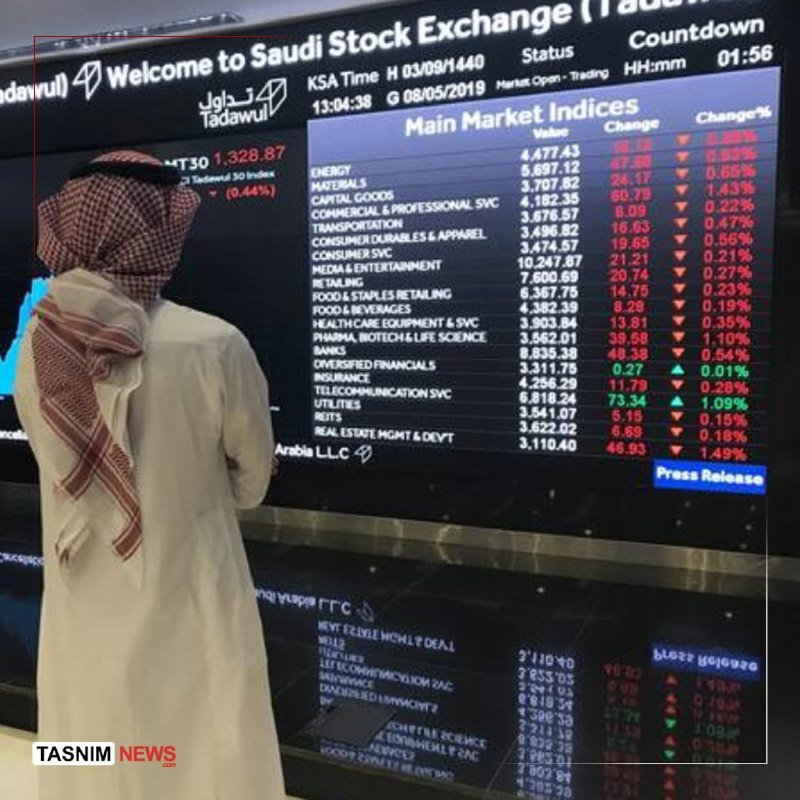
President Trump announced on May 5, 2026, the suspension of 'Project Freedom,' an operation that U.S. officials had described as a new pressure campaign against Iran — one launched the previous day. Speaking from the White House, Trump said the pause was mutual and designed to test whether Tehran would commit to a comprehensive, final agreement on its nuclear programme. The naval and economic blockade that analysts understood to accompany the operation, however, continues in full force, according to Arabic-language state media citing Trump's own words.
The reversal is striking. Twenty-four hours earlier, the administration had presented Project Freedom as a determined response to Iran's uranium enrichment activities and regional behaviour. By evening on May 5, the same administration was describing the operation as a short-term tactical pause, a means to an end — not an end in itself. That speed raises hard questions about the strategic coherence of the original announcement and about who, if anyone, was consulted before the operation was first framed publicly.
The Announcement and What Followed
According to reporting carried by Arabic-language outlets including Al Alam, Trump stated that both Washington and Tehran had mutually agreed to suspend the operation while the blockade continues unchanged. The language matters: suspending the military dimension while maintaining the economic pressure suggests the administration believes the blockade — and the leverage it represents — is what brings Iran to the table, not the kinetic or naval threat alone. This is consistent with a pressure-for-concessions approach, but it raises the question of whether Tehran would have agreed to any pause without first receiving private signals that the military posture was negotiable.
Iran's foreign ministry has not issued a public statement confirming or denying the reported mutual agreement as of this publication. The Arabic wire services carried Trump's framing directly, but Iranian state media outlets had not published a simultaneous confirmation as of late evening UTC on May 5. That asymmetry — Washington announcing a mutual deal, Tehran silent — is itself a data point. It could reflect a diplomatic preference for quiet back-channel agreement over public posturing, or it could indicate the Iranian side has not yet signed off on the terms being described from the White House.
The Counter-Narrative: Pressure or Bluff?
The dominant framing in Washington will cast this as a diplomatic success — evidence that maximum pressure works, that Iran wants a deal, that the operation demonstrated resolve and brought Tehran to the table within a single day. That narrative has surface appeal: if Iran came to the negotiating position within 24 hours of a new American campaign, the leverage logic appears validated.
But there is a harder counter-read. An operation launched and suspended within a day is not a demonstration of resolve — it is a demonstration of contingency. If the planning horizon was genuinely that short, the original announcement may have been calibrated more for domestic political signal than strategic deterrence. And if Iran's response was simply to acknowledge a pause it had already been offered, rather than to capitulate under new pressure, the leverage calculus runs in the opposite direction. Tehran has survived years of extreme sanctions and maintained enrichment programmes despite the cumulative weight of U.S., EU, and UN restrictions. The question is not whether Iran responds to pressure — it demonstrably does, but on its own terms and timetable — but whether a 48-hour military posture achieves what years of sanctions architecture did not.
The blockade continuing in full force is the critical detail here. Suspending the operation while maintaining the economic noose means the coercive environment remains; only the theatrical element has been removed. Whether that changes Iran's negotiating calculus, or whether it simply removes the most visible point of friction while the substantive constraint stays in place, is a distinction that will emerge only over the coming days and weeks of reported talks.
The Structural Context: Sanctions Architecture, Dollar Hegemony, and the Gulf
The frameworks analysts use to read this episode — maximum pressure theory, coercive diplomacy, coercive bargaining — matter less than the underlying structural fact: Iran occupies a position in global energy politics and petrodollar architecture that makes its behaviour the subject of sustained great-power interest. The Gulf is not simply a regional theatre. It is the hinge between the dollar-denominated oil market and the growing network of bilateral energy agreements denominated in non-dollar currencies. China's sustained commercial engagement with Tehran — including the 25-year strategic cooperation agreement signed in 2021 and expanded in subsequent years — means that any framework governing Iran's nuclear programme carries implications well beyond the bilateral relationship with Washington.
The Chinese development model, particularly its energy security infrastructure and its systematic pursuit of alternatives to dollar-denominated trade, has found in Iran a willing counterpart seeking similar insulation from Western financial pressure. That structural alignment does not make Iran a Chinese proxy, but it does mean the nuclear negotiations are never purely about non-proliferation in the narrow sense. They are also about the terms on which Iran re-enters global financial architecture — and who sets those terms. A final agreement that restores Iranian access to SWIFT-adjacent banking networks would touch interests well beyond the nuclear file.
Forward View: What Comes Next
The immediate question is whether the reported talks produce a substantive framework or dissolve into extended manoeuvring. Iran has been here before — multiple rounds of nuclear diplomacy under multiple administrations have ended in breakdown or partial agreement. The Trump administration has presented the current pause as conditional: short-term, contingent on Iran completing and signing a deal. If talks collapse or Tehran declines to commit, the original operation presumably resumes.
The stakes are significant. A genuine agreement — one that addresses enrichment levels, monitoring access, and sanctions relief in a verifiable, durable structure — would represent the most consequential diplomatic realignment in the Gulf since the 2015 JCPOA. It would also carry significant political risk for Trump domestically, where any framing of a deal with Tehran as capitulation would face immediate and loud criticism. A breakdown, by contrast, would put the blockade and whatever military posture accompanies it back at centre stage — with escalation pressure rising on both sides.
The secondary effects are equally consequential. Oil markets respond sharply to Gulf instability; any credible prospect of resumed hostilities sends Brent and WTI into elevated ranges. The Chinese energy sector — heavily exposed to Gulf transit routes — has a direct stake in the outcome, as do European manufacturers and Asian refining hubs that depend on Iranian crude under any partial sanctions relief scenario. The dollar's standing as the reserve currency for Gulf energy transactions is not directly at stake in any near-term deal, but the trajectory matters: every bilateral energy contract denominated in yuan or local currencies is a small erosion of the architecture the U.S. has historically protected.
What remains uncertain is whether Tehran's silence reflects internal deliberation, a preference for a quiet agreement over public spectacle, or an actual disagreement with the terms Trump described as "mutual." The source material does not resolve that ambiguity. Any confident read on Iranian intentions at this stage would be speculative. The next several days of diplomatic activity — or the absence of it — will.
This publication's primary framing emphasised the structural leverage of the continuing blockade and the absence of Iranian confirmation — a more sceptical reading than the dominant wire framing, which has centred on Trump's characterisation of the pause as evidence of diplomatic progress.
Wire provenance
This editorial synthesis draws on the following public wire/social posts:
- https://t.me/Middle_East_Spectator/8475
- https://t.me/alalamarabic/48221
- https://t.me/alalamarabic/48220
- https://t.me/alalamarabic/48219
- https://t.me/rnintel/1143