Trump Suspends Project Freedom — Strait of Hormuz Blockade Partially Paused
The White House announced a temporary suspension of Operation Project Freedom on 5 May 2026, following diplomatic pressure from Pakistan and unnamed regional partners — but left the core blockade of the Strait of Hormuz fully intact.
President Donald Trump announced late on 5 May 2026 that the United States would temporarily suspend Operation Project Freedom — a naval initiative reportedly aimed at forcibly clearing Iranian-linked vessels from the Strait of Hormuz. The blockade itself, which has choked a critical global oil transit corridor since late April, remains in full force, administration officials confirmed.
The announcement followed what the White House described as diplomatic outreach from Pakistan and "other countries" whose governments had lobbied Washington to de-escalate the standoff. A formal statement released by the Presidential communications office cited requests from "multiple allies and partners" as the proximate trigger for the pause, though the administration did not publicly name the specific governments beyond Pakistan.
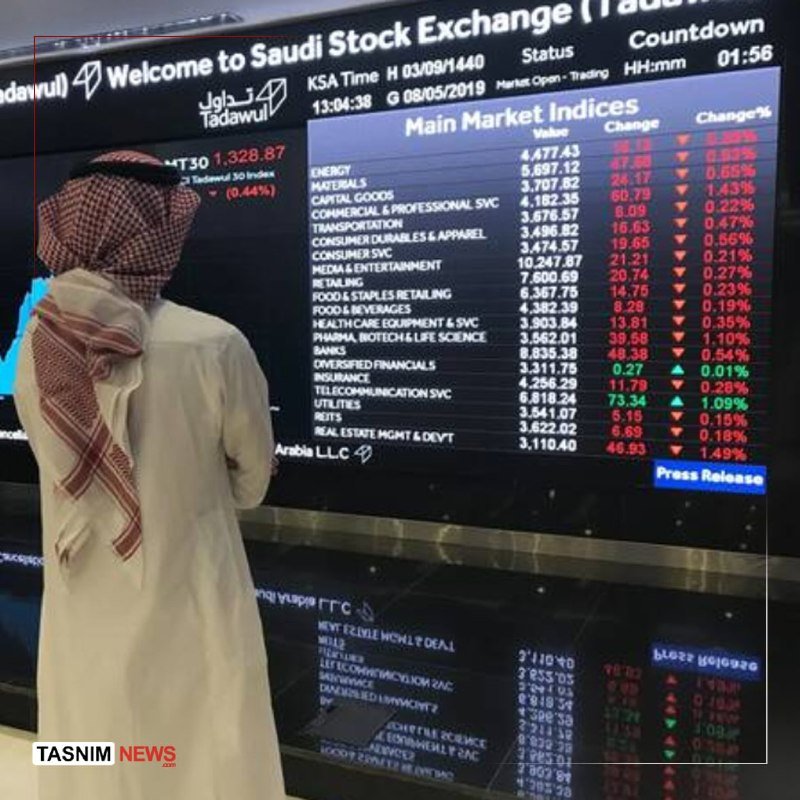
The Strait of Hormuz is among the world's most strategically sensitive maritime passages. Roughly 20 percent of global oil supply transits the 21-mile-wide channel between Oman and Iran, making any disruption to traffic a first-order concern for energy markets from Singapore to Rotterdam. The blockade, imposed without an explicit congressional authorization or UN Security Council mandate, had sent benchmark Brent crude prices spiking by a reported 12 percent in the preceding week, according to data compiled by market analysts tracking the incident.
A Tactical Pause, Not a Withdrawal
What the administration styled as a "suspension" is better understood as a recalibration. Trump stated plainly that the blockade "remains in full force" even as the freedom-of-navigation operation that triggered the initial confrontation was placed on hold. Translation: the coercive architecture stays in place; the kinetic enforcement has been dialled back pending further diplomatic contact.
The distinction matters. A full withdrawal of the US naval presence from the strait would signal a capitulation to Iranian and regional pressure. A temporary suspension, by contrast, preserves leverage — it keeps the blockade in being while giving diplomatic space to states that have the most to lose from a prolonged disruption. Pakistan, whose eastern refineries depend on crude shipments routed through the Persian Gulf, has obvious incentive to push for de-escalation. It is not yet clear whether other governments that lobbied for the pause have made any reciprocal commitments to press Iran toward direct negotiations.
Iranian state media had no immediate formal response to the suspension announcement as of 06:00 UTC on 6 May, according to initial reports from regional wire services. Tehran has consistently characterised the blockade as an illegal act of economic warfare and has called on the International Maritime Organization to convene an emergency session. The regime's next move — whether it uses the pause to signal willingness to talks or to reposition assets in the Gulf — will test the hypothesis that the White House suspension was a genuine de-escalation signal rather than a political gesture designed to quiet domestic critics.
What Pakistan's Request Reveals
Pakistan's role in precipitating this moment deserves attention. Islamabad has long navigated a careful line between its security partnership with Washington and its profound economic dependence on Gulf oil transit. A prolonged Hormuz blockade does not merely raise energy prices — it threatens the viability of Pakistani refinery supply chains that have no viable alternative routing in the near term. That calculus explains why Pakistani officials reportedly lobbied not through back-channels but through direct diplomatic communication with the White House.
The question is whether Pakistan's engagement reflects a broader regional coalition forming behind scenes, or whether Islamabad acted as a lone intermediary hoping to defuse a crisis that threatened its own energy security first. The administration has not confirmed whether the other countries referenced in its statement are Gulf states, South Asian partners, or European allies. That ambiguity is itself informative: a coordinated effort would typically be named; an improvised response from a single concerned party is more often described in the vague language Washington used.
The Structural Context: Oil Markets and the Dollar Frontier
Whatever the immediate diplomatic mechanics, this episode belongs in a longer pattern. The Strait of Hormuz has been a friction point in US-Iranian relations for decades, but the scale and declared purpose of the current blockade marks a qualitative escalation. The White House has framed the operation explicitly in terms of "maximum pressure" — the same doctrine that underwrote the unilateral withdrawal from the JCPOA nuclear agreement in 2018. That policy architecture has consistently aimed not merely at constraining Iranian nuclear advancement but at strangling the revenue streams that fund the Islamic Republic's regional behaviour.
The problem, as energy economists and regional analysts have noted, is that tight squeezes on Iranian oil exports have historically pushed other Gulf producers to pick up the slack — and have done so in ways that entrench the dollar-denominated petrodollar system that Washington depends on for global currency hegemony. The blockade, if sustained, does not merely punish Iran; it reinforces the structural logic that makes Gulf Arab production the price-setter for global oil markets, denominated in dollars, cleared through US financial infrastructure. Whether or not that outcome was designed into the policy, it is the structural effect — and it explains why Gulf states that are technically aligned with the US have not been enthusiastic cheerleaders for the operation.
What Remains Uncertain
The sources reviewed for this article do not specify the precise naval assets involved in the blockade, the rules of engagement the administration has authorized for the enforcement operation, or the timeline the White House envisions for resuming Project Freedom if the diplomatic pause produces no results. The Iranian government's response — whether conveyed through official state media or through back-channel communication — has not been independently confirmed as of publication. Market reaction during Asian trading hours on 6 May has been muted so far, according to early data, but oil markets are likely to remain volatile until the strait's operational status is clarified.
The deeper uncertainty is whether the pause signals an eventual negotiated settlement or merely a tactical intermission in a pressure campaign designed to continue. The administration has given no public indication that it is prepared to offer sanctions relief in exchange for Iranian concessions, which has historically been the currency of previous nuclear negotiations. Without that dimension, the suspension looks less like a road toward dialogue and more like a pressure tactic wearing diplomatic clothing.
Wire provenance
This editorial synthesis draws on the following public wire/social posts:
- https://x.com/sprinterpress/status/1930845123474563201
- https://t.me/abualiexpress/19442
- https://t.me/CorriereDellaSera/8921