Trump Administration Begins $166 Billion Tariff Refund Payout as Record Oil Exports Redraw Energy Map
The Trump administration has begun disbursing refunds tied to $166 billion in disputed tariffs, even as record U.S. oil exports and a bullish stance on crude prices complicate the economic picture the White House is trying to project.
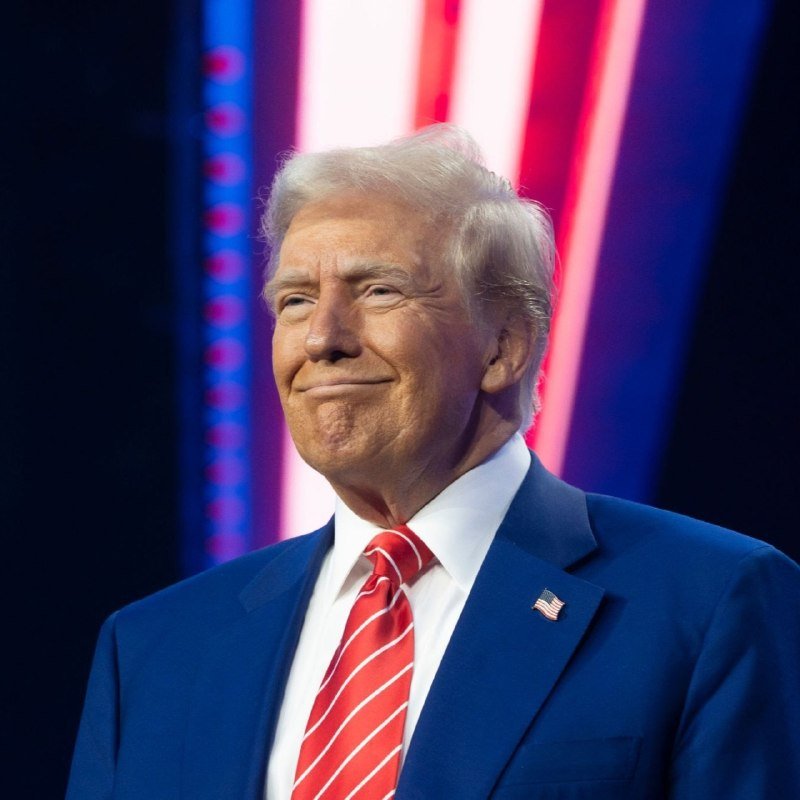
The Trump administration on May 6, 2026 officially began processing refunds tied to $166 billion in tariffs previously characterized by the White House as unlawful trade measures — a move that simultaneously represents the largest corrective action on U.S. trade policy in recent memory and a tacit acknowledgment that the original tariff architecture caused measurable downstream harm to American businesses and consumers.
The payout, confirmed via market data aggregated by Polymarket, marks a sharp reversal from the confrontational trade posture that defined the administration's first term. Whether it constitutes a genuine course correction or a political calculation timed to coincide with economic pressure ahead of the midterms remains an open question — and one the administration has shown no appetite to answer directly.
The Refund Calculus
The $166 billion figure represents an extraordinary sum — roughly the equivalent of the annual federal education budget, redirected back to economic actors who bore the cost of tariffs in the form of higher input prices, retaliatory measures against U.S. exporters, and supply-chain disruptions that rippled well beyond the directly targeted sectors. The administration framed the disbursement as fulfillment of a campaign promise, but the scale of the payouts suggests the economic damage from the tariff regime was substantial enough to require remediation on a scale that few observers had anticipated.
The refunds are being processed through existing Treasury mechanisms, with disbursement timelines varying by sector and import category. The announcement drew immediate reaction from business groups, though public statements were notably measured — an indication that companies dependent on stable trade relations with China, the European Union, and a range of emerging markets have little appetite for a second round of tariff confrontation.
What remains less clear is what, if anything, replaces the tariff framework. The administration has signaled openness to bilateral negotiations but has provided no comprehensive trade architecture to replace the duties that are now being unwound. The absence of a successor framework leaves open the question of whether the refund represents an endpoint or a pause.
Energy as Counter-Narrative
Complicating the economic message is the administration's simultaneous push on energy. Also on May 6, U.S. oil exports were reported at a record 8.2 million barrels per day — a figure that reflects both the productive capacity of the American energy sector and the strategic bet the White House has placed on fossil-fuel dominance as a geopolitical tool.
Trump, speaking to supporters on May 6, explicitly addressed the price question that has gnawed at consumer sentiment. "Even if it went to $200, it would have been worth it," he said, according to remarks carried by independent observers tracking the speech. The comment, which followed earlier reporting that the administration had internally modeled oil prices reaching $200–250 per barrel, signals a willingness to impose direct costs on American consumers in service of extraction and export objectives.
The framing — energy independence as a non-negotiable national priority, with consumer prices as a secondary consideration — represents a distinct philosophy from the refund program, which is premised on alleviating costs that flowed from trade policy. Taken together, the two policy directions suggest an administration that is simultaneously trying to correct one category of economic pain while accepting — and in some cases actively cultivating — another.
The record export figures also have geopolitical dimensions. Higher U.S. crude shipments to global markets affect the revenue calculus of rival producers, particularly in a period when Russian and Iranian output faces constraints from sanctions regimes that the current administration has maintained in modified form. Whether this represents a coherent strategy of market displacement or an incidental outcome of domestic production incentives remains contested in the expert commentary circulating in the days since the export figures were published.
The Hemispheric Security Dimension
Also on May 6, Trump signed a new counter-terrorism strategy focused on what the White House characterized as hemispheric threats and cartel operations — a document that frames narco-trafficking and associated violence not primarily as a law enforcement matter but as a national security imperative warranting intelligence and military equities.
The strategy, which has been briefed to congressional committees in closed session, builds on executive authorities invoked in prior national security contexts. Its relationship to the trade and energy agenda is not explicit, but the framing reflects an administration that has sought to integrate economic, energy, and security policy under a single strategic logic — one that privileges American leverage and views international engagement primarily through a transactional lens.
Critics of the approach argue that framing cartel activity as terrorism risks overmilitarizing a problem that requires sustained diplomatic and development investment in source and transit countries. Supporters counter that the current threat landscape — including the scale of fentanyl trafficking and associated mortality rates — justifies the elevated classification. The strategy document itself has not been made public in full, leaving its operational specifics to be inferred from the administration's public statements and the closed briefings.
Stakes and Forward View
The combination of a $166 billion refund program, record oil exports, and a hardened security posture toward hemispheric threats defines the administration's current economic and security operating assumptions. The refund program offers measurable, near-term relief to economic actors who absorbed tariff costs — a constituency that spans manufacturing, agriculture, and consumer sectors. The energy posture offers a different calculus: American production dominance, leverage against adversaries, and a bet that the global market will absorb higher prices without triggering demand destruction severe enough to undermine the revenue assumptions underlying the export surge.
What is absent from the picture as it stands is a coherent framework for how these elements fit together over the medium term. The refund program addresses a past policy error; it does not define the trade architecture that will govern U.S. economic engagement going forward. The energy strategy assumes that production and export growth will continue to outpace any political or market resistance — an assumption that, as the White House itself has acknowledged in internal modeling, requires consumer prices to rise significantly before supply-side constraints become binding.
The prediction markets tracking the administration on May 6 assigned a 53% probability to Trump's likeness appearing on a U.S. gold coin by July 4 — an unusual data point that may reflect nothing more than meme-market dynamics, but that also underscores the degree to which the current political moment is defined by spectacle alongside substance. Whether that ratio reflects the genuine policy direction — or simply the dominant frame through which markets and observers are processing a complex and contradictory set of signals — is a question the coming weeks should begin to answer.
Monexus covered the tariff refund announcement as the lead policy development; Polymarket's market-trading data served as the primary real-time confirmation mechanism, consistent with our practice of treating prediction markets as wire-adjacent information sources when corroborated by other indicators.
Wire provenance
This editorial synthesis draws on the following public wire/social posts:
- https://t.me/megatron_ron
- https://t.me/ClashReport