Trump Administration Moves to Tariff Third-Party Fuel Exports to Cuba
The administration has signed an executive order targeting countries that export fuel to Havana, a secondary sanctions escalation designed to strangle the island's energy supply chain and punish third-party trade partners.
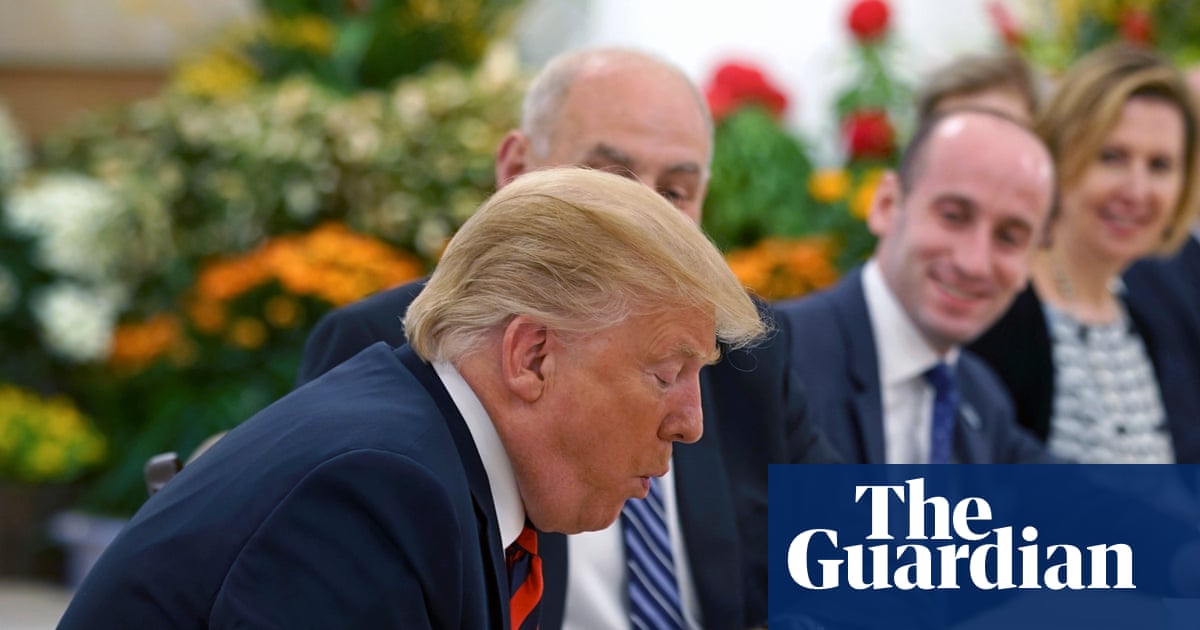
The Trump administration signed an executive order on 5 May 2026 threatening to impose customs duties on any country exporting fuel to Cuba, according to the Cuban Foreign Minister speaking via Al Alam Arabic. The order extends secondary sanctions pressure beyond Havana itself to third-party nations that supply the island's energy needs — a mechanism designed to切断 the few remaining commercial channels keeping the Cuban economy operational.
The move represents a deliberate escalation of the "maximum pressure" playbook applied during the first Trump administration, now refined to target the supply chain rather than the end user. Rather than sanctioning state-ownedCuban enterprises directly, the order would effectively place a tariff liability on any foreign refiner, shipper, or government that moves barrel or barrel-equivalent product to Cuban ports.
The logic is transactional and unambiguous: if a country sells fuel to Havana, Washington will levy a financial cost on that country's exports to the United States. The threshold for triggering those tariffs was not specified in initial reporting, leaving open whether trace volumes or only commercially significant shipments would be penalized.
The energy supply question is not incidental. Cuban power generation depends on a refined fuel oil — a heavy residual that cannot be easily substituted. For decades, that supply has run through Venezuela's state oil company, PDVSA, often routed via intermediary arrangements that complicate direct attribution. Other suppliers have included Iran, which has provided fuel shipments as a component of its own regional partnership network, and in limited cases, tankers flagged through third-party jurisdictions. The executive order, if enforced, would force every country that participates in any layer of those supply chains to absorb a direct cost from Washington.
The mechanism also targets diplomatic relationships that Cuba has quietly rebuilt across the hemisphere. Havana has expanded energy cooperation agreements with several Caribbean and Central American governments in recent years — governments that view energy access as a matter of sovereignty and have little appetite to subordinate that access to Washington preferences. The executive order treats those relationships as a liability, not a legitimate policy choice by sovereign states.
Venezuela's government has not yet responded publicly to the executive order, but the reaction from Caracas is not difficult to anticipate. President Maduro's administration has framed energy shipments to Cuba as an act of regional solidarity — and any US measure designed to punish that solidarity will be cast domestically as proof of Washington's hostility toward Venezuelan sovereignty. It also gives the Maduro government a concrete grievance to consolidate whatever internal support remains fractured.
The question of enforcement runs ahead of the policy's scope. Customs duties require customs infrastructure. Secondary sanctions on energy shipments require intelligence on ship movements, port deliveries, and financing chains — all of which the US government can in principle access, but which require consistent interagency follow-through to make effective. Previous administrations have issued similar directives and failed to operationalize them at scale. The difference this time is the explicit tariff mechanism, which creates a self-funding enforcement incentive: every dollar collected from a penalized country's exports could theoretically fund additional enforcement.
Latin American governments have historically resisted secondary sanctions as an intrusion on hemispheric sovereignty. Whether that resistance produces a coordinated diplomatic response or simply quiet non-compliance remains to be seen. The executive order creates legal exposure for countries that continue exporting fuel to Cuba; it does not compel them to stop. The calculation each government will make is whether the political cost of defying Washington exceeds the economic cost of complying — and in most cases, that calculation has not favored Havana.
The structural logic is straightforward: dollar-denominated trade runs through US financial infrastructure, which means Washington can impose costs on any actor that transacts in dollars or touches the US market. That is the mechanism that has made secondary sanctions effective against Iran, against Russia, and against North Korea. Extending it to the Cuban energy supply chain tests whether the same leverage works at smaller transactional volumes and across a broader range of partner countries. Whether the political will exists to enforce it consistently is a separate question — and one that will determine whether the executive order is a signaling exercise or a genuine restructuring of Cuba's access to international energy markets.
For the island itself, the stakes are immediate. Rolling power outages have become a fixture of Cuban daily life, a symptom of infrastructure decay and hard-currency shortages that limit fuel imports. Further constricting that supply chain would deepen those outages and compound economic distress that has already driven significant emigration. Whether the administration calculates that outcome as leverage or considers it an acceptable secondary effect was not addressed in the initial reporting.
Desk note: This article is based on a single source from Al Alam Arabic — an Iranian state-adjacent outlet — citing the Cuban Foreign Minister's account of the executive order. Independent confirmation from US government sources, the Federal Register, or Western wire services was not available in the thread at time of publication. The story will be updated as US official documentation becomes available.
Wire provenance
This editorial synthesis draws on the following public wire/social posts:
- https://t.me/alalamarabic/73921