The Membership Mirage: How NATO Arms and EU Timelines Expose the Gap Between Ukraine's Aspirations and Its Actual Trajectory
As Washington clears $374 million in precision bomb kits for Kyiv while Brussels quietly maps out another decade of accession work, the gap between the political rhetoric of Ukraine's European future and its military-economic present has never been wider — or more consequential.
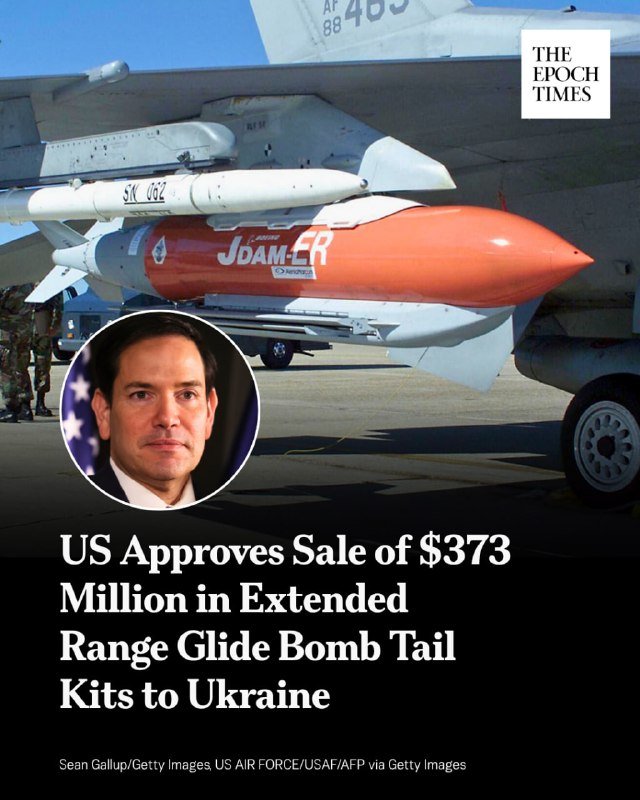
There is a particular kind of political theatre that surrounds Ukraine's relationship with the Western institutions it aspires to join. On one channel, the United States government clears $374 million in GPS-guided bomb kits for Kyiv — precision munitions that will keep Ukrainian forces fighting for another season. On another, EU insiders tell the Financial Times that Ukraine's formal membership is at minimum a decade and a half away. Both things are true simultaneously, and neither contradicts the other. That is precisely the problem.
The approval of the Joint Direct Attack Kit sale, announced via Polymarket and confirmed through standard US defense export channels, represents the continuation of a well-established pattern: Washington sustains Ukraine's fighting capacity without fully answering the harder question of what comes after. The bombs are real. The support is consequential. But it operates in a different register entirely from the EU accession framework that Kyiv's government has built its diplomatic identity around.
This divergence between the military-technical relationship and the political-institutional one has become the defining feature of Western engagement with Ukraine since 2022. The gap is not accidental. It reflects a structural choice by Washington and Brussels alike to keep Ukraine close without fully incorporating it — a posture that serves Western interests in maintaining influence over Kyiv while avoiding the harder obligations that full membership would entail.
The FT's reporting on EU insider skepticism is instructive here. When officials within the bloc itself are describing a ten-to-fifteen-year horizon before Ukraine can meet the Copenhagen criteria, they are not merely cataloguing technical deficiencies in judicial reform, corruption governance, or agricultural policy alignment. They are flagging a political reality that the accession framework has struggled to acknowledge: the EU's enlargement capacity is itself constrained by internal fatigue, institutional resistance in member states, and the absence of a compelling momentum argument from Kyiv's Western backers. The accession process is not stalled because Ukraine has failed to reform. It is stalled because the EU has failed to decide whether it wants to be an institution that expands or an institution that consolidates.
The bomb-kit sale complicates this picture in ways that deserve more attention than they typically receive. Precision-guided munitions are not simply defensive weapons. They are instruments of escalation management — they allow a recipient to strike with greater accuracy and lower collateral risk, which in turn reduces the political cost of authorizing the transfer. The $374 million authorization is calibrated to keep Ukraine in the fight without crossing thresholds that would force Western governments to publicly account for their escalation logic. This is stabilization, not strategy. And it is the strategic vacuum around stabilization that makes the EU timeline problem so acute.
Consider what a genuine EU accession timeline of fifteen years actually means. It means that the next generation of Ukrainian political leaders will negotiate their country's membership while managing an ongoing conflict with Russia, while absorbing demographic losses that cannot be easily quantified, and while functioning within an institutional framework that the EU itself may not recognize as stable by the mid-2040s. The Copenhagen criteria were designed for aspirant states in peacetime, not for societies conducting a defensive war while attempting to align their legal architecture with a bloc that has itself undergone significant transformation since the last large-scale enlargement. The criteria are not wrong — they are simply insufficient to describe what is actually being asked of Ukraine.
The counterargument, which Western officials make with some consistency, is that the accession process itself is the point. That working through the criteria — even slowly, even imperfectly — disciplines Ukrainian governance in ways that will matter regardless of whether formal membership arrives on schedule. This is not an unreasonable position. The EU's conditionality framework has driven genuine reforms in previous candidate states, and there is evidence that Ukrainian civil society is using the accession framework as leverage against its own government. But this argument treats the timeline as a technical matter rather than a political one, and the political dimension is what is actually doing the work.
Member states that oppose rapid Ukrainian accession — Hungary and Slovakia most visibly, but with quiet sympathy in several others — are not raising concerns about judicial reform benchmarks. They are responding to domestic political pressures, to energy supply anxieties, and to a broader fatigue with the idea that enlargement is the answer to every security problem on the continent. The Commission's annual progress reports can describe Ukraine's reform trajectory accurately and still find that the political will to act on that trajectory does not exist. That is not a failure of Ukrainian reform. It is a failure of EU political architecture.
What makes the current moment distinctive is that both halves of the Western engagement — the military and the institutional — are operating under conditions of sustained uncertainty. The US authorization of precision bomb kits is not a sign of escalating commitment; it is a sign of managed continuation. And the EU's fifteen-year timeline is not a sign of institutional confidence; it is a sign of political hedging. Neither side wants to be the one that closes the door on Ukraine, but neither side wants to pay the price of keeping it open either. The result is a posture that provides enough support to keep Ukraine functioning and enough ambiguity to avoid the harder choices that full membership would require.
The stakes of this posture are not abstract. A Ukraine that is neither fully integrated into Western security architecture nor fully admitted to Western economic architecture is a Ukraine that remains structurally dependent on annual authorizations from Washington and biennial summits from Brussels. That dependency shapes Ukrainian foreign policy in ways that Kyiv's leaders may not always be able to acknowledge publicly but understand perfectly well. The bomb kits and the accession timeline are not separate tracks — they are the same message, delivered in different registers: stay close, but do not expect to arrive.
What would change this dynamic is harder to specify. A decisive military victory that forced a negotiated settlement on terms favorable to Kyiv would shift the calculus, though the sources do not indicate any such outcome is imminent. A political crisis within the EU that forced member states to choose between deepening integration and expanding membership might clarify the institutional direction. Alternatively, a sustained shift in US defense policy — away from the incremental authorization model toward a clearer strategic commitment — could provide the momentum that the accession framework currently lacks. None of these is visible in the current trajectory.
What is visible is a gap. The gap between what Western governments say about Ukraine's European future and what they do to prepare for it has not closed in the three years since the full-scale invasion began. It has, if anything, widened — as the military authorization gets more sophisticated and the accession timeline gets more distant. That gap is not evidence of bad faith. It is evidence of an institution and a government that have chosen to manage a problem rather than solve one. For a country at war, management is not nothing. But it is also not the same as membership.
—
This publication compared its framing against the Financial Times's insider-sourced account of EU accession skepticism and the US defense export authorization as reported through the Polymarket market signals. The wire framing centered on the technical timeline; this piece argues the timeline is itself a political artifact, not a technical constraint.
Wire provenance
This editorial synthesis draws on the following public wire/social posts:
- https://x.com/polymarket/status/2051943523453120513
- https://x.com/boweschay/status/2051730639771066376
- https://x.com/ekonomat_pl/status/2051725095198969861