US turns to Beijing as Hormuz blockade tightens global energy markets
The State Department has formally asked China to use its sway over Tehran to reopen the Strait of Hormuz, as energy markets absorb the compounding effects of the blockade ahead of a high-stakes Trump-Xi meeting in the coming days.
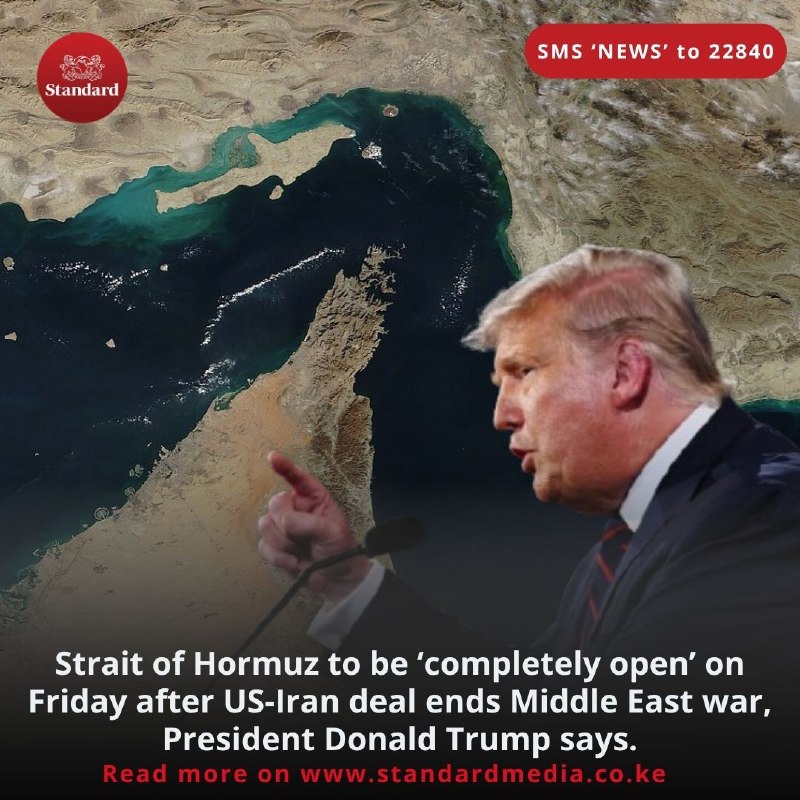
The United States has formally asked China to help reopen the Strait of Hormuz, setting up a direct test of Beijing's leverage over Tehran at a moment when energy markets are already absorbing the compounded shock of the blockade and Washington's own tariff regime.
Secretary of State Marco Rubio told reporters on 5 May 2026 that the US had urged China to use its influence with Iran to ease the waterway's restriction. The appeal comes days ahead of a planned meeting between President Trump and Chinese leader Xi Jinping, a conversation that observers now expect will place the Hormuz crisis at the centre of the agenda alongside tariff disputes and Taiwan, according to Polymarket market signals and reporting cited across financial wires.
"We are asking them to use that relationship," Rubio said of Beijing's channels with Tehran, per coverage by The Indian Express on 6 May 2026. The US is asking Beijing to lean on the Iranian government directly, using economic and diplomatic connections that Washington itself lacks.
A partnership tested by mutual pain
The blockade is not a comfortable arrangement for China either, even if Western framing sometimes treats Beijing as Iran's无条件 ally.
China is the largest buyer of Iranian crude, purchasing roughly 90 percent of Tehran's oil exports, according to industry tracking cited across energy desk reporting. A sustained Hormuz restriction keeps global oil prices elevated — an outcome that directly conflicts with Beijing's need to keep manufacturing costs manageable as it absorbs the compound effect of US tariffs on Chinese goods. Chinese energy importers and petrochemical firms have reported elevated spot-contract costs for light crude since the blockade began, with Saudi Arabia unable to fully substitute Iranian volumes through the OPEC+ mechanism.
The Chinese government's public posture, as reported by Global Times and Xinhua, has been to call for "dialogue and restraint" — language that stops well short of endorsing the blockade but equally falls short of any public pressure on Tehran to open the waterway. That deliberate ambiguity is itself a diplomatic position. Beijing is not being dragged into the Hormuz crisis against its interests; it is managing a situation in which both the blockade and its resolution carry strategic upsides, depending on what concessions the Trump administration offers at the Xi table.
Energy markets at a pressure point
The blockade's effect on oil markets is compounding with existing tariff-related volatility rather than displacing it.
Brent crude climbed sharply following the Hormuz restriction and has held above $76 per barrel in the weeks since, trading in a range that reflects both the physical supply risk and the broader uncertainty introduced by US tariff policy on energy-intensive trade flows, per Bloomberg energy reporting. US retail gasoline prices rose to a national average of $3.72 per gallon by late April 2026, according to AAA data cited in financial wire reporting — a figure that incorporates the logistics disruption of the strait's restriction alongside the tariff-driven freight cost increases that have pressured fuel distribution across the domestic supply chain.
Trump, when asked about pump prices during an Oval Office appearance on 5 May 2026, described the fuel cost increase as a "small price to pay" for strategic pressure on Iran. The comment landed as Polymarket odds showed a 25 percent probability that the blockade would be formally lifted before the end of May 2026 — a market signal suggesting most traders do not anticipate a rapid resolution. A concurrent market view gave just a 2 percent probability of a Chinese blockade of Taiwan materialising by end of June 2026, a separate scenario that some analysts had speculated could become linked to Hormuz concessions in a grand-bargain framework — a connection that, at present, the odds suggest markets treat as unlikely.
The energy market picture is not uniform across consumers. East Coast US refineries are running at reduced utilisation because of seasonal maintenance cycles, which limits the domestic gasoline supply response to any price signal. If the blockade persists into the early summer driving window, retail prices in parts of the country could approach levels that create political friction — particularly in states where fuel price sensitivity maps onto competitive Senate races, a dynamic the White House has not been indifferent to in prior energy-shock cycles.
Separately, the SEC's formal proposal on 5 May 2026 to allow semiannual corporate reporting in place of quarterly filings — a change Trump publicly supported — introduces a secondary energy-sector dynamic. Oil majors navigating price uncertainty and geopolitical risk will have more room to manage earnings communication under the proposed 10-S form. Whether that flexibility benefits investors or smooths over genuine volatility is a question the comment period on the rule change will test.
What Beijing can actually deliver
The Hormuz blockade is not primarily an energy problem — it is a corridor politics problem. Oil flows through the strait at roughly 21 million barrels per day; the physical constraint is real, but the resolution mechanism is diplomatic, not logistical.
China's actual leverage over Tehran operates through several channels that are less visible than a naval presence. Chinese state banks process the majority of Iranian oil settlement payments under the partial sanctions architecture that has constrained Western financial access since 2018. Chinese shipping insurers and vessel operators cover a substantial portion of the tanker fleet moving Iranian crude — a fleet that has become more important to global supply since OPEC+ cuts reduced Saudi and UAE spare capacity. Beijing's pressure on Tehran through these channels could create humanitarian corridor space for LNG carriers and food-product vessels without formally lifting the blockade — an outcome that would reduce the acute price spike without offering Trump a clean political win.
That scenario is plausible precisely because it serves both Beijing's interest in keeping energy costs contained and Tehran's interest in demonstrating it can extract concessions through sustained pressure rather than capitulation. Whether Trump accepts an incomplete resolution or holds out for a full Hormuz reopening as a condition of tariff relief for Chinese goods is the unresolved question heading into the Xi meeting.
Stakes beyond the strait
The Hormuz situation is one of several pressure points converging on the Xi meeting. Taiwan, semiconductor access, tariff escalation, and now energy corridor security are all on the agenda — and the sequencing of concessions on each will define the meeting's outcome.
For Iran, the blockade is a high-cost signal that only works if it ends in something. Sustained pressure without resolution has historically eroded the domestic political credibility of hardline posturing in Tehran. For the US, the \u201csmall price\u201d framing carries political risk if gasoline prices move above $4 per gallon nationally as peak driving season opens. For China, the Hormuz crisis is, unexpectedly, a source of leverage — Beijing enters the Xi meeting with something Washington needs, which shifts the terms of the tariff conversation in ways that are not yet priced into the market odds.
The SEC's reporting reform, the tariff regime, and the Hormuz blockade are operating in the same news cycle but not in isolation from each other. How they interact in the final accounting of the Trump-Xi talks will determine whether global energy markets face a managed resolution or a summer of compounding shocks. The sources do not yet agree on which outcome Beijing prefers — only that Beijing is, for now, the centre of gravity this negotiation cannot avoid.
Wire provenance
This editorial synthesis draws on the following public wire/social posts:
- https://t.me/IndianExpress/284582