The USMNT's Goalkeeper Problem and the Host-City Hangover
Six months out from co-hosting the first men's World Cup on North American soil, the United States men's national team faces a goalkeeping crisis while hoteliers in host cities report tournament demand far below expectations — raising uncomfortable questions about how the world's most-watched sporting event will play out in America.
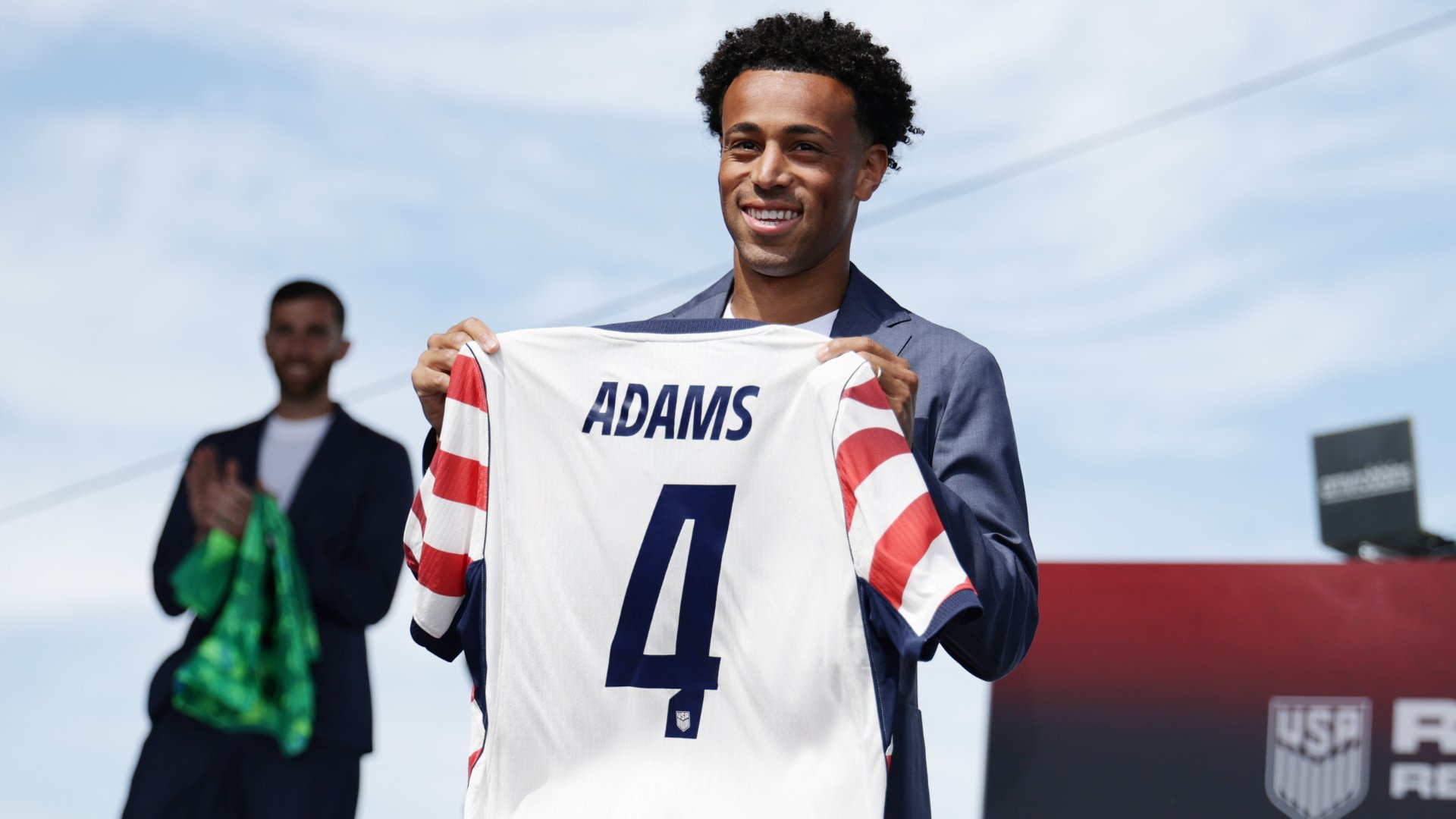
For much of the past decade, the United States men's national team could count on one thing: goalkeeping. From the Tim Howard heroics of the 2014 Brazil run to the steady hands of Zack Steffen and Matt Turner in the years that followed, the position offered a rare, reliable constant in an American side still learning to compete at the elite level. That foundation, by most assessments entering 2026, is no longer solid.
ESPN reported on 6 May 2026 that goalkeeper has become a position of weakness for the USMNT — a striking reversal for a national team that entered the 2022 World Cup with what coaches and analysts regarded as a genuine area of strength. The concern is not merely about individual errors or form slumps. It is structural: the pool of elite American goalkeepers has narrowed precisely as the tournament that demands the most arrives.
The hotel booking data, published the same day by the American Hotel & Lodging Association and cited by Unusual Whales, tells a separate but related story. Eighty percent of hoteliers across the eleven American World Cup host cities report that bookings are tracking below original forecasts. Some are using a word the industry rarely applies to a World Cup: non-event.
Two data points, one morning. Neither is flattering. Together, they sketch an opening frame for what the 2026 World Cup might actually mean in the United States — a country that has invested heavily in hosting the planet's biggest sporting event but may be receiving the tournament at a moment of both sporting vulnerability and commercial ambivalence.
A Position Unmoored
The USMNT's goalkeeper depth was once a quiet competitive advantage. Howard anchored the 2014 team to the round of 16. Steffen was a regular Premier League starter at Manchester City. Turner held down the Arsenal net before a transfer to Nottingham Forest. The pipeline appeared healthy.
By the spring of 2026, that pipeline has frayed. ESPN's reporting indicates that the position has become a liability rather than an asset heading into the group stage draw — a shift that will concentrate pressure on a coaching staff already navigating questions about squad construction, tactical identity, and the expectations of a home-coached World Cup.
The specific names in the pool matter less for this analysis than the trajectory. A national team does not rebuild its goalkeeper culture in six months. If the assessment ESPN published on 6 May is accurate, the USMNT enters the 2026 tournament with one fewer structural crutch than it had four years earlier — and with a defending infrastructure that will be tested by opponents far more clinical than those who routinely face Concacaf competition.
The Host-City Reality Check
The American Hotel & Lodging Association survey of properties in eleven World Cup host cities offers a striking counterpoint to the optimism FIFA and the North American organizing committee have projected. Eighty percent of respondents say bookings are running below forecasts. That is not a marginal miss. It is a broad-based shortfall across a cohort of cities — Miami, Los Angeles, New York/New Jersey, Dallas, Houston, Seattle, Kansas City, Philadelphia, Atlanta, San Francisco, and Boston — that were promised substantial tourism lift.
The non-event framing is the sharpest detail in the data. Hoteliers are not hedging; they are naming the experience for what it is. Whether that reflects structural demand problems — pricing sensitivity, tournament scheduling, fan base geography — or something harder to quantify about American enthusiasm for a men's World Cup on home soil remains an open question the sources do not fully resolve.
FIFA has consistently projected billions in economic activity from the North American World Cup. The AH&LA data suggests that projection deserves scrutiny — at least at the lodging level, where the relationship between ticket sales, room demand, and ancillary spending is most directly measurable.
What the Gap Signals
The overlap between the goalkeeping concern and the host-city shortfall is not incidental. Both reflect something about how the United States is relating to this particular World Cup: a combination of sporting uncertainty and commercial restraint that is distinct from the narratives organizers prefer.
The sporting dimension is the easier to address analytically. Football is a results game, and American coaches and supporters know that a failure to advance past the group stage — made more plausible by a weakened back line — would register not merely as a tactical defeat but as a repudiation of the investment in youth development that followed the 2022 cycle. The goalkeeping problem is a specific, bounded challenge within that larger reckoning.
The commercial dimension is more structural. World Cups do not automatically generate the economic returns their host bids promise. The United States hosted the women's World Cup in 1999 to extraordinary atmosphere and limited documented tourism windfall. South Africa in 2010 delivered a tournament widely regarded as well-organized but produced uneven legacy returns. Qatar in 2022 was an outlier in the opposite direction — unprecedented demand, tightly controlled access, and a compressed geography that artificially concentrated spending.
The American case sits somewhere in the middle but skewing toward caution. A geographically dispersed tournament across eleven cities, in a country where international tourism is not structurally dependent on sporting mega-events, produces different incentives than a compact, oil-funded Gulf state. Hoteliers pricing rooms at rates that are deterring the advance bookings they expected is not a failure of the World Cup as an institution. It may be a realistic signal about how much demand actually exists when the novelty of hosting does not translate automatically into demand.
The Forward View
Six months is not much time to reverse either trend. A goalkeeper does not become reliable through rhetoric; form, confidence, and consistency are built over seasons, not weeks. And hotel pricing behavior is sticky — once a property class signals its rate expectations, it is difficult to walk them back without visible demand collapse.
What the two data points published on 6 May 2026 do is establish a baseline. The USMNT enters its home World Cup in a defensively weaker state than widely assumed. American host cities are receiving the tournament with less commercial enthusiasm than organizers projected. Neither fact determines the outcome — tournaments produce their own dynamics, and six months in elite sport is an eternity — but both are relevant to how the event will be understood when the final whistle sounds in New Jersey next summer.
The desk note: This article was built around two data points published on the same date, which is unusual editorial luck — and a useful reminder that the sporting and commercial dimensions of a World Cup rarely move in lockstep. ESPN's goalkeeper assessment and the AH&LA survey occupy entirely different registers, but both challenge the organizing assumptions of a tournament that America has been building toward since the bid was awarded in 2018. Where the wire framed them separately, this publication reads them together.
Wire provenance
This editorial synthesis draws on the following public wire/social posts:
- https://x.com/unusual_whales/status/1919846493283365088