Washington's 600-Attack Threshold: How the Iraq War Legacy Shapes US Pressure on Iran
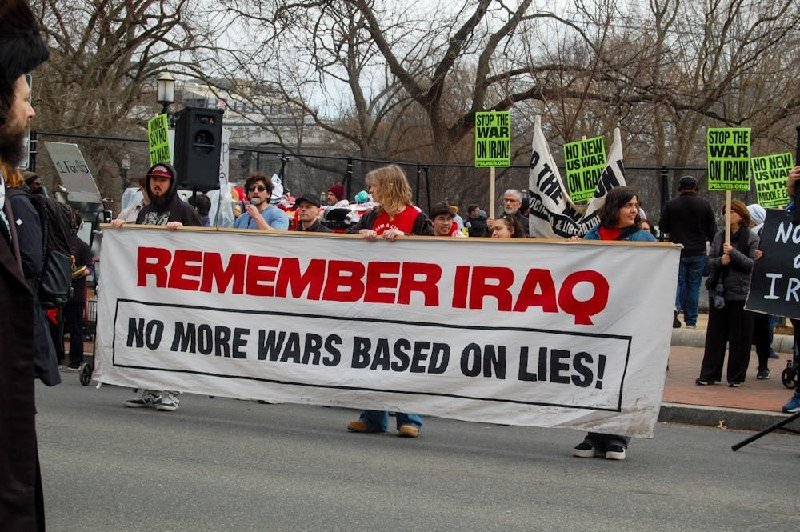
A senior official at the United States State Department stated on 6 May 2026 that more than 600 attacks had targeted American facilities in Iraq during the Iran-Iraq war — a statistic that surfaces not as historical footnote but as active diplomatic leverage. The disclosure, reported via CNN and corroborated across regional wire services including Rudaw, arrives as Washington asks Tehran to take more concrete steps against armed groups operating from Iranian territory.
The framing matters. By anchoring current pressure in a decades-old conflict, the State Department is constructing a through-line from a period when Iranian-backed proxies directly menaced US personnel and infrastructure in Iraq to the present, where the same structural dynamic — Tehran's use of non-state armed actors as instruments of regional pressure — remains unresolved. Iraqi officials, according to the same official, understand Washington's expectations. The question is whether Tehran shares that understanding.
The 600-Attack Baseline
The number itself — 600-plus attacks, in a war that formally ended in 1988 — is not new to military historians. But its deployment by a sitting State Department official in 2026 signals something different: a rhetorical choice designed to remind interlocutors, regional partners, and domestic audiences that the US-Iran dynamic in Iraq has deep roots and consistent costs. The official did not specify which facilities were hit, what the casualty toll was, or whether the figure included only American government installations or extended to contractor and allied targets.
What the disclosure does establish is a baseline of threat magnitude. During the Iran-Iraq war, Iranian-backed Shia formations conducted operations against US interests in the Gulf and within Iraq itself — an arrangement that, from the perspective of Tehran's regional strategy, served multiple functions: testing American tolerance, demonstrating commitment to proxy networks, and sustaining pressure on Baghdad's then-hostile government. That the number reached 600 in that context tells observers something about the scale of activity Iranian-aligned groups could generate when directed to do so.
What Tehran's Counter-Argument Would Look Like
Iranian state media and diplomatic communications will almost certainly frame Washington's current demands as an extension of maximum-pressureera logic — an attempt to use historical grievances as justification for present-day constraints on Iranian sovereignty. Tehran's position, articulated through Foreign Ministry channels and amplified via outlets like Tasnim and PressTV, typically holds that armed groups operating from Iranian territory are independent actors whose decisions Tehran cannot fully control, or alternatively that Iranian support to such groups constitutes legitimate resistance to US regional presence rather than actionable aggression.
Neither framing is new. But it sits uneasily alongside the State Department's framing, which treats Iranian-linked militia activity as a policy choice rather than an uncontrollable emergent phenomenon. The tension between these two narratives defines the negotiating space: Washington wants behaviour change, Tehran wants sanctions relief, and the gap between those positions is measured in how much pressure each side is willing to absorb before moving.
Structural Context: A Regime That Learned Itself
What the 600-attack figure obscures is the degree to which Iranian proxy strategy has itself evolved. During the Iran-Iraq war, Iranian-backed operations were relatively undifferentiated — the Islamic Revolutionary Guard Corps coordinated directly with Lebanese Hezbollah, Palestinian factions, and Iraqi Shia militias in ways that were operationally blunt and diplomatically costly. The post-2015 nuclear deal period showed a different pattern: reduced公开 support for some proxy operations, a deliberate effort to present Tehran as a responsible stakeholder in the Joint Comprehensive Plan of Action framework.
The current pressure — framed explicitly around militia conduct in Iraq — suggests Washington is testing whether that post-JCPOA restraint was structural or transactional. If Iranian-backed groups resume or expand operations against US personnel or facilities in Iraq, the answer becomes clear. And the 600-attack reference functions as a calibration device: it tells Tehran what a worse-case scenario looks like, even if it understates how much Iranian capability and willingness to use proxies has changed in the intervening decades.
Stakes: Iraqi Sovereignty, Gulf Stability, Diplomatic Architecture
The implications spread beyond bilateral US-Iran relations. Iraq, whose government has indicated awareness of Washington's expectations, sits at the intersection of both pressures: it cannot afford to be seen as a platform for Iranian proxy attacks on US targets, given its economic dependence on American reconstruction assistance and its fragile political equilibrium between Shia, Sunni, and Kurdish factions. Simultaneously, Baghdad cannot afford to alienate Tehran, which remains the dominant external actor in Iraqi Shia political life.
Gulf states — Saudi Arabia, the UAE, Qatar — are watching closely. Their calculus has shifted somewhat since the 2023 Chinese-brokered Iran-Saudi rapprochement, but they retain deep scepticism about Iranian regional intentions and continue to rely on American security guarantees as a hedge against worst-case scenarios. A breakdown in US-Iran negotiations over militia conduct would re-open that strategic question for every Gulf capital: what does a US withdrawal from active regional containment actually look like in practice, and who fills the vacuum?
The most contested unknown is whether Tehran's current leadership — facing domestic economic pressure, a changed regional environment post-Gaza, and the lingering structural damage of maximum-pressure sanctions — has sufficient incentive to enforce militia restraint without a verifiable sanctions-relief mechanism. Without that mechanism, the historical record Washington is invoking may prove more predictive than the diplomatic language currently on offer.
This piece was reported with wire sourcing from Rudaw and Middle East Eye, covering State Department framing of the Iraq-war-era attack record as current leverage in US-Iran talks.
Wire provenance
This editorial synthesis draws on the following public wire/social posts:
- https://t.me/wfwitness/18441
- https://t.me/wfwitness/18440
- https://x.com/middleeasteye/status/1920987654321090057