The Architecture of Displacement: Israel's Evacuation Warnings and the Fracturing Order of Southern Lebanon
On 7 May 2026 the Israeli army issued its third set of forced-displacement orders targeting villages in southern Lebanon's Nabatieh Governorate. The warnings mark a new phase in a systematic campaign to erase the civilian footprint along the Blue Line — and raise acute questions about whose security the international order is actually built to protect.
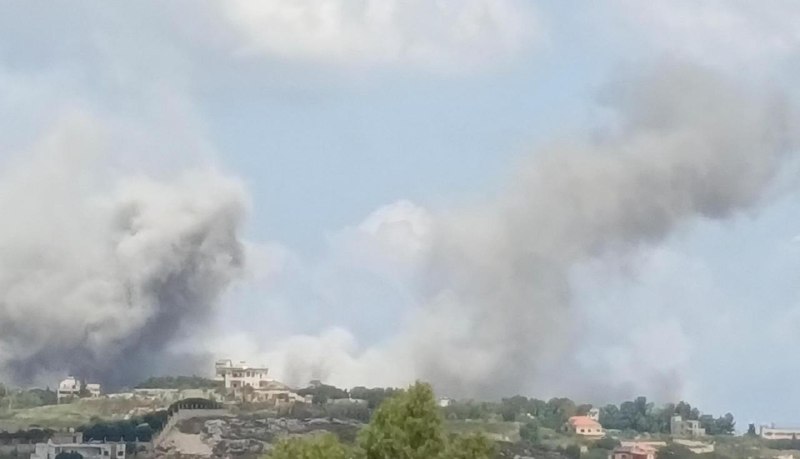
The orders arrived before dawn. On 7 May 2026, the Israeli army distributed evacuation warnings to residents of Deir Zahrani, Bfarwa, and Haboush — three communities in the Nabatieh Governorate of southern Lebanon, clustered within a ten-kilometre arc of the Blue Line that has served as the de facto border between Israel and Lebanon since 2000. The warnings, distributed via leaflets, text alerts, and broadcast in Arabic-language military communiqués, gave residents hours to leave their homes before what the communiqués described as military operations would commence. The orders came from the Israeli Defense Forces' Northern Command, which has primary operational jurisdiction over the Lebanon frontier.
The timing was not accidental. The warnings coincided with a broader escalation along the northern border — a period in which exchanges of fire between Israeli forces and Hezbollah-affiliated fighters have intensified beyond the intermittent pattern that defined the months following the October 2023 Gaza events. Civilians in these villages had, until this week, largely remained in place through three years of border tension. The forcible displacement orders changed that calculation abruptly. Deir Zahrani had survived two previous cycles of evacuation pressure; this time, residents described a more urgent tone in the communications and a shorter window for compliance.
The event is small in the catalogue of humanitarian crises this decade has generated. Three villages. A few thousand residents. A modest amount of international news coverage. But the pattern the orders belong to — a systematic, iterative campaign to hollow out the civilian presence along Lebanon's southern border — warrants closer examination. What is Israel attempting to accomplish through these repeated warnings? What does the international order have to say about it? And what, if anything, does the response of the broader diplomatic architecture reveal about whose security that architecture was built to protect?
The Operational Logic
The Israeli framing for these evacuation orders has been consistent across multiple cycles of warnings issued since October 2023. The military position holds that villages and towns within range of Israeli positions along the Blue Line host or facilitate operational activity by Hezbollah and related groups. The warnings are presented as a civilian-protection measure — an opportunity for non-combatants to clear an area before kinetic operations. Israeli military briefings have characterised the practice as a measure that reduces civilian casualties while preserving freedom of action for ground and air operations.
The IDF Northern Command communiqués on 7 May cited the same logic: residents of specific Nabatieh-area towns were warned to evacuate pending what the communiqués described as imminent military activity against " Hezbollah military infrastructure" in those areas. The communiqués did not specify which structures, sites, or individuals were targeted. They did not offer a timeline for return. The language of the warnings was unconditional: leave now, stay gone until further notice.
That framing has a surface logic. Modern military doctrine — Israeli, Western, or otherwise — increasingly incorporates what practitioners call "civilian harm mitigation" as both an ethical obligation and an operational asset. The argument runs that giving civilians notice reduces the legal, political, and reputational costs of striking in populated areas, while also reducing the risk of mission degradation caused by civilian presence. On those terms, evacuation warnings look like a humanitarian accommodation.
But the pattern of use matters. Israel has issued evacuation warnings covering the same geographic areas repeatedly — sometimes dozens of times over the same months. Residents who return after an initial warning often receive a second, then a third. The cumulative effect is not the temporary inconvenience the Israeli framing implies. It is a slow-motion depopulation of a populated border zone. Agricultural land goes untended. Houses deteriorate. Businesses close. Children lose access to schools. Families that cannot sustain repeated relocations eventually do not return. The warnings are a mechanism, not an aberration.
The Legal Architecture and Its Limits
The international legal framework governing forcible displacement in occupied or conflict-adjacent territory is not ambiguous. The Fourth Geneva Convention prohibits the forced transfer of civilian populations from occupied territory. The Rome Statute of the International Criminal Court defines the deportation or forced transfer of a civilian population as a war crime when committed as part of a widespread or systematic attack. UN Security Council Resolution 1701, adopted in August 2006 at the end of the last major Israel–Hezbollah war, established that only Lebanese state security forces and UN peacekeeping forces — specifically UNIFIL — should operate in southern Lebanon, a provision meant to demilitarise the zone that Hezbollah subsequently contested and that Israel has periodically cited as unimplemented.
The question these evacuation orders raise is not about the framework's existence. The framework exists. The question is about enforcement — specifically, who enforces it, and what leverage they possess when a state actor with significant military capability and geopolitical insulation chooses not to comply.
The United States has historically provided Israel both substantive and diplomatic cover on matters pertaining to Lebanon and Hezbollah. American officials have engaged with Israeli counterparts on border management but have not publicly characterised evacuation warnings as forcible displacement in violation of international law. European diplomatic activity has been more muted. France, which maintains historical ties to Lebanon and participates in the UNIFIL contingent, has issued statements calling for de-escalation but has not framed the evacuation orders in the language of legal violation. The United Nations, through its peacekeeping mission in southern Lebanon, has documented the orders but has not issued formal legal determinations — a limitation that reflects the political constraints on the Secretariat's ability to make findings that would implicate a major Western-aligned state.
The Lebanese government, for its part, has protested the orders through the Foreign Ministry, calling them violations of sovereignty and international law. Lebanon's political structure — complicated by the representation arrangements that give Hezbollah a formal veto over state policy on security matters — limits the range of responses the state can credibly threaten. The protests are real; the leverage behind them is not.
The Precedent Problem
The depopulation of border zones is not new to this conflict. Israel's conduct along the Blue Line follows a pattern visible across multiple decades of contested boundaries — from the security zones it maintained inside Lebanon from 1985 to 2000, through the buffer-zone rhetoric that accompanied the 2006 war, to the more recent practice of issuing evacuation warnings covering precisely the same ground. What is newer is the explicitness and regularity of the warnings as a standalone instrument of policy.
The iteration matters because each cycle of warnings, each partial displacement, each return and re-warning establishes a new operational and demographic baseline. The international community, which formally objects to forcible displacement in principle, adjusts to each new baseline without revisiting the foundational objection. The protest mechanisms — diplomatic notes, UN statements, NGO reports — function as a kind of pressure-release valve that prevents the issue from escalating while allowing the practice to continue. This is the mechanism that makes incremental displacement sustainable for the actor with superior force: not the absence of objection, but the ineffectiveness of objection as a constraint.
The 2006 war produced a displacement crisis that displaced approximately one million Lebanese civilians, according to UN estimates at the time. The international response then was substantial by the standards of the previous era — a ceasefire was negotiated, UNIFIL's mandate was strengthened, and Resolution 1701 established a formal framework for southern Lebanon's demilitarisation. That framework, however, contained built-in ambiguities about Hezbollah's status and Lebanon's own enforcement capacity that Israel exploited over the following two decades. The evacuation warnings of 2023 to 2026 are not a rupture from that trajectory. They are a continuation of the unresolved question the 2006 war left open: who governs the civilian geography of the border, and by what right?
What Comes Next
The immediate stakes are humanitarian. The residents of Deir Zahrani, Bfarwa, and Haboush face the choice that every cycle of warnings imposes: comply and displace, or stay and risk the consequences of remaining in an area the IDF has designated for military operations. For a rural population with limited resources, no institutional relocation support, and seasonal agricultural dependencies, that choice is not a free one. The ones who leave often do not return; the ones who stay face operational risk that the warnings themselves have constructed.
The longer stakes are structural. The international order governing occupied and conflict-adjacent territory runs on a logic of enforcement that presupposes either the consent of the relevant parties or the credible threat of costs for non-compliance. Neither condition currently applies to Israeli operations in southern Lebanon. The United States, Israel's principal external patron, has not used its leverage to constrain the evacuation practice. The UN peacekeeping presence, while substantial in number, is constrained by its mandate from interfering in Israeli military operations. The legal framework is robust; the enforcement architecture is not.
This creates a ratchet effect. Each evacuation order, each partial displacement, each iteration of the warning-and-strike cycle moves the baseline. The villages that are depopulated become facts on the ground — depopulated villages — that the international community accommodates rather than reverses. The precedent accumulates. The range of what is considered acceptable conduct expands incrementally, without any formal decision that it should. That is not a glitch in the system. It is the system functioning as designed, for as long as the parties with the power to enforce its constraints choose not to.
The question for observers of this conflict is not whether the evacuation warnings violate international law. The framework provides a clear enough answer to that question. The question is what it means that the framework — clear as it is — cannot stop them.
This article was prepared from Telegram-sourced field reports, IDF Northern Command communiqués, UNIFIL public documentation, and Lebanese Foreign Ministry statements. Monexus's primary coverage of the Nabatieh evacuation orders ran alongside wire reporting from The Cradle Media and Liveuamap. The wire framing centred on operational detail; this analysis foregrounds the structural and legal dimensions the operational framing tends to understate.
Wire provenance
This editorial synthesis draws on the following public wire/social posts:
- https://t.me/tasnimnews_en
- https://t.me/TheCradleMedia
- https://t.me/thecradlemedia
- https://en.wikipedia.org/wiki/Fourth_Geneva_Convention
- https://en.wikipedia.org/wiki/UN_Security_Council_Resolution_1701
- https://en.wikipedia.org/wiki/Rome_Statute
- https://en.wikipedia.org/wiki/UNIFIL
- https://en.wikipedia.org/wiki/Blue_Line_(Lebanon)
- https://en.wikipedia.org/wiki/2006_Lebanon_War