The Architecture of Warning: What IDF Evacuation Notices Conceal
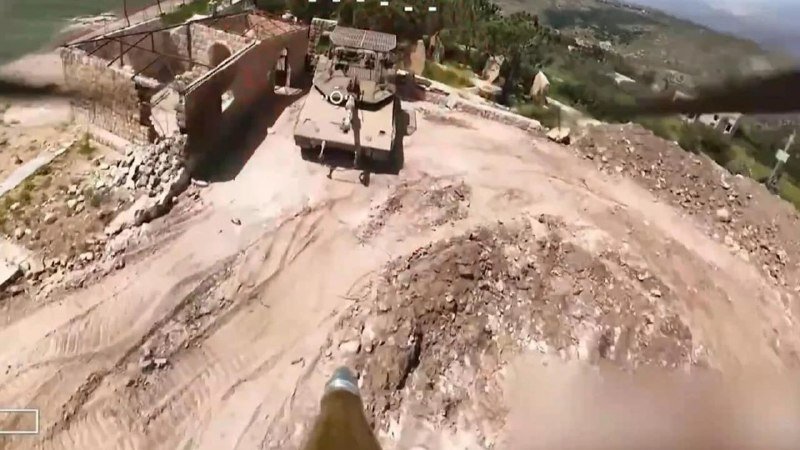
The morning of 7 May 2026 brought a pattern that, taken individually, reads as routine. The IDF warned residents of Deir Zahrani, Bfarwa, and Haboush to evacuate. Within minutes, Israeli strikes hit Nabatieh al Fawqa, Touline, and Deir Kifa. A drone strike followed on Deir Kifa. Six communities. One morning. The coverage will frame this as compliance with international humanitarian law—warnings issued, civilians given time to flee. That framing deserves scrutiny.
The architecture of warning is not neutral. It is a legal instrument, a media strategy, and a tool of control all at once. When a military warns civilians before striking, it creates a documented record of compliance with the laws of armed conflict. When those civilians flee—and flee quickly, with only minutes to gather what they can—it generates displacement, economic rupture, and social fragmentation that never appears in the strike tally. The legal box is checked. The human cost is dispersed across months and years, carried by people who have no platform.
The Problem With Procedural Legitimacy
International humanitarian law requires precautions when attacking populated areas. Issuing evacuation warnings is one such precaution. The IDF has made this a systematic practice in southern Lebanon—not a response to battlefield conditions but a standing operational procedure. When the IDF sent warnings to residents of southern Lebanon on 7 May 2026, it was following a protocol that predates this particular morning by years.
The problem is not that warnings are issued. The problem is what warnings accomplish beyond their stated purpose. They shift the burden of civilian protection from the attacking force to the civilian. The military has done its legal duty by saying leave. What happens to the people who cannot leave—who are elderly, immobile, too poor to relocate, or simply have nowhere to go—falls outside the legal frame. The warning creates a clean record for the military. The hardship that follows is someone else's problem.
This is not a technicality. It is the structure of modern urban warfare as practiced by sophisticated militaries. The legal framework for civilian harm contains built-in exceptions and attenuations that make accountability nearly impossible. A force that warns before striking is not liable for the displacement it causes. A force that strikes a structure it has warned to vacate is not liable for the infrastructure damage. The compliance record grows while the destruction continues.
What Simultaneous Strikes Reveal
The scale of the 7 May 2026 operations is worth dwelling on. Six communities targeted in rapid sequence is not the behavior of a force responding to immediate intelligence on specific threats. It is the behavior of a force executing a pre-planned operation that happens to be timed to a morning when conditions are favorable.
The towns struck—Nabatieh al Fawqa, Touline, Deir Kifa—represent a cross-section of southern Lebanon's inhabited areas. Nabatieh al Fawqa sits in a known area of Hezbollah activity and support infrastructure. Touline and Deir Kifa are smaller communities whose significance to the IDF is not explained in the warning notifications. The strikes on smaller towns alongside larger ones suggest either intelligence on multiple discrete targets across a wide area, or an operational approach that treats southern Lebanon as a continuous zone of legitimate engagement.
Neither possibility is reassuring. If the IDF has identified specific targets across six communities, the question of proportionality becomes acute. Six separate strikes in one morning, each generating its own civilian impact—displacement, stress injuries, property destruction, disruption of already-fragile local economies—must be assessed cumulatively, not in isolation. If the IDF is treating a geographic zone as a unified target area, the legal framework requires a proportionality assessment that the coverage from this morning does not address.
The Audience Problem
The systematic use of evacuation warnings serves an audience beyond Lebanon. Domestic Israeli audiences—and, critically, Western governments and media that frame Israeli military operations—receive a specific narrative: precision, restraint, compliance with international law. The warnings are proof. The strikes are presented as surgical.
This narrative construction is not unique to Israel. Sophisticated militaries everywhere understand that operational legitimacy is partly a media and legal product. The question is whether the narrative reflects reality. In southern Lebanon, the reality includes repeated cycles of warning, displacement, and strike that have been ongoing since October 2023. The population of southern Lebanon has been under continuous pressure. The warnings are not preventing harm; they are distributing it across time in a way that is harder to aggregate and report.
International coverage reflects this asymmetry. Gaza receives sustained attention precisely because the volume of civilian harm is so large and so visible that it generates pressure. Lebanon receives less. The media infrastructure that scrutinizes Gaza is thinner for Lebanon, partly because Lebanon lacks the same degree of international political salience in Western capitals. The people of southern Lebanon are being subjected to a strikes-and-warnings dynamic that degrades their living conditions incrementally. They have no platform that forces Western governments to account for what is being done in their name.
The Stakes
The operations of 7 May 2026 are not an anomaly. They are the continuation of a pattern that has no clear endpoint. Southern Lebanon is not a battlefield in the conventional sense—it is an inhabited zone that is being progressively emptied of its civilian population through legal means. The warnings are legal. The strikes are legal. The displacement is the product of both, but accountability for it dissolves into procedural compliance.
The question that matters is not whether the IDF complied with warning requirements. It is what Lebanese civilians are supposed to do when their villages become designated strike zones, and who—if anyone—is accountable for the cumulative effect of that designation on a population of several hundred thousand people who did not choose this conflict and have no means of escaping it.
The international community's silence is itself a choice. When the framework for civilian protection is exploited rather than strengthened, the loss is not just Lebanese. The principle that civilians should be protected—that warfare has limits—erodes each time a legal procedure is used to manage the optics of harm rather than to prevent it. The strikes on Nabatieh al Fawqa, Touline, and Deir Kifa are not large by the standards of this conflict. They are small enough to go mostly unexamined. That smallness is the point.
This publication covered the 7 May 2026 strikes via Telegram wire alerts from a single monitor service, reflecting the lighter editorial infrastructure available for Lebanon compared to Gaza. Monexus will continue tracking the southern Lebanon escalation as events develop.
Wire provenance
This editorial synthesis draws on the following public wire/social posts:
- https://t.me/wfwitness/7234
- https://t.me/wfwitness/7232
- https://t.me/wfwitness/7231
- https://t.me/wfwitness/7230