Arsenal's Champions League Return: A Final in Budapest and the Weight of Everything
Arsenal's return to the Champions League final after two decades raises questions about timing, opportunity, and what a first European trophy since 2006 would mean for a club rebuilding its identity.
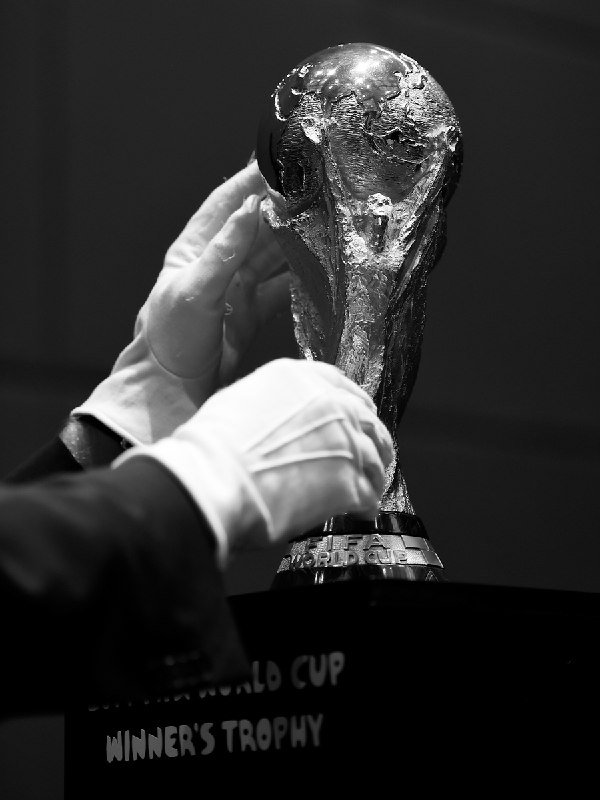
When the final whistle blew at the Emirates Stadium on 6 May 2026, Arsenal had done something their supporters had stopped believing was possible. A 2-1 aggregate victory over Atletico Madrid sent the club into the Champions League final for the first time in twenty years. Their opponents will be Paris Saint-Germain, and the venue is Budapest.
The arithmetic of the moment deserves its weight. Arsenal had not reached this stage of European football's premier competition since May 2006, when a goal from Sol Campbell briefly silenced a generation of accumulated doubt. That team won nothing in the end. This one, pending the result in the Hungarian capital, may yet win everything.
The scale of what Arsenal have constructed under Mikel Arteta is not accidental. It is the product of targeted recruitment, a clear tactical identity, and an institutional patience that has become rare in elite football. The club's league position — one point off the summit with two games remaining — suggests that domestic and European ambitions have not cannibalised each other. They have reinforced each other.
The path to Budapest
Arsenal's route to the final was not serene. The semi-final against Atletico Madrid tested their nerve in ways the preceding rounds had not. Diego Simeone's side arrived in London for the second leg knowing that a goal would shift the pressure entirely onto Arsenal's shoulders. The response — measured, controlled, pragmatic when the moment demanded pragmatism — said something about the mentality Arteta has installed. This is not a squad that panics. It is a squad that has learned, through successive near-misses, how to manage sequences.
The broader Premier League representation in Champions League finals — the seventeenth such appearance by an English club in the competition's history, according to reporting from The Athletic — is a separate data point worth noting. English clubs have dominated European competition for most of the past two decades. Arsenal's presence in the final extends that record. Whether it represents a high-water mark or a structural shift in the continental game is a question the Budapest final will begin to answer.
PSG wait in the final
Paris Saint-Germain navigated their own semi-final to reach the final, setting up a meeting that reflects how far both clubs have travelled since their group-stage encounters earlier in the competition. PSG's project has always been financed by ambition; the question this season has been whether that ambition could be directed into something coherent rather than centrifugal.
The Parisian side have reached their fifth Champions League semi-final in six seasons. They have not, until now, consistently converted that regularity into final appearances. The signing decisions, the managerial appointments, the philosophical debates about how to play without a classical number nine — none of it has delivered the trophy PSG's owners covet above all others. Arsenal represent either the opportunity to resolve that pattern or the latest proof that European finals are decided by moments rather than structures.
Arteta's side will not lack for attacking quality. Whether it is Bukayo Saka, Martin Ødegaard, or the forward movement of a midfield that has learned to press with purpose, Arsenal carry genuine threat. The question PSG poses — and it is a question their own semi-final left partially unanswered — is whether they have solved the defensiveOrganisation that eluded them against lesser opponents. Against a side as hungry as Arsenal, uncertainty at the back is a liability.
The domestic dimension
The timing of the final creates an unusual pressure. It will be played before the Premier League season concludes, meaning Arsenal must navigate the final against PSG while their domestic fate remains unresolved. One point separates them from Liverpool at the summit. The arithmetic is unforgiving.
The concern for Arsenal's management is not simply fatigue or distraction. It is the question of what a season — any season — means when a club reaches this crossroads. The Premier League title has eluded Arsenal since 2004. Winning the Champions League without the league would be a extraordinary achievement. Winning both would be, by any reasonable standard, a defining season for a generation.
What the trophy would mean
The Champions League trophy has sat in Arsenal's trophy cabinet exactly twice, both under Arsène Wenger. The 1994 Cup Winners' Cup and the 1994 Inter-Cities Fairs Cup — the institutional record is thin by the standards the club's history demands. A victory in Budapest would make this generation of players the first Arsenal side to win Europe's elite club competition since that 2006 final, which they lost to Barcelona.
The broader significance is not lost on the club's leadership. Arsenal's commercial trajectory, their ability to attract and retain elite players, their institutional credibility on the continent — all of it converges on what happens in Budapest. A trophy does not guarantee those outcomes, but the absence of one has constrained them.
For Arteta personally, the stakes are equally clear. He arrived as a young coach with a thesis about how football should be played and a mandate to rebuild a club that had drifted from its foundations. The league position validates the project on domestic terms. The Champions League final validates it on the terms that matter to the global game.
What remains uncertain
The sources do not specify the exact date of the Budapest final, beyond confirming it will take place later in May 2026. The precise scheduling — how it intersects with Arsenal's remaining Premier League fixtures — is a detail that will shape the final's context but has not yet been confirmed in the available reporting. The same applies to any tactical decisions Arteta has yet to announce. The shape of the squad he selects, the fitness status of any key players nursing injuries from the Atletico tie, will emerge in the weeks ahead.
These are the variables. The constant is what Arsenal have already achieved: they are in the final. Everything else is the conversation that follows.
—
This publication covered Arsenal's semi-final progress with emphasis on the tactical discipline that carried them through, a framing that distinguished the coverage from wire services that focused on the narrative of a club rediscovering its European identity.
Wire provenance
This editorial synthesis draws on the following public wire/social posts:
- https://t.me/TheAthletic/124321
- https://t.me/TheAthletic/124322
- https://t.me/TheAthletic/124323
- https://t.me/TheAthletic/124324