The al-Daraj Strike and the Ceasefire That Never Fully Began
An Israeli strike wounded the son of a Hamas leader. Hamas called it a ceasefire violation. Both characterisations are technically correct — and that is the problem.
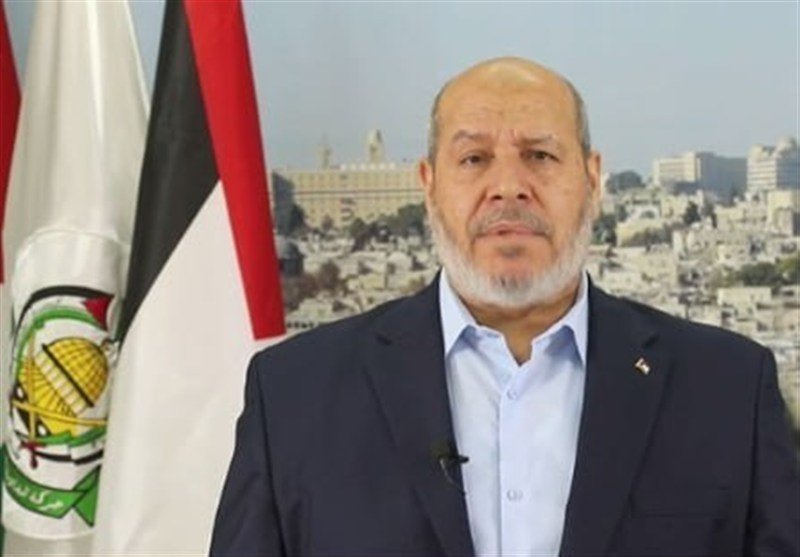
On the morning of 7 May, an Israeli airstrike struck the al-Daraj neighbourhood of Gaza City. At least one Palestinian was killed. The son of Hamas leader Khalil al-Hayya was seriously wounded. That is the factual sequence, confirmed across multiple wires. Everything else is contested.
The ceasefire signed in January, formalised in subsequent rounds through October, was supposed to stop exactly this kind of incident. Instead, al-Daraj has become another flashpoint in a agreement that has never operated cleanly on the ground. Hamas issued a statement calling the strike a "blatant violation" of the ceasefire terms. Israel has not publicly addressed the specific incident in detail. The gap between those two positions is not semantic — it is the entire fault line this agreement was built on.
What al-Daraj represents
The strike lands inside a pattern that has repeated throughout the ceasefire's lifespan: episodic Israeli military action inside Gaza, followed by Palestinian condemnation, followed by mediation attempts that produce temporary restraint before the cycle restarts. Al-Daraj is not an anomaly. It is the structure.
Khalil al-Hayya is not a peripheral figure. As Hamas's deputy leader, his family members have been previously targeted — a signal, intentional or not, that this strike carries political weight beyond its immediate tactical rationale. Whether the target was the son specifically, a proximate individual in the same location, or simply an area assessed as hosting hostile activity, the result is the same: a ceasefire committed to protecting civilians was breached in a manner that involved the family of a senior adversary. That is not a technical violation. It is a political act.
The ceasefire architecture, such as it exists, was never a single document with agreed enforcement mechanisms. It has been a series of understandings, mediated under pressure, with different parties holding different interpretations of what Phase One obligations require. The result is an agreement that functions when both sides choose restraint and collapses when either side finds restraint politically unsustainable. Al-Daraj is the latter scenario, played out in the middle of a city where the fighting never fully stopped.
The violation question — both sides at once
Hamas's statement calling the strike a "blatant violation" of the ceasefire agreement is, on its face, accurate under the terms the group acknowledges. An Israeli strike inside Gaza — regardless of its target — violates the ceasefire's core premise that hostilities cease. Israeli framing has consistently held that its right to self-defence survives the ceasefire, that military action against verified threats is not a violation but a continuation of legitimate security operations. These are not equivalent positions, but they are both internally coherent, which is precisely the problem.
There is no arbitral mechanism inside the ceasefire that settles this dispute. Qatar, Egypt, and the United States have served as guarantors and intermediaries, but none have enforcement power over either party. When Israel acts and Hamas protests, the international response is typically a call for both sides to respect the agreement — language that treats the aggressor and the violated party as equally responsible for the breach. This symmetry is often politically necessary to keep the mediation channel open. It is analytically false.
The Zionist enemy refuses to commit, blocking the transition to the second phase — that phrasing from the PressTV Telegram account reflects the Hamas framing that the failure to move forward is Israel's doing, that the ceasefire's incomplete implementation is a deliberate Israeli choice. Israeli actions like the al-Daraj strike, from that vantage, are not separate incidents but expressions of a single strategy: maintain the first phase indefinitely while preventing the obligations that would follow. That framing is self-serving, as all framings are. But it correctly identifies that the second phase of any ceasefire agreement — the harder questions of governance, reconstruction, and political status — has never genuinely been opened.
The structural problem
Ceasefires in active conflicts rarely fail because one side suddenly decides to resume full-scale war. They erode. Specific incidents accumulate. The political conditions that made restraint necessary shift. What we are watching in Gaza is not the dramatic end of the ceasefire but its slow dissolution — each strike, each retaliatory statement, each mediated pressure point gradually eroding the premise that neither side will resume large-scale hostilities.
The ceasefire was always incomplete. It addressed the immediate humanitarian requirement — a pause in mass casualties — without resolving the underlying political question. That is not a criticism of the mediators who produced it. In active conflicts, partial agreements are often the only agreements available. But partial agreements that leave the core disputes unresolved create precisely this dynamic: a state of affairs where the ceasefire operates on paper while the conditions that produced the conflict continue to operate in practice.
This creates a particular kind of instability. Neither side wants to be seen as the party that broke the ceasefire — that label carries diplomatic costs in international forums where both parties are seeking credibility. But neither side is willing to make the concessions that would solidify the ceasefire's terms and create the conditions for the second phase. The result is what we see in al-Daraj: an incident that is simultaneously deniable as a ceasefire violation (by Israel) and cited as evidence of one (by Hamas), with no mechanism to resolve the disagreement.
What comes next
The immediate consequence is predictable: condemnation, mediation calls, a temporary quiet that will be tested again. The ceasefire does not end with a single strike. It ends when one or both parties decide that the costs of maintaining it exceed the costs of resuming hostilities — a calculation that depends on domestic political pressure, regional dynamics, and the degree to which each side believes it can shape international opinion in its favour.
The stakes are substantial. A failed ceasefire reactivates the humanitarian catastrophe that the January pause temporarily alleviated. It closes whatever diplomatic channel has remained open for the past several months. It signals to regional actors — Iran, Hezbollah, Gulf states watching the broader trajectory — that the present period of restrained engagement may be ending. For Gaza's civilian population, who have been living in the ceasefire's ambiguity rather than benefiting from its certainty, the difference between a ceasefire that holds and one that erodes is not abstract. It is the difference between continued survival and another cycle of destruction.
What remains genuinely unclear is whether either party has a shared understanding of what the first phase of the ceasefire actually requires, what the second phase would contain, or whether there exists any political horizon that would allow those questions to be answered. Al-Daraj does not answer those questions. It simply adds another layer to an agreement that is simultaneously in force and failing, holding and collapsing — sometimes in the same afternoon.
Monexus covered this incident via Middle East Eye's live wire with emphasis on the violation framing Hamas advanced. Western wires led with the strike mechanics and civilian harm. Neither framing is wrong; they reflect different editorial priorities about which element of a disputed event carries the greater significance.
Wire provenance
This editorial synthesis draws on the following public wire/social posts:
- https://t.me/presstv/136842