Gaza ceasefire crumbles as phase two stalls and the family of a Hamas leader pays the price
The death of Azzam Khalil al-Hayya in an Israeli raid near Jabalia punctuates a week of deepening fractures in the Gaza ceasefire, as Hamas publicly accuses Israel of abandoning the first-phase commitments that were supposed to unlock the next round of talks.
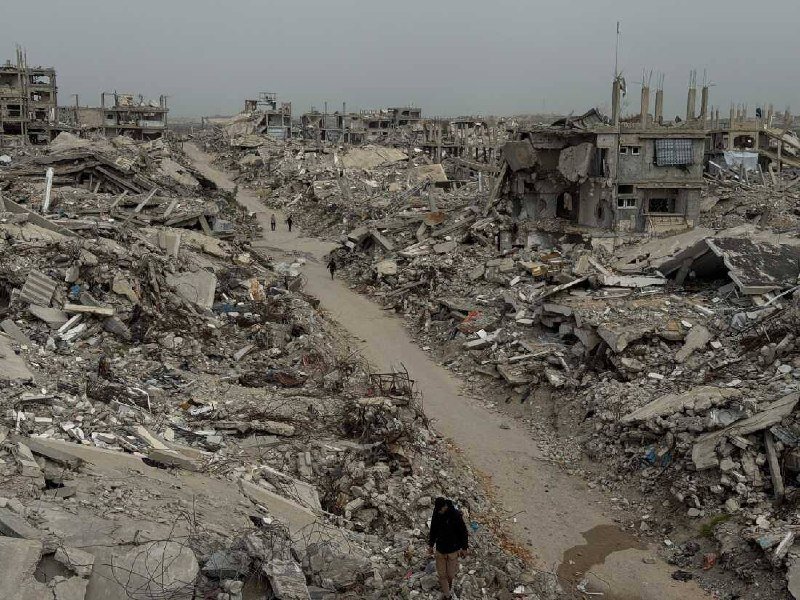
The rubble from an Israeli air strike near the Jabalia parking lot in northern Gaza City yielded a body on 6 May 2026. The victim was Azzam Khalil al-Hayya, son of Khalil al-Hayya — the most senior political figure the Hamas movement has inside Gaza. By the morning of 7 May, Hamas state media confirmed what Palestinian sources had been reporting since the previous night: Azzam died of his wounds. Two of his brothers survived but were injured. The strike, carried out by Israeli aircraft, targeted a group in the al-Daraj neighbourhood of Gaza City, according to a statement from senior Hamas leader Khalil al-Hayya cited by Iranian state outlet Press TV.
The personal loss arrived at a moment of maximum political fragility. On the same day the family was burying its dead, Khalil al-Hayya delivered a public accusation with broader implications: Israel, he said, had failed to honour the terms of phase one of the ceasefire framework and that non-compliance was blocking entry into phase two. The occupation, he told reporters, "did not adhere to the details of the first stage, which hinders going to the second stage." The statement, carried by Al-Alam Arabic on 7 May, was unambiguous — and it reframed the strike near Jabalia not as an isolated security operation but as part of a pattern of behaviour that Hamas says is tearing the agreed framework apart.
What the ceasefire architecture was supposed to deliver
The phase-one deal, brokered under intense American and Qatari mediation earlier this year, was always fragile. Its core premise was straightforward: a staged reduction of hostilities, with the first phase covering a 60-day window during which hostages would be released in exchange for Palestinian prisoners, Israeli forces would partially withdraw from populated corridors, and humanitarian aid would flow at scale. Phase two was supposed to follow seamlessly — a permanent cessation of hostilities and a full Israeli withdrawal. In practice, the handoff between phases was always the hardest moment: it requires mutual agreement on compliance, a shared reading of what the first phase committed each side to, and — critically — political will on both sides to absorb the domestic cost of moving forward.
Hamas's position, as articulated by al-Hayya on 7 May, is that Israel has cherry-picked the first-phase obligations it implements while ignoring those that impose constraints on its military posture. Israeli officials have not publicly accepted that framing. The gap between the two accounts — Israeli security-first, Hamas compliance-first — is not new. What has changed in recent days is the accumulation of incidents that each side points to as evidence of the other's bad faith.
The Jabalia strike in context
Jabalia sits in the northern Gaza Strip, an area that has seen some of the heaviest urban combat of the past eighteen months. It is also one of the zones where the first-phase agreement mandated a partial Israeli pullback. The strike that killed Azzam al-Hayya targeted what Israeli sources described as an armed cell operating near a commercial area. Hamas described it as an attack on a family. Both characterisations are partially true — armed actors live inside civilian family structures in Gaza by necessity as much as by design, a structural reality that any ceasefire framework had to grapple with from the outset.
The death of a senior Hamas figure's son in an area where phase-one withdrawals were supposed to have occurred carries symbolic weight beyond the individual casualty. It signals, from the Israeli side, that security operations will continue regardless of what the ceasefire framework says about northern Gaza. From the Hamas side, it confirms a narrative that al-Hayya has been building for weeks: that Israel is using the ceasefire as cover for continued kinetic action in zones it was supposed to cede.
The phase-two deadlock and who is paying for it
The immediate consequence of al-Hayya's statement is a hardening of positions on the Hamas side. Several Hamas officials have echoed the assessment that phase two is effectively blocked. Mediation partners — Qatar, Egypt, and the United States — face a familiar problem: neither party to the ceasefire wants to be seen as the one that broke it, but both are constructing conditions that make the next phase impossible to reach.
The human cost is not abstract. Gaza's civilian population, which has endured displacement, food insecurity, and the destruction of infrastructure on a scale that UN agencies have repeatedly described as unprecedented, was told that phase one would bring measurable relief. The inability to move to phase two means the partial ceasefire holds — but the partial ceasefire is precisely the arrangement that leaves most of Gaza under movement restrictions, with limited aid access and a reconstruction process that has barely begun. Civilians in the north, where Jabalia sits, are living in areas where the fighting was supposed to have ended but where strike patterns suggest it has not.
The United States, which invested significant diplomatic capital in brokering the phase-one agreement, has not publicly acknowledged the phase-two blockage as a structural failure. American officials have, in recent weeks, continued to describe the ceasefire as operative. The gap between that characterisation and the situation on the ground in northern Gaza — where a strike on 6 May killed a member of a prominent political family — is becoming harder to paper over with diplomatic language.
What comes next
Three scenarios are plausible in the near term. The first is a mediated correction — Qatar and Egypt apply pressure on both sides to return to phase-one compliance and restart phase-two technical talks. This requires Israeli concessions on northern Gaza operations and Hamas acceptance that partial compliance is better than a full breakdown. The second is continued drift: the ceasefire holds at the macro level but incidents like the Jabalia strike accumulate, gradually eroding Hamas's willingness to participate in further phases. The third is a faster collapse — triggered by an incident that either side frames as a sufficient breach to justify resuming full hostilities.
The death of Azzam al-Hayya makes the second scenario more likely. It gives Hamas officials a concrete, emotionally resonant grievance to present both to their own constituency and to the mediation powers. Whether that grievance becomes a negotiating lever or a trigger for escalation depends on factors that the sources reviewed here do not fully illuminate: namely, the internal calculations of the Israeli political and military leadership regarding the continued viability of a staged ceasefire in the north.
What is clear is that the framework built around phased implementation is under strain in a way that the optimistic language of "progress toward phase two" obscures. The ceasefire is not broken — but it is no longer functioning as the instrument of transition that its architects intended. The family of Khalil al-Hayya has paid one of the costs. Whether the mediators and the parties themselves can prevent the price from rising further is the question that the coming days will answer.
Wire provenance
This editorial synthesis draws on the following public wire/social posts:
- https://t.me/alalamarabic/45791
- https://t.me/alalamarabic/45790
- https://t.me/presstv/11543