Gulf States Revoke US Base Access as Strait of Hormuz Tensions Escalate
Riyadh and Kuwait City have cut off American military access to their bases and airspace just 48 hours after an attack on the UAE's Fujairah port, a development that threatens to widen a rapidly deteriorating security situation in the Persian Gulf.
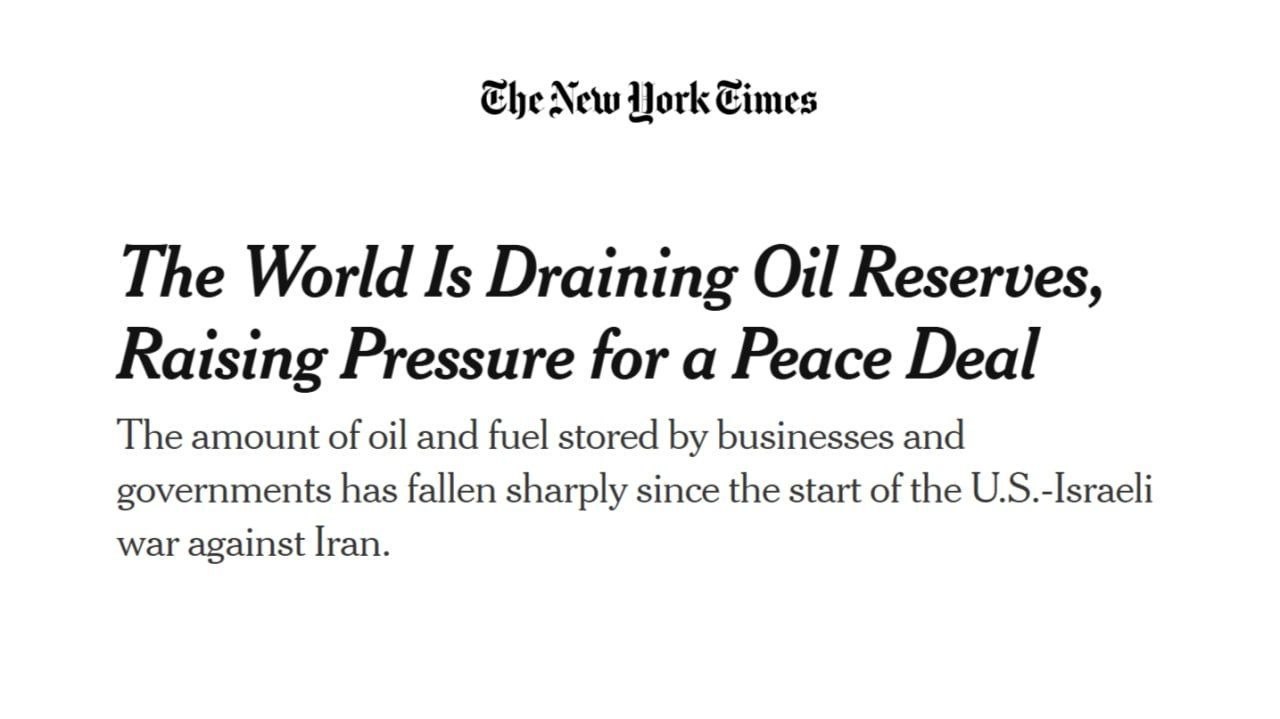
Saudi Arabia and Kuwait have revoked American military access to their air bases and airspace, according to reporting confirmed across multiple independent channels on 7 May 2026. The decision represents a sharp reversal from earlier negotiations in which Riyadh and Kuwait City had reportedly agreed to expand US basing rights. The move came in direct response to the Trump administration's announcement of a proposed operation dubbed "Project Freedom," conceived as a mechanism to reopen the Strait of Hormuz should Iran attempt to close it.
The Strait of Hormuz is the world's most critical oil transit corridor. Roughly 21 million barrels per day flow through the chokepoint, representing approximately 20 percent of global oil supply. Any disruption sends immediate shockwaves through energy markets and forces a recalculation in every Western capital that imports Gulf petroleum. The timing of the Gulf states' decision—before Project Freedom has been operationalised—suggests Riyadh and Kuwait City calculated that the announcement itself carried more risk than the operation it described. Whether that calculation holds depends on how Washington responds.
The Bases Decision
The decision to revoke access affects installations both countries have historically made available to US and coalition forces. Saudi Arabia's Al-Udeid Air Base, south of Doha, has served as a hub for US Central Command operations for more than two decades; it was the primary staging point for air operations during the 1991 Gulf War and again in 2003. Kuwait's Ali Al Salem Air Base has hosted American personnel continuously since the liberation of Kuwait in 1991. Together, the two countries represent a logistical backbone without which sustained air operations in the Gulf become significantly more complex.
The sources reviewed by this publication do not specify the precise mechanism by which access was revoked—whether through formal diplomatic notification, an executive order, or a practical withdrawal of existing infrastructure agreements. What is clear is that the announcement is not a rumour or an empty gesture: multiple regional and wire sources confirmed the substance of the decision independently on 7 May.
Middle East Eye reported that the cutoff followed directly from Trump's Project Freedom announcement, framing the Gulf states' response as a rejection of what they perceived as an escalation that threatened to draw them into a wider conflict. The Unusual Whales wire, citing the Wall Street Journal, noted that Washington was previously in discussions to expand basing access—meaning the revocation represents a setback, not merely a failure to agree.
Project Freedom and the Hormuz Question
The Strait of Hormuz has been a recurring point of tension between Washington and Tehran for decades. Iran has repeatedly threatened to close the strait in response to sanctions pressure or military provocation, and Western intelligence assessments have long ranked that threat as credible. In practice, closing the waterway completely would be operationally difficult and would expose Iran to severe retaliation—but the mere threat is sufficient to spike oil prices and concentrate minds in capitals worldwide.
Project Freedom, as described in the available reporting, appears to be a contingency plan to counter any Iranian attempt to interfere with transit. The specific operational details—what forces would be used, under what legal authority, with what regional partners—remain unclear from the sources consulted. What is clear is that the Gulf states interpreted the announcement as a signal that the US was preparing to act in a manner that would implicate them, whether they consented or not.
The Polymarket market referenced in the wire, which assigns an 8 percent probability to Kuwait sending warships through the Strait of Hormuz by 31 May 2026, reflects market uncertainty rather than a determination that the move is likely. The base-access revocation complicates that scenario: warships cannot easily be serviced, crewed, or positioned without the logistical infrastructure that regional partners provide.
The Fujairah Attack
The Gulf states' decision came 48 hours after an attack on the UAE port of Fujairah, on the eastern coast of the Arabian Peninsula directly outside the Persian Gulf proper. Fujairah is significant not as a major oil export terminal but as a refuelling and transhipment hub, and as the location from which US and allied naval vessels monitor traffic through the Strait of Hormuz. Iranian officials denied responsibility for the attack, according to the rnintel Telegram channel's briefing.
The attribution question is consequential but unresolved in the sources consulted. Western and Emirati officials have not formally stated who was responsible. Iranian state media denied involvement, but Tehran has historically maintained strategic ambiguity about operations carried out by regional proxies. The timing, though, is difficult to ignore: the attack preceded the Gulf states' cutoff by exactly two days, and the cutoff preceded the Project Freedom announcement—suggesting a chain of escalation in which each party is reacting not to what happened but to what it fears will happen next.
A Widening Gap Between Washington and the Gulf
The episode exposes a structural tension that has been building for several years. Gulf states, particularly Saudi Arabia and the UAE, have invested heavily in normalisation with Iran since the 2023 Beijing-brokered rapprochement. Riyadh's calculation is straightforward: continued confrontation with Tehran offers no route to the regional stability the kingdom needs to attract investment and manage its own domestic transition away from oil revenues. The Gulf states want the US security umbrella, but they do not want the Gulf to become the arena for a US-Iran showdown.
Washington's posture—signalling willingness to act in the Strait while not fully consulting with the regional partners who would be most immediately affected—appears to have confirmed the Gulf states' worst read of American intentions. Whether Project Freedom was a genuine contingency plan or a coercive signal, it was read in Riyadh and Kuwait City as a provocation designed to increase American leverage at the expense of regional stability. The revocation of base access is the consequence.
What comes next is not clear. The US retains significant military assets in the Gulf—Bahrain hosts the Fifth Fleet, and Qatar's Al-Udeid remains technically operational pending formal notice of closure—but the loss of Saudi and Kuwaiti access removes options that commanders have relied upon for more than three decades. Diplomatic channels are presumably open. But the signal from the Gulf is unambiguous: the region will not be a staging ground for a campaign against Iran without explicit, negotiated consent. That consent has been withdrawn.
This publication's reporting on Gulf security has historically focused on Western wire sources. The base-access story broke across regional and independent channels before the major wires published; we have sought to incorporate that sequencing accurately rather than retroactively position the wire framing as primary.
Wire provenance
This editorial synthesis draws on the following public wire/social posts:
- https://x.com/unusual_whales/status/1921034184762777917
- https://t.me/rnintel
- https://x.com/polymarket/status/1921034184762777917