The Hantavirus Cruise That Wasn't a Crisis
A cruise liner carrying confirmed Andes hantavirus cases sailed from Cape Verde to the Canary Islands this week. WHO says the public risk is low. The story tells us more about how health scares travel than about any actual danger.
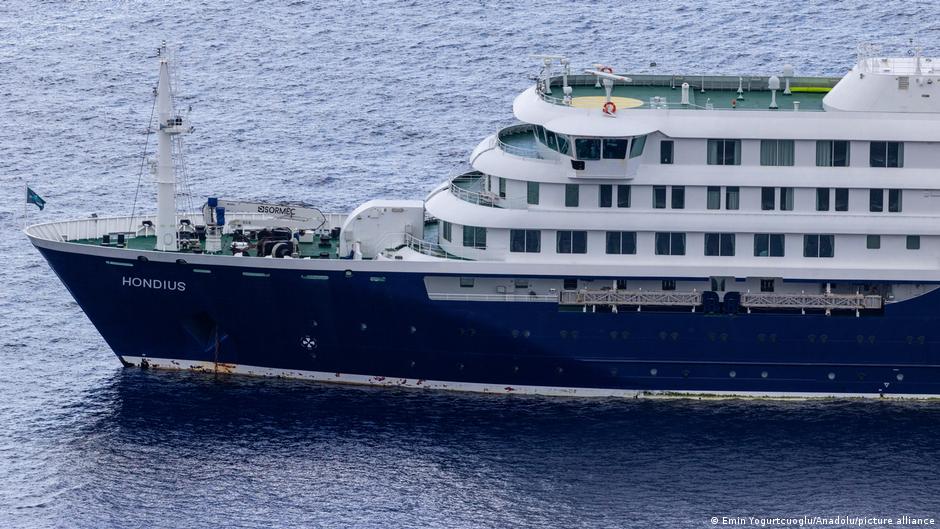
A cruise liner carrying confirmed Andes hantavirus cases departed Cape Verde on 6 May 2026, bound for Spain's Canary Islands where more passengers were expected to disembark. The World Health Organization, asked to assess the situation, described the public risk as low. Five of eight identified cases on board had been laboratory-confirmed as Andes hantavirus by 7 May; three remained suspected. That is the factual core of a story that has travelled faster than any virus.
The low-risk verdict from the WHO was not a face-saving hedge. Hantaviruses — a family of rodent-borne pathogens rather than a single agent — generally require sustained, direct contact with infected animals or their excreta to transmit between humans. Person-to-person spread is documented for Andes hantavirus in South America and remains rare even there. The conditions that amplify respiratory viruses on cruise ships — recirculated air, shared dining, thousands of passengers in confined proximity — do not apply in the same way to a pathogen that moves primarily through contaminated dust or, in rare cases, through very close household contact. The WHO's assessment reflects this virology.
What the Cruise Actually Carried
The vessel left Praia, the capital of Santiago in Cape Verde, on the evening of 6 May 2026. Polymarket posts tracked its position throughout the following day as it moved north-west across the Atlantic toward the Canary Islands archipelago, a Spanish territory approximately 1,500 kilometres south-west of mainland Spain. The next major port of call was Santa Cruz de Tenerife. Passengers booked to disembark there were, by 7 May, the subject of coordinated public health protocols.
The five confirmed infections represent a cluster, not an outbreak in any clinically meaningful sense. The three additional suspected cases may yet resolve in either direction — confirmed positive or cleared through further testing. The sources available as of publication do not specify how many passengers were aboard in total, the nationalities involved, or whether any individuals required hospital-level care. Those details, where they exist, have not entered the public record through the channels this publication monitors.
Andes hantavirus itself is endemic to Argentina and Chile, where rodent populations maintain the reservoir. Cases outside South America are rare and almost always traceable to travel history. The presence of this specific strain on a ship in the mid-Atlantic, rather than a more common Old World hantavirus variant, is epidemiologically notable — but notable in the way that makes scientists take notes, not the way that closes ports.
When Low Risk Meets High Anxiety
The WHO's statement that public risk is low arrived into an information environment that processes health stories through a lens forged by COVID-19. That experience created two durable reflexes: first, that any novel or semi-novel pathogen on a ship or in a transit hub carries cascading, uncontainable potential; second, that official reassurances are always understatements, issued to avoid panic rather than to describe reality. Both reflexes are understandable. Neither is always right.
The reflex to distrust low-risk assessments has a specific cost in this case. It shifts attention from the actual epidemiology — contained transmission risk, confirmed pathogen identity, functioning international surveillance — toward a hypothetical worst case that the available evidence does not support. That hypothetical case does exist in the technical literature; any virologist will acknowledge that person-to-person transmission, while rare for Andes hantavirus, cannot be categorically excluded. But public health communication is not conducted in the subjunctive mood, and for good reason. Describing the world as it is, rather than as it might conceivably become, is what makes warnings credible when they are genuinely warranted.
The Canary Islands Port Question
Whether Tenerife was the right destination is a separate question from whether the risk was low. The Canary Islands receive millions of tourists annually and maintain European-standard port health infrastructure. If the intent was to isolate passengers with confirmed infection and manage disembarkation under clinical supervision, a Spanish-administered port is well-equipped for that task. The alternative — diverting to an Atlantic island with limited medical capacity, or keeping infected passengers aboard indefinitely — would have created logistical and humanitarian complications without demonstrably reducing an already-low public health risk.
The decision to allow the ship to continue its voyage, rather than ordering an immediate diversion, reflects the WHO's risk calculus. Had the assessment been higher, different protocols would have applied. The sources do not indicate that any coastal state requested a change of course, or that Spain's health authorities issued any public advisory beyond what the WHO had already characterised.
What the episode reveals, if anything beyond its immediate facts, is the residual tension between global health surveillance and the populations it is designed to protect. Surveillance systems worked as designed: the cases were identified, the WHO was notified, a public assessment was issued, passengers are being managed through established port procedures. The information moved cleanly from ship to international body to public statement within 24 to 48 hours. That is the system functioning. Whether the public heard the low-risk message, or heard only the words "hantavirus" and "cruise ship" in sequence, is a different matter — and one that has less to do with the pathogen than with the architecture of modern health communication.
What Remains Unknown
The sources consulted for this article do not specify the name of the vessel, the total passenger manifest, the severity of any individual cases, or whether any crew members were among the confirmed or suspected infections. Contact tracing protocols at the port of disembarkation, and any subsequent monitoring requirements for passengers who left the ship in Cape Verde before the cluster was identified, are not detailed in the public record as of publication. These are factual gaps, not editorial omissions — the information exists somewhere in the port health and epidemiological reporting chain, but it has not entered the channels available for verification. Any confident claim about the broader exposure risk to passengers or port workers would outrun what the sources actually establish.
The Andes hantavirus cluster on this ship is, on present evidence, a contained medical event with a low probability of community transmission. The international health apparatus noticed it, assessed it, and said so publicly. The story that travelled, and the story that the facts support, are not the same thing.
Wire provenance
This editorial synthesis draws on the following public wire/social posts:
- https://x.com/disclosetv/status/1930275512399392880
- https://x.com/polymarket/status/1930139286879887688
- https://x.com/polymarket/status/1930393729435029558