Hezbollah's Drone Video and the Hollow Ceasefire Between Israel and Lebanon
A propaganda video released by Hezbollah on 7 May 2026, showcasing drone footage of Israeli military positions, arrives alongside continued strikes that underline a ceasefire in name only.
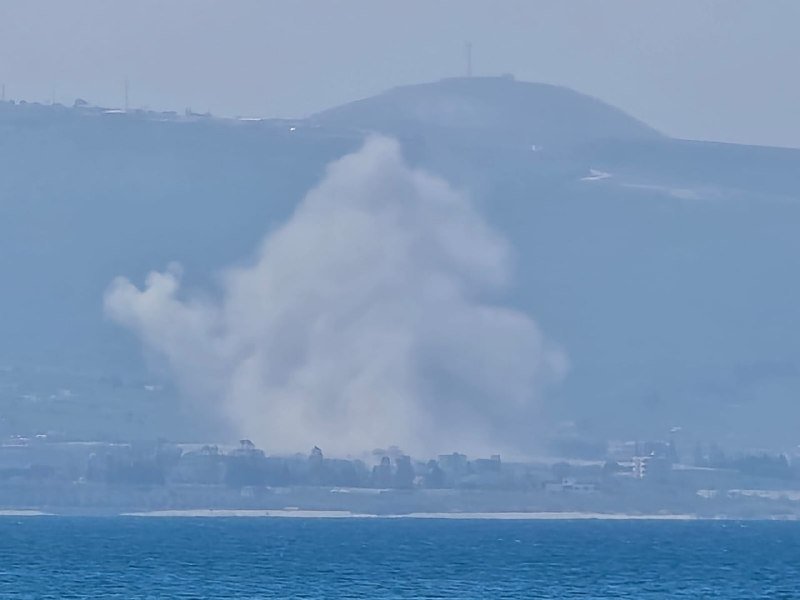
Hezbollah published footage on 7 May 2026 that the group said showed drone reconnaissance of Israeli Defence Forces positions in areas adjacent to southern Lebanon. The video, accompanied by the Arabic phrase roughly translatable as "you will soon be caught," was released as the group confirmed it had carried out additional retaliatory strikes against Israeli positions — strikes it said were warranted because the Israeli side had violated the terms of the ceasefire arrangement. Within hours, Israeli military aircraft broke the sound barrier over southern Lebanon, a display of air power whose timing was not coincidental. The choreography of threat and counter-threat, playing out across Telegram channels and military briefing rooms simultaneously, is the only ceasefire either side has honoured consistently: the one that permits mutual deterrence without formal acknowledgement.
What makes the footage significant is not its military sophistication, though that matters. It is the deliberate theatrical register in which Hezbollah chose to deploy it. This is not intelligence-sharing with a mediator. It is a broadcast. The group wanted an audience — Lebanese, Israeli, and the wider region — to see what its drones had seen. That framing tells us something about what Hezbollah now calculates it needs: not merely to respond to Israeli actions, but to be seen responding, and to be seen capable of continuing to do so. The drone footage is evidence assembled for public consumption, and its release on the evening of 7 May, within minutes of confirmation that additional strikes had been carried out, was a deliberate merger of operational and communicative acts.
Whose Violation First?
The central dispute — which party broke the ceasefire and bears responsibility for its unraveling — is the kind of question that produces genuinely irreconcilable answers depending on which institutional voice one consults. According to Iranian state-affiliated Press TV, which reported Hezbollah's account on the evening of 7 May, it is the Israeli regime that "continues to violate the ceasefire agreement by attacking Lebanon." Under that framing, Hezbollah's strikes are remedial: reactions to provocations, not independent escalations. Israeli military spokespeople and Western officials have consistently characterised Hezbollah's continued military posturing — the presence of fighters, the retention of weapons, the cross-border surveillance — as the original sin that makes Israeli operations defensive rather than provocative. Both framings have internal coherence. Neither is obviously false on its own terms. The difficulty for outside observers is that the ceasefire framework itself contains enough ambiguity about what constitutes a permitted versus prohibited activity that both sides can, with equal rhetorical confidence, present themselves as the aggrieved party and the other as the aggressor.
The sound barrier flights by Israeli aircraft over southern Lebanon on the evening of 7 May are technically within a range of conventional military signalling. Sonic booms serve multiple purposes: demonstration of air superiority, intimidation of civilian populations, and stress-testing of the opponent's early-warning infrastructure. Their timing — reported by first-hand witnesses on the ground within hours of Hezbollah's video release — suggests a deliberate calibrated response. Hezbollah gets its broadcast; Israel gets to remind southern Lebanon that its air force operates without effective challenge. Neither side advances territory. Neither retreats from position. The escalation, such as it is, occurs in the register of signals rather than physical control.
The Architecture of a Non-Enforcement
What the 7 May events illustrate, yet again, is the structural weakness of ceasefire arrangements brokered without credible third-party enforcement mechanisms. The ceasefire between Israel and Hezbollah — an agreement reached after the 2024 exchange that drew in international mediators — depends on parties who fundamentally distrust each other and who have, at various points, calculated that limited violations serve their interests better than strict adherence. Hezbollah retains weapons that, by any reasonable construction of the arrangement, should have been surrendered or neutralised. Israel conducts surveillance and occasional strikes that, by Hezbollah's construction, breach the sovereignty provisions of the agreement. Each side's violations become the other's justification for further violations, in a cycle that no mediator has been able to interrupt with sufficient credibility or leverage.
The United States and France, the primary international partners in the original ceasefire negotiation, have limited standing to enforce its terms. Washington is not neutral. Paris retains relationships with both parties but lacks the military leverage to compel compliance from either. Hezbollah's own political calculation, shaped by its position within Lebanon's fractured governance landscape and its alignment with Iranian regional strategy, treats the ceasefire as a tactical pause rather than a structural transformation — a position that is, it should be noted, shared by substantial factions within Israel's political and military establishment.
What Sustains the Present Equilibrium
The present equilibrium — sustained low-intensity conflict dressed in the language of ceasefire — persists because it serves interests that go beyond the military. For Hezbollah, the ability to claim legitimate resistance to Israeli occupation, even a de facto occupation conducted through monitoring rather than settlement, maintains the group's political relevance within Lebanon's Shia communities and its broader regional standing. For Israel's current government, maintaining the tension allows for continued military presence in the north without the political cost of re-occupying southern Lebanon while the southern border with Gaza remains active.
The drone video released on 7 May fits neatly into both calculations. It reinforces Hezbollah's deterrence narrative domestically. It also, deliberately or otherwise, provides Israeli military planners with evidence of continued Hezbollah surveillance capability — evidence that can be used to justify ongoing IDF operations in the north without triggering a full resumption of the 2024 conflict. The ceasefire, in this reading, is not broken. It is being managed. The language of violations is the instrument through which each side conducts that management, not a description of a genuine collapse.
Whether that equilibrium holds depends on factors neither party fully controls: the trajectory of the Gaza conflict, the decisions of Hezbollah's Iranian backers, the patience of Lebanese civilians living under the permanent infrastructure of a border tension, and the degree to which domestic political pressures in both Israel and Lebanon make continued restraint politically untenable. The evening of 7 May suggests neither side has yet reached that threshold. It also suggests neither is particularly interested in stepping back from it.
This publication covered the 7 May exchanges through Hezbollah's own public communications and ground-level witness accounts rather than through the diplomatic framing of the original ceasefire agreement.
Wire provenance
This editorial synthesis draws on the following public wire/social posts:
- https://t.me/presstv
- https://t.me/wfwitness