The Hormuz Flashpoint: US Warships Pass Through Under Fire as Gulf Allies Revoke Overflight Rights
Three US destroyers transited the Strait of Hormuz on 7 May 2026, the White House announced — a moment of naval bravado that coincides with, and may have precipitated, a coordinated pullback by two Gulf monarchies from US overflight access.
The White House announced on 7 May 2026 that three Arleigh Burke-class destroyers had completed a daylight transit of the Strait of Hormuz, the narrow maritime corridor through which roughly a fifth of the world's oil commerce passes. President Donald Trump called the passage "very successful" and said no damage had been sustained. The timing, however, is difficult to separate from a cascading set of developments in the 72 hours preceding the transit — developments that raise a more complicated question than the triumphalist framing suggests: successful passage of three warships through a chokepoint is one kind of signal; simultaneous withdrawal of Gulf overflight access by Saudi Arabia and Kuwait is another kind of signal entirely.
The broader picture emerging from the Persian Gulf in the first week of May 2026 is of a US posture that is simultaneously assertive in its kinetic language and eroding in its diplomatic foundations. The warships got through. The alliance architecture around them is under pressure in ways the Pentagon has not publicly acknowledged.
The Hormuz Passage: What the Sources Say and Do Not Say
The President's post on Truth Social, as reported by the ClashReport wire feed on 7 May 2026, described the three destroyers as "World Class American Destroyers" that had transited under fire with no damage sustained. The language is vintage Trump-era grandstanding — vivid, specific in its boast, vague in its military particulars. What "under fire" means in this context is left unexplained. Naval transits of the Strait of Hormuz routinely occur; the waterway is international水道 and the US Navy has a standing presence in the Gulf. The question the President's framing invites but does not answer is whether this was a routine freedom-of-navigation operation given additional political choreography, or something closer to an actual stress test of a contested waterway.
The rnintel intelligence wire, also reporting on 7 May 2026, corroborates the transit but frames it within a 48-hour sequence of escalating incidents. Forty-eight hours before the transit, the UAE port city of Fujairah — a critical refueling and transshipment hub at the eastern mouth of the Strait — was struck in an attack that Iran denied responsibility for. The attack on Fujairah is significant: it sits outside the Strait proper but controls a significant share of Gulf energy infrastructure throughput. Twenty-four hours before the transit, the same source reports, Saudi Arabia and Kuwait revoked US overflight access rights to their airspace.
The combination of these three events — an attack on Gulf energy infrastructure, a coordinated withdrawal of airspace access by two major Gulf monarchies, and a US naval transit announced as a demonstration of strength — does not, on its face, suggest a region consolidating behind US pressure on Iran. It suggests the opposite.
The Fujairah Variable: Attribution and Escalation Risk
Fujairah sits at the eastern rim of the Arabian Peninsula, looking directly across the Gulf of Oman toward Iran. It is the only emirate of the UAE on the Gulf of Oman coast, and its significance lies in what it enables: vessels refuel there rather than transiting the Strait itself to reach ports deeper in the Gulf. An attack on Fujairah — regardless of attribution — is an attack on the infrastructure layer of the global oil trade, not merely on a UAE municipal asset.
Iran denied involvement. The denial is itself informative: Tehran has both the capability and, depending on one's reading of its strategic calculus, plausible motive for such a strike in a period of heightened US-Iranian tension. Whether Iran ordered, facilitated, or simply declined to restrain a proxy actor remains unresolved in the available sources. What is structurally notable is that the attack occurred without prompting a public US military response in kind; instead, within 48 hours, the US announced a naval transit as though the incident had been absorbed.
This is worth dwelling on. The pattern — attack on regional infrastructure followed by a visible but ultimately defensive US military demonstration — maps onto a dynamic the US has cycled through before in the Gulf. Show of force, with attribution absorbed and escalation capped by both sides. The difference in May 2026 is what happened simultaneously on the diplomatic track.
The Airspace Withdrawal: The Signal That Matters More
The decision by Saudi Arabia and Kuwait to cut US access to their airspace, reported 24 hours before the Hormuz transit, is the development that has received the least public attention and may be the most consequential. Airspace access for US military aircraft — for surveillance, for logistics, for rapid reinforcement — is a different kind of strategic asset than port access or basing rights. It is given and withdrawn by sovereign states acting on their own assessments of risk.
The sources do not specify the scope of the withdrawal — whether it affects all US military flights or a subset; whether it is a temporary suspension or a formal revocation; whether it was notified to Washington in advance or implemented as fait accompli. These are material gaps. What the sources do suggest is that the withdrawal occurred in close temporal proximity to the Fujairah attack and in the immediate lead-up to the Hormuz transit announcement.
Saudi Arabia and Kuwait are not peripheral actors in the US regional architecture. Riyadh hosts the US Central Command forward headquarters and a significant contingent of US military personnel. Kuwait hosts Camp Arifjan, one of the largest US logistical installations in the Middle East. Both countries have, for decades, navigated a careful balance between their security relationships with Washington and their economic and diplomatic relationships with Tehran. The withdrawal of overflight rights — if it is as broad as the reporting implies — represents a material shift in that balance. It signals that both governments have assessed the current trajectory of US-Iranian tensions as sufficiently volatile that they do not wish to be visibly complicit in a US posture that could trigger broader conflict.
The question this raises is whether the airspace withdrawal is a reaction to the Fujairah attack — both states factoring in that the attack might escalate — or a reaction to the US response posture itself, which may have been perceived in Riyadh and Kuwait City as destabilizing rather than stabilizing.
Structural Frame: What Hegemonies Look Like When Their Alliances Hesitate
There is a structural logic to what the Persian Gulf is revealing in the first week of May 2026. A hegemonic power announces the successful passage of its warships as a demonstration of strength, and simultaneously loses the airspace access that makes those warships operationally useful for sustained regional presence. The warships got through; the supply lines and surveillance corridors are narrowing.
This is not a novel dynamic in the history of great-power influence in the Gulf. The US has managed this tension before — during periods of heightened Cold War competition, during the energy shocks of the 1970s, during the Iran-Iraq war era. What has changed is the specific configuration: the US is operating under a White House that frames Iran as an existential adversary requiring maximum pressure, in a region where several Gulf monarchies have concluded that their own exposure to that pressure may exceed their appetite for being associated with it.
The Strait of Hormuz is, structurally, a chokepoint precisely because it concentrates global oil commerce into a physically narrow corridor. That physical fact gives the US Navy leverage — a strike capability in a crisis. But leverage over the Strait is different from leverage over the broader regional order. The former the US retains. The latter is what the airspace withdrawal suggests is under renegotiation.
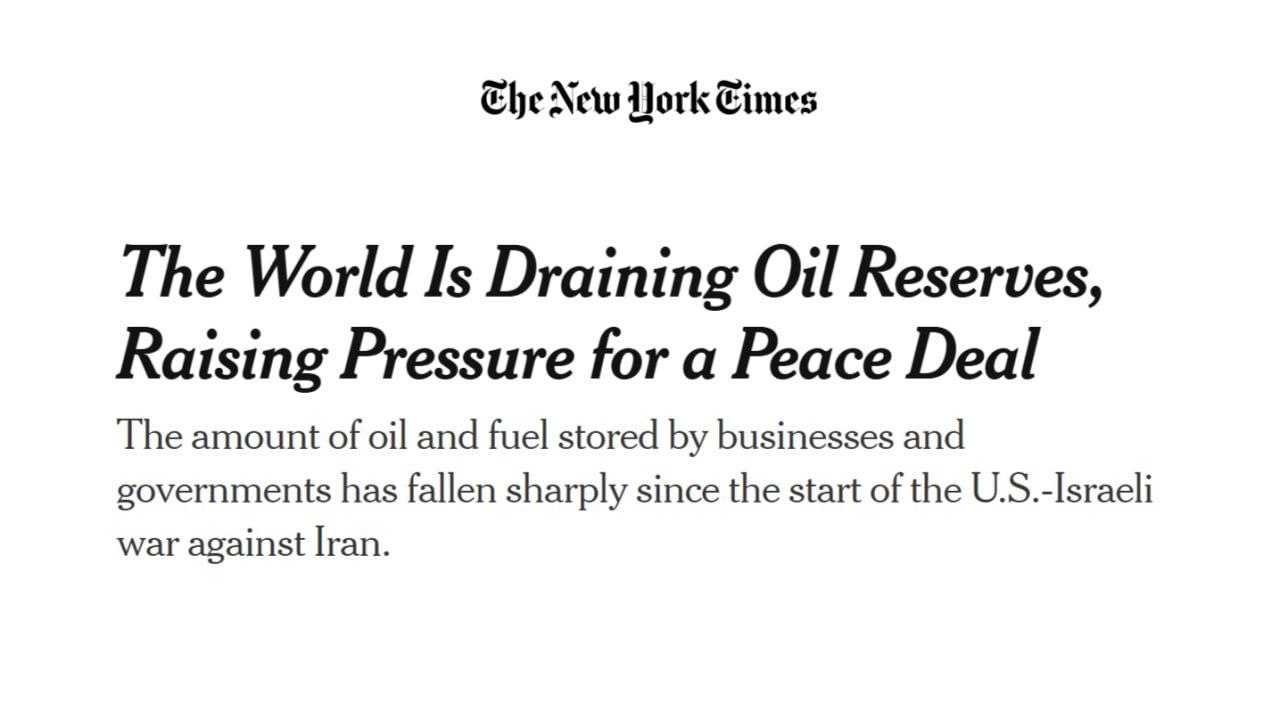
The global oil market does not yet appear to have reacted sharply to the convergence of events — Fujairah, the airspace withdrawal, the Hormuz transit. Brent crude has been elevated by broader OPEC+ dynamics for months. The question for markets, and for the Pentagon's forward planners, is whether the sequence of the past 72 hours represents a discrete incident or the beginning of a sustained reconfiguration. Regional actors who have spent decades managing their positioning between Washington and Tehran are, at minimum, demonstrating that the current US posture does not command the automatic alignment it once did.
What Remains Unresolved and Why It Matters
The available sources — all from the past 48 hours — leave several material questions open. The precise scope and duration of the Saudi and Kuwaiti airspace withdrawal are not specified. The attribution of the Fujairah attack is contested. The specific nature of the threat the destroyers faced during their "under fire" transit is unexplained. Whether these events are causally connected — the airspace withdrawal as a direct consequence of the Hormuz transit posture, or the transit as a response to the preceding incidents — cannot be determined from the current reporting.
What can be said is that the public framing from Washington and the structural signal from the region are running in opposite directions. The White House announced strength. Two Gulf monarchies quietly reduced their exposure. That discrepancy — between declared confidence and the recalculation happening around it — is where the more durable story lies.
This publication's coverage of the Strait of Hormuz and Gulf security has historically foregrounded the operational dimensions of US naval presence. The May 2026 developments suggest that the more consequential story, at least in the near term, is the diplomatic infrastructure around that presence — and whether the states that host and transit through it still regard it as worth the risk it currently implies.
Wire provenance
This editorial synthesis draws on the following public wire/social posts:
- https://t.me/ClashReport/48291
- https://t.me/rnintel/15834
- https://t.me/GeoPWatch/9903
- https://en.wikipedia.org/wiki/Strait_of_Hormuz
- https://en.wikipedia.org/wiki/Fujairah
- https://en.wikipedia.org/wiki/Camp_Arifjan
- https://en.wikipedia.org/wiki/United_States_Central_Command
- https://en.wikipedia.org/wiki/Freedom_of_navigation_in_the_South_China_Sea_and_Persian_Gulf