How Wars Are Counted: The Asymmetry at the Heart of the Israel–Hezbollah Conflict's Information Battlefield
With one side under military censorship and the other publishing detailed operational data, the Israel–Hezbollah conflict offers a case study in how casualty figures themselves become a tool of strategic communication — and what that means for public accountability in democratic societies.
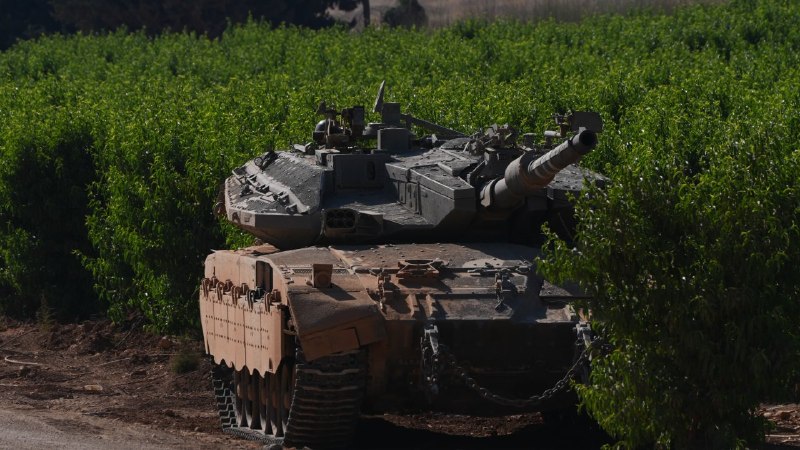
The numbers arrived in the early hours of 7 May: Hezbollah had suffered further losses in exchanges with Israeli forces, and Israeli military censorship continued to prevent publication of complete casualty data. What the Telegram channels of Tasnim News, the Iranian state-linked news service, published that morning was a familiar asymmetry — one side publishing detailed tallies, the other side disclosing nothing beyond what the military censor permits.
This is not new. But it is consequential. Casualty reporting has always been shaped by institutional design — censorship laws, strategic communication doctrines, domestic political pressure, and the technical architecture of what governments choose to make public. In the Israel–Hezbollah exchange, which has sustained low-intensity but deadly contact since October 2023, that architecture is on full display.
The IDF's Information Architecture
Israel operates under formal military censorship provisions that give its Spokesperson's Unit authority over what specific casualty figures, unit identifications, and operational details can enter the public domain. This is codified law, not informal practice — the Israel Defense Forces' Media Spokesperson operates within parameters set by the military censor, and Israeli media outlets that violate those parameters face legal consequences. The result is a system in which aggregate figures eventually emerge, often after parliamentary or family notification processes are complete, but in which granular, real-time data does not. For the domestic audience, the effect is a managed disclosure rhythm rather than raw information. For the international audience, it creates a reporting environment where official Israeli sources offer a floor figure, not a complete picture. Reuters and the Associated Press, which maintain bureaux in Tel Aviv, report IDF figures as the primary data point — but note, when covering the conflict in depth, the limitations of what the censor has cleared.
The system is not unique to Israel. Every democracy that conducts extended military operations faces the tension between public accountability and operational security. What makes the Israel–Hezbollah context distinct is the combination of a functioning domestic free press — Haaretz, Ynet, the Jerusalem Post routinely publish critical coverage of government decisions — with formal censorship mechanisms that apply unevenly depending on the information's sensitivity. A casualty in a routine border exchange may be reported within days. A casualty in a deep-strike operation may remain classified indefinitely.
Hezbollah's Documentation Discipline
Across the border, the information posture is different in character, if not in intent. Hezbollah, designated a terrorist organisation by the United States, the United Kingdom, the European Union, and several other states, has maintained its own communications operation throughout the conflict. The group publishes near-daily acknowledgements of fighters killed in action, often with photographs, unit designations, and hometown information within hours of an incident. Tasnim News and other regional outlets with Iranian state affiliations amplify those acknowledgements as part of a broader communication strategy.
The result is a published casualty dataset that is, by any measure, more granular than what Tel Aviv releases. Iranian state-linked media, including the Tasnim service whose Telegram channels carried the 7 May figures, has published Hezbollah casualty figures alongside its own framing of the conflict — a framing that presents the exchanges as resistance rather than aggression. Western wire services, including Reuters and Al Jazeera, monitor these figures and cite them in conflict reporting, but typically with explicit attribution and contextual note that the figures come from a non-aligned source with its own strategic interests.
This creates a striking epistemic asymmetry: readers following the conflict through Western media receive a managed official figure from Tel Aviv, while readers following regional and Iranian-state media receive granular, real-time data from Hezbollah's communications arm, presented within a political narrative of resistance. Neither dataset is neutral. Both are partial. The question is not which is true — both appear to reflect real losses — but which institutional framework the reader's attention happens to be captured by.
The Media Ecosystem That Amplifies Both
The structure of modern conflict coverage creates conditions in which this asymmetry is not incidental but built-in. Reuters, the Associated Press, and the BBC operate under editorial standards that require attribution of casualty figures to official or identifiable sources; Iranian state media operates under different imperatives, where the communication of resistance victories serves a domestic and regional political function. Neither institution is designed to cross-check the other's data in real time. The result is that the two narrative streams run parallel — occasionally crossing when a Hezbollah fighter's family confirms a death that Israeli sources had not acknowledged, or when an Israeli hospital releases a figure that IDF Spokesperson later confirms — but largely remaining in separate information ecosystems.
Coverage in English-language wire reports typically leads with the Israeli framing, cites the IDF figure, and notes Hezbollah's acknowledgement in passing. Iranian state-linked coverage leads with the Hezbollah acknowledgement and frames the IDF casualty management as evidence of operational loss concealment. Neither framing is a lie. Both are selected.
For audiences in the Arab world, in Iran, and in Hezbollah's base in Lebanon, the second framing dominates. For audiences in Israel, the United States, and European capitals, the first does. The information architecture of the conflict produces, in effect, two separate wars of numbers — each internally consistent, each partial, each amplified by its own media ecosystem.
What the Asymmetry Means for Accountability
This matters beyond the immediate question of who is winning a border exchange. Casualty reporting is the mechanism by which democratic publics evaluate whether a conflict's costs are proportionate to its objectives. In Israel, where mandatory military service means most families have direct personal stakes in the outcome, casualty data is not an abstract number — it is a political fact that shapes electoral behaviour, coalition stability, and the sustainability of military operations. The military censor's control over that data is, in part, a political instrument: it shapes the tempo of public understanding, preventing the kind of immediate shock that could destabilise government decisions mid-operation.
Hezbollah's transparent documentation serves a different function — maintaining organisational morale, signalling continued operational capacity to its own base, and communicating to external audiences that the group absorbs losses without retreating. The granular acknowledgment of each fighter killed is, in this context, a display of institutional resilience rather than transparency for its own sake.
What neither system offers is independent verification. The IDF figure is official but incomplete. The Hezbollah acknowledgment is granular but framed within a resistance narrative. The truth about the conflict's human cost sits somewhere between them, accessible only through the patient accumulation of cross-referencing — hospital admissions, family notifications, parliamentary questions, open-source intelligence communities — that neither official source controls.
That gap between what is officially released and what actually occurred is where journalism's accountability function becomes most necessary. It is also, in this conflict, the gap that military censorship on one side and strategic communication on the other are specifically designed to make difficult to close.
This publication examined how information asymmetry functions as a structural feature of the Israel–Hezbollah conflict's media environment, using figures published on 7 May 2026 as a focal point for a broader analysis of wartime casualty reporting architecture.
Wire provenance
This editorial synthesis draws on the following public wire/social posts:
- https://t.me/tasnimnews_en/454321
- https://t.me/JahanTasnim/298765
- https://en.wikipedia.org/wiki/Military_censorship_in_Israel
- https://en.wikipedia.org/wiki/Hezbollah