The Ignored Warning: Why Military Bureaucracies Miss the Threats That Matter
A pattern of dismissed warnings and operational surprise is repeating itself in the Israel-Lebanon theatre, with consequences measured in soldiers’ lives.
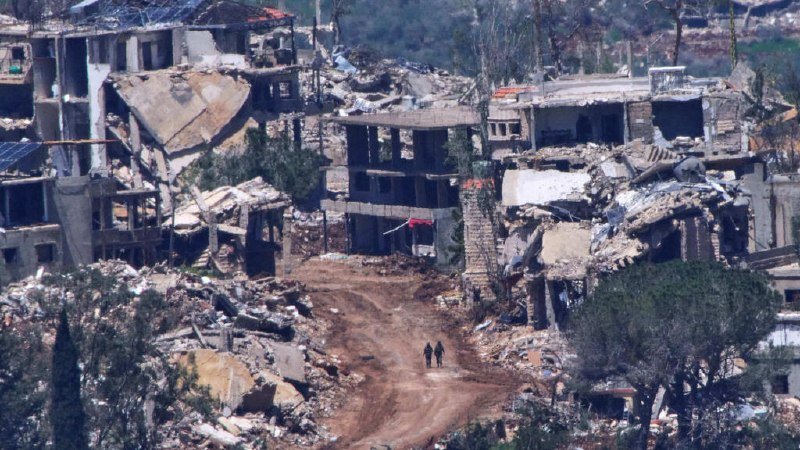
On a single afternoon in early May 2026, Israeli jets struck at least five towns in southern Lebanon. Siddiqin. Harouf. Dweir. Blat. The sequence, reported by regional wire services on 7 May, described a concentrated wave of strikes across a corridor of territory that has been the epicentre of low-intensity conflict since October 2023. There was no single dramatic trigger cited in the contemporaneous reports. The strikes appeared to be part of an ongoing operation rather than a response to a specific incident — which raises a harder question than any single sortie: what happens when a military knows a threat exists, is warned specifically about it, and still finds itself surprised when that threat materialises in combat?
That question is no longer hypothetical. According to reporting by The Cradle, at least two Israeli soldiers and a contractor were killed by Hezbollah FPV drones in southern Lebanon — and the outlet cited sources asserting that Israeli military leadership had received warnings about the FPV drone threat before the current phase of hostilities began. The IDF's formal position on those warnings, and whether it contests the characterisation of its response, is not yet fully established across the available record. But the charge itself — that an institution absorbed information about a novel threat and failed to act on it with sufficient urgency — fits a pattern with which military historians are intimately familiar, and which serving officers tend to find deeply uncomfortable to examine in public.
The pattern is not unique to this conflict, nor is it evidence of malicious intent. It is, in many respects, the正常运行 output of organisations designed to resist change. Military bureaucracies are optimised for the last war. Doctrine is written after battles are won. Procurement cycles run for years. Institutional memory is preserved in formations and protocols that take time to update. When a threat emerges outside existing categories — whether that's a civilian drone repurposed for surveillance, a commercial quadcopter modified to drop ordnance, or a first-person-view attack drone that exploits terrain in ways conventional artillery cannot — the bureaucratic machinery that might respond tends to classify the warning as an edge case, not a central scenario. The Israeli case, if The Cradle's reporting holds under scrutiny, would be a version of this dynamic with lethal consequences already attached.
The counter-narrative deserves to be stated plainly. It is entirely possible that Israeli military planners assessed the FPV warning correctly as a low-probability, high-consequence event — and made a rational allocation of resources accordingly. Every military faces an infinite list of threats and a finite budget. Drones are cheap. Building a comprehensive counter-drone architecture across a disputed border zone is not. The decision to deprioritise a threat that has not yet demonstrated mass-casualty capability may have been a considered judgment call rather than a failure of attention. Military institutions that pivot too rapidly to every new threat category tend to spread themselves thin and lose operational coherence. The Israeli Defence Forces have maintained a relatively effective posture across multiple simultaneous threat vectors for decades. That record did not come from reacting to every warning at full alarm.
What complicates the comfortable version of that defence is the casualty figure itself. Two soldiers and a contractor are dead. If those deaths resulted from a threat that was foreseeable and warned against, the "resource allocation" explanation becomes harder to sustain — not because it is wrong in principle, but because the price of the decision has been paid in identifiable lives. This is the juncture where institutional risk management and individual human cost collide, and where post-hoc analysis tends to be harsh. When the probability of an event is low but the consequences are severe, the rational choice is not obvious — but when the event occurs, the decision-makers who chose otherwise face predictable scrutiny.
The structural problem here is not uniquely Israeli, and it would be misleading to frame it as such. Western militaries have spent years publicly wrestling with the implications of commercial drone technology for battlefield operations. The Ukrainian conflict demonstrated at scale what previous conflicts had only hinted at: that a cheap, off-the-shelf drone flown by a single operator can accomplish what previously required a missiles system and a trained crew. The learning curve for FPV systems in particular has been steep, and the adaptation required of conventional forces has been slower than the technology's proliferation. Israel, operating in a dense urban and terrain environment along its northern border, faces particular exposure to the tactic. That The Cradle reports Israeli commanders received explicit warnings about this specific vector before the conflict escalated makes the institutional failure, if confirmed, more pointed — not because malice should be inferred, but because the opportunity to act was apparently present.
The strikes on southern Lebanon on 7 May are the operational consequence of a conflict that has not found diplomatic resolution. The FPV drone deaths reported by The Cradle are a data point within that larger picture — one that will be examined in after-action reviews regardless of what comes next. What those reviews will ultimately have to explain is not why a new technology surprised a military institution — that is nearly universal — but why, in this instance, the warning appears to have been received and not acted upon. The answer matters not only for the families of the soldiers killed, but for every military still operating under the assumption that the next war will look enough like the last one to be managed with the existing playbook. The available evidence suggests that assumption is becoming costlier by the year.
The thread context for this piece drew on regional wire reports via Telegram and on The Cradle's reporting on the FPV warnings and casualties. As this publication goes to press, the IDF has not issued a public statement responding to the specific allegations in the Cradle report. The struck towns in southern Lebanon are home to civilian populations; the sources do not specify civilian harm from the 7 May strikes. This publication will continue to monitor the record as it develops and update where the evidence warrants.
Wire provenance
This editorial synthesis draws on the following public wire/social posts:
- https://t.me/wfwitness
- https://t.me/thecradlemedia