Air Defense Activity Reported in Iran as Israel Denies Involvement
Reports emerged on 7 May 2026 of air defense activity in Iran, with Israeli officials quickly moving to deny any Israeli role in the incident, while speculation centered on alternative explanations including the possible involvement of the UAE.
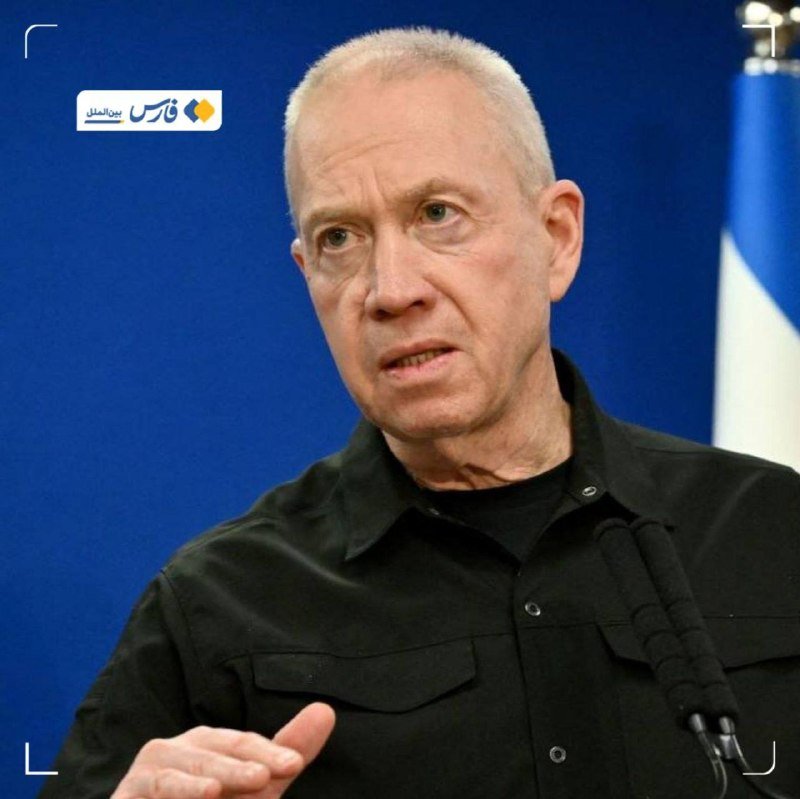
Reports of air defense system activations circulated on Telegram late on 7 May 2026, with footage apparently showing defensive activity in or near Iranian territory. The precise location of the reported incident remained disputed as of filing — some channels placed the activity in the country's west, others in the south — and it remained unclear whether the footage represented a single discrete event or footage from earlier incidents being recirculated.
Within hours of the reports emerging, an Israeli official spoke to the i24 NEWS network and stated explicitly that Israel had no connection to the night's events in Iran. The denial was subsequently amplified by additional Israeli sources quoted across Telegram channels monitoring regional security. No Israeli government statement had been posted to official channels as of 19:41 UTC.
Speculation immediately filled the vacuum created by that denial. Some Telegram accounts tracking Iranian security matters suggested the activity could involve the United Arab Emirates as a potential actor — a hypothesis that remained entirely unconfirmed and was flagged as such by the accounts posting it. The denial-and-speculation dynamic underscored how rapidly information ecosystems around Middle East incidents can fragment in the absence of authoritative confirmation.
Initial Reporting and Source Quality
The first accounts of the incident came exclusively from Telegram channels operating in Persian-language and regional security spaces. These channels — among them FotrosResistancee, BellumActaNews, and GeoPWatch — have track records of breaking early information on air defense activations and strikes in the region, but they are not official sources, and their initial reports frequently contain contradictory details before a more coherent picture emerges.
The footage itself — a visual staple of such reporting — cannot be independently geolocated or timestamped from the Telegram posts alone. That is standard for early incident reporting, where visual evidence often circulates before corroboration is possible, but it means any conclusions about scale, target, or attribution remain speculative at this stage.
Israel's Denial in Context
Israeli denials of involvement in regional incidents are not unusual, but their timing and specificity carry political weight. A prompt, categorical denial — rather than a studied silence or non-commitment — signals deliberate messaging, typically aimed at managing escalation risk or signaling restraint to domestic and international audiences simultaneously.
In this case, the denial came within approximately twenty minutes of the initial Telegram reports. Israeli officials and state-adjacent outlets have in the past issued denials that were later partially walk-backed or qualified; absent a fuller Israeli government statement, Tuesday's denial should be understood as a political communication rather than a definitive account.
Structural Dynamics in the Gulf Region
The speculation pointing toward the UAE as a possible actor reflects a broader structural reality: the Gulf security architecture is dense, with overlapping air defense systems, rivalries that do not map neatly onto the Israel-Iran binary, and intelligence relationships that are not fully transparent. When incidents occur and the dominant actor denies involvement, secondary hypotheses proliferate — some plausible, some not — and the information environment degrades accordingly.
For readers accustomed to framing that treats every Gulf incident as a chapter in a single Iran-Israel narrative, the UAE speculation serves as a useful reminder that regional actors have their own calculations, their own threat perceptions, and their own operational tempo. The assumption that any detected air defense activity in Iran must trace to Israeli action is an editorial assumption, not a logical one.
What Remains Unknown
The sources Monexus reviewed for this article do not establish what triggered the reported air defense activity, what was engaged, or whether the engagement was successful. No wreckage analysis, no radar data, and no casualty or damage reporting has emerged from credible verified sources. The Israeli denial addresses attribution, not scale.
Independent news wires had not yet published confirmed reporting on the incident as of 20:00 UTC on 7 May 2026. Any article — including this one — that relies solely on early Telegram reporting should flag that limitation explicitly, as this piece does. The gap between the volume of speculation and the scarcity of confirmed facts is itself a structural feature of how regional security incidents are reported in real time.
The coming hours will likely bring additional data points: satellite imagery if significant damage occurred, statements from Tehran or the IRGC, and potentially from the UAE Foreign Ministry if that hypothesis is being tested internally. Until those arrive, the honest position is that an incident occurred, Israel denies involvement, and the rest is contested.
This publication noted the rapid circulation of unconfirmed visual evidence across Telegram channels and chose to foreground the Israeli denial and the evidentiary gap rather than amplifying unattributed speculation as fact.
Wire provenance
This editorial synthesis draws on the following public wire/social posts:
- https://t.me/FotrosResistancee/12489
- https://t.me/FotrosResistancee/12488
- https://t.me/BellumActaNews/7891
- https://t.me/GeoPWatch/4521