Iran's Air Defense Lights Up Tehran as Strikes Resume — and the West Is Watching the Wrong Metric
Reports of heavy air defense activity over western and northwestern Tehran on the evening of 7 May mark a significant re-escalation after weeks of managed ceasefire. The question is not whether another strike has landed — it clearly has — but what the pattern of targeting tells us about the strategic logic on both sides.
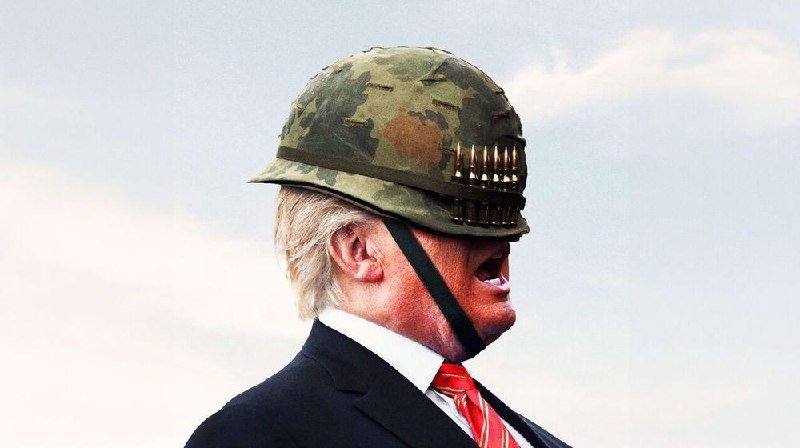
At 20:19 UTC on 7 May, open-source monitors began flagging unusual activity over northwestern Tehran. Within minutes, reports were arriving from multiple independent channels: air defense systems had activated over the Iranian capital. By 20:27 UTC, local sources were describing at least four distinct explosions in the western part of the city. The pattern was unmistakable — not a test, not a false alarm, but the sound of an active engagement.
This is not the first time air defenses over Tehran have made headlines this year. But the cadence is changing, and with it the assumptions that Western capitals have built their public communications around. The prevailing media frame treats each strike as an isolated event — a proportional response, a red line crossed, a de-escalation signal sent — while the underlying trajectory tells a different story. The strikes are getting closer to the center of gravity. The intervals are getting shorter. The Iranian responses are getting less ambivalent.
What we are watching, in plain terms, is the erosion of a managed-crisis framework that was never as solid as it looked. Both sides have been performing restraint for domestic and international audiences while conducting a war below the threshold of total conflict. That arrangement is fraying.
The Escalation Ladder Has No Upper Rung in Sight
Iran's air defenses firing over Tehran is not simply a signal of threat response. It is an admission that the threat is arriving at ranges and with precision that make concealment impossible. A government that can frame an incident as a misdirected drone or an errant test will do so. When the official channels instead go quiet and the explosions are described by multiple local witnesses, it means the government's preferred narrative has already failed.
From the striking side's perspective — whether Israeli, American, or a combination that official statements are careful not to name — the choice to target sites in the western approach to Tehran carries specific signal value. It is not a peripheral target. It is not a symbolic gesture. It is an assertion that the strike package can reach the capital's defensive perimeter and succeed in doing so. That is a different category of message than striking infrastructure in Bushehr or deep in Isfahan province.
Western coverage has tended to parse these events through the lens of diplomatic opportunity — whether the latest strike creates an opening for talks, whether Tehran will choose to absorb the blow rather than respond, whether the ceasefire talk at the international level has any bearing on what actually happens in the air. That framing is understandable. It reflects how decision-makers in Washington and European capitals prefer to consume the conflict. But it mistakes the medium of diplomacy for the substance of strategy.
Iran's leadership has made clear through its official statements and through the calibrated nature of its own retaliatory strikes that it is engaged in a strategic cost-benefit calculation — not a reactive spasm. The calculus is no longer primarily about whether to absorb a blow, but about what the next round of striking will look like and who will be conducting it. As the strikes move closer to Tehran's defensive core, the calculation shifts from deterrence to retaliation architecture. That is a structural change, not a cyclical one.
What the Reporting Framework Misses
Coverage of air defense activations tends to treat the event as the story — air defense fires, therefore strike occurred, therefore we have confirmation of escalation. The more important story is what the targeting pattern reveals about the striking side's theory of the game. Each strike closer to Tehran's center advances a logic: that the path to a negotiated settlement runs not through concessions but through demonstrated reach. The goal, on this reading, is to show that the cost of non-agreement rises with every round.
That theory has a history in this region. It has produced outcomes that looked like victories in the short term and created conditions for deeper instability in the medium term. The difference this time is the technology gap — the strike package is more precise, the defenses it faces are more sophisticated, and the regional architecture that was supposed to provide a backstop for containment has been weakened by sustained attrition.
Iranian state media, when it reports on these incidents at all, has been careful to frame them as acts of aggression requiring response while avoiding language that forecloses diplomatic off-ramps. That restraint is real — it reflects genuine differences within the Iranian leadership about how to calibrate response — but it is not infinite. Every strike that reaches the defensive perimeter of the capital chips away at the audience for restraint. The hawks inside the regime do not need a majority; they need a moment when the absorptive-capacity argument loses credibility.
The Western media framework is also missing the Global South dimension of this conflict. The coverage defaults to a Washington–Tel Aviv–European capital information environment that treats Iran as a problem to be managed and the strikes as a legitimate exercise of pressure. That framing has genuine validity in the channels where it operates. But outside that information environment — in the Gulf states that are watching their own airspaces with new anxiety, in South and Southeast Asian capitals that depend on Gulf maritime transit, in African capitals that watch the dollar-price effects of every escalation signal — the story reads differently. The strikes are not a pressure tactic; they are a preview of what a wider conflict looks like, and the preview is already destabilising energy markets and insurance premiums in ways that have real-world consequences for populations far from the engagement zone.
The Stakes Are Not Diplomatic Window Dressing
What makes the current phase different from the managed-crisis period of the past two years is that both sides appear to have concluded — or be approaching the conclusion — that the managed-crisis framework has run its course. Iran's nuclear programme has advanced in ways that no longer fit neatly inside the diplomatic timelines that Western officials use to structure their public statements. The striking side's tolerance for what it calls threshold activity has contracted. The regional environment — shaped by the Gaza conflict's aftermath, by shifting alignments in the Gulf, by the slow-motion deterioration of the Syrian and Iraqi state structures — no longer provides the same buffering capacity for miscalculation.
The air defense activations over Tehran on 7 May are not the crisis. They are a symptom of a crisis that the coverage is treating as a series of discrete incidents rather than a structural realignment. The question worth asking is not whether this round of strikes will be followed by diplomatic activity — it will be; there is too much infrastructure built around that expectation to abandon it — but whether the diplomatic activity will be operating on a real map or the outdated one both sides have been consulting while the ground shifted beneath them.
The explosions over western Tehran are audible in a way that earlier strikes were not. That difference is not incidental. It is the signal.
Wire provenance
This editorial synthesis draws on the following public wire/social posts:
- https://t.me/BellumActaNews/12487
- https://t.me/rnintel/8934
- https://t.me/Middle_East_Spectator/5512
- https://t.me/wfwitness/7823