Iran Calls US Hormuz Reopening Proposal 'Unrealistic' as CIA Warns of Prolonged Blockade Resilience
Iran has dismissed American calls to reopen the Strait of Hormuz as unworkable, even as fresh intelligence suggests the Islamic Republic could sustain a blockade of the waterway for months without significant domestic strain. The confrontation places global energy markets on notice.
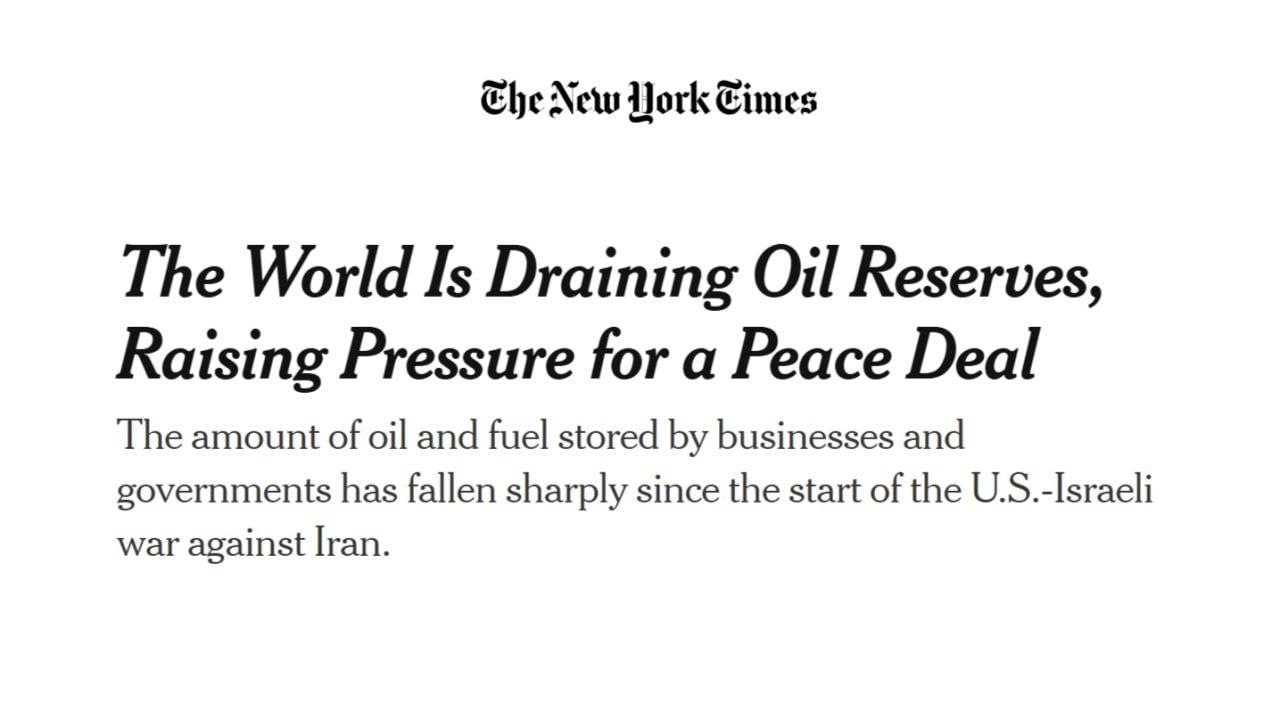
On 7 May 2026, Iran dismissed a United States proposal to reopen the Strait of Hormuz as "unrealistic," according to reporting from the BRICS News Telegram channel citing Iranian state-aligned media. The rejection arrived as new intelligence from the Central Intelligence Agency suggested Tehran possesses the economic and structural resilience to sustain a blockade of the critical waterway for months, per a Washington Post report shared across social media platforms the same day.
The confrontation, which has been building since the weekend, places at risk one of the world's most consequential maritime chokepoints: Hormuz handles roughly a fifth of all global oil trade and a third of the world's liquefied natural gas shipments. Any sustained disruption carries immediate consequences for energy prices and, by extension, for inflation-pressured consumer economies across Asia and Europe.
The Rejection
Iran's response to the US overture was categorical. State media described the American proposal as disconnected from conditions on the ground, the tone suggesting Tehran views any external pressure on its Hormuz posture as an affront to sovereignty rather than a negotiation subject. The framing — "unrealistic" — carries deliberate weight in diplomatic contexts, signalling not merely disagreement but a fundamental rejection of the premise that Hormuz access is a matter for negotiation.
That posture aligns with Tehran's longstanding position that the strait falls under Iranian jurisdiction and that any militarised interference constitutes a provocation. Iranian officials have consistently maintained that control over Hormuz is a question of national security, not bargaining leverage — a distinction that matters when assessing how far Tehran might go in practice.
The CIA Assessment
The timing of Iran's rejection coincided with publication of CIA-sourced analysis suggesting the Islamic Republic could absorb the economic costs of a prolonged Hormuz disruption. The Washington Post reported on 7 May that intelligence officials believe Iran has built sufficient reserves and domestic energy flexibility to weather international sanctions pressure that would typically accompany a blockade scenario. The assessment, if accurate, removes what US policymakers have long counted on as a deterrent: that Iran would blink before its own economy buckled.
That calculation matters enormously for the escalation calculus. A country that can sustain a blockade for months is a country that does not fear the short-term consequences of confrontation. US military planners have historically counted on economic pain to forestall Iranian moves; if that assumption no longer holds, the deterrence picture shifts.
The intelligence also underscores a broader reality: Iran's economic architecture has changed substantially since the last period of acute Hormuz tension a decade ago. Years of sanctions逼迫 Iranian authorities to develop alternative revenue streams, deepen trade relationships with non-Western partners, and reduce dependence on hydrocarbon exports as the sole economic driver. That adaptation has a corollary — it has also reduced Iran's vulnerability to the specific weapon the West once relied on most.
The Strategic Geometry
The Hormuz question is not simply bilateral. What Iran signals in rejecting the American proposal reverberates across a wider constellation of relationships — most immediately with Gulf Arab states who have their own interests in unimpeded shipping, and with great powers for whom the strait represents both a strategic vulnerability and a pressure point.
Beijing, for instance, imports substantial volumes of crude through Hormuz. Any Iranian posture that threatens transit — even rhetorically — directly affects Chinese energy security. Chinese state media and diplomatic briefings have historically treated Hormuz stability as a core interest, and Beijing has historically avoided publicly backing Iranian moves that could destabilise the waterway. The structural tension — between Iran's interest in projecting power and China's interest in keeping the strait open — is real, even if it does not always surface in Western coverage.
That geometry helps explain the Polymarket question surfaced on 7 May, which asks users to predict which countries will deploy warships to Hormuz before the end of the month. Markets and observers are watching because the strategic maths is not simple: a US naval presence deters Iran but also risks a flashpoint; an absence invites miscalculation. Gulf states face their own version of that dilemma — dependent on US security guarantees but also on stable hydrocarbon revenues that require open transit lanes.
What Western coverage often misses is the degree to which Iran's Hormuz posture reflects domestic political logic, not purely external calculation. A government that frames itself as resisting American pressure — at a moment of regional tension — gains legitimacy that purely economic or diplomatic arguments cannot provide. That does not make the threat performative; it makes it structurally durable.
Consequences and Forward View
If Hormuz transit faces disruption — whether through a formal blockade or through the more ambiguous pressure of heightened military activity — the first-order effect lands on oil markets. Brent crude has traded in a range sensitive to Middle East escalation signals for months; a credible Hormuz threat would breach that range upward. Asian buyers, particularly those in China, Japan, and South Korea, would face immediate cost pressures that feed into broader inflation dynamics.
The second-order effect is on shipping insurance and logistics. Hull insurers and maritime Lloyd's underwriters build in geopolitical risk premiums; an extended period of Hormuz tension would push those premiums higher, adding costs to every barrel that transits the strait regardless of whether it is actually impeded. That insurance effect can, perversely, create disruption even when transit remains nominally open — because the cost of routing around the strait becomes comparable to the risk of passing through it.
The third-order effect is on the credibility of American security architecture in the Gulf. If Tehran successfully sustains a posture that the US cannot, or chooses not to, overturn militarily, the signal to regional partners — and to adversaries — is unmistakable: the deterrence model that has structured Gulf security for decades has a ceiling. Allies will adjust. Some will accelerate defence modernisation programmes; others will quietly explore hedging arrangements. The architecture does not collapse overnight, but it shifts.
What remains genuinely uncertain is whether Iran's current posture is the opening move in a sustained campaign or a negotiating position designed to extract concessions elsewhere. The intelligence assessment suggesting resilience may be correct, but resilience and willingness are not identical. Tehran has historically chosen moments of heightened confrontation strategically — and those choices have not always followed the patterns Western analysts predicted.
For now, the strait remains open. That statement carries less certainty than it did a week ago. Markets are watching. Governments are calculating. And Iran, with its categorical rejection of American overtures, has signalled that it does not consider Hormuz a question for diplomacy — it considers it a question of sovereignty.
This publication covered the Hormuz confrontation through Iranian state-adjacent and BRICS-aligned Telegram channels alongside the CIA-assessment reporting from the Washington Post, with market-sentiment context from Polymarket. Western wire outlets provided the baseline facts but did not foreground the structural dimensions of Iran's economic resilience or the multipolar context in which the strait dispute operates.
Wire provenance
This editorial synthesis draws on the following public wire/social posts:
- https://t.me/BRICSNews/11482
- https://x.com/unusual_whales/status/1920346571786082309
- https://x.com/unusual_whales/status/1920321471786082309