Iran Fires on U.S. Warships in the Strait of Hormuz
Iran targeted U.S. naval units in the Strait of Hormuz on May 7, firing missiles at warships enforcing a naval blockade — a direct confrontation at the world's most critical oil chokepoint that risks spiralling into a wider regional conflict.
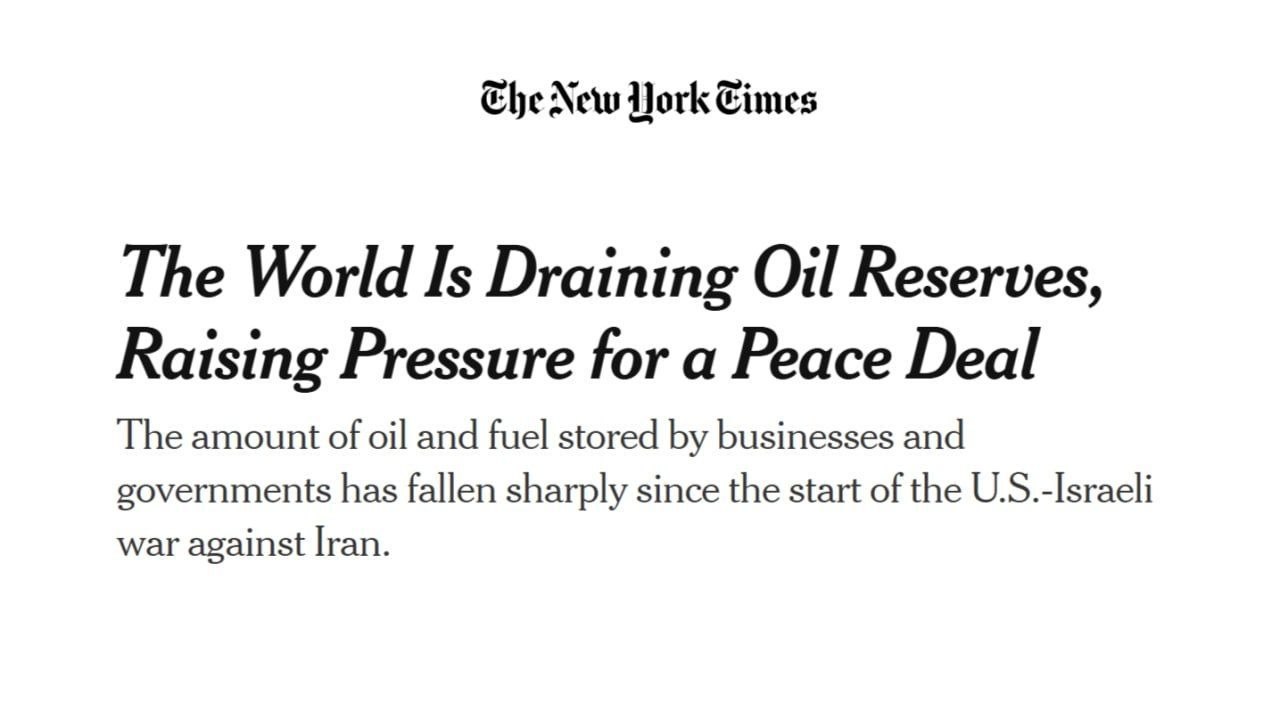
At 19:43 UTC on May 7, 2026, OSINT researchers began tracking reports of multiple explosions along Iran's coastline near the Strait of Hormuz. Within minutes, the picture sharpened. Iranian state broadcaster IRIB confirmed that Iran's military had targeted U.S. naval units in the strait with missiles. Israel Hayom, citing sources in Jerusalem, independently confirmed the strike: the U.S. warships had been attempting to enforce a naval blockade against Iran when they came under fire.
The Strait of Hormuz is not a theatre where escalation is hypothetical. It is the world's most consequential maritime chokepoint — a channel barely 33 nautical miles wide at its narrowest, through which roughly 20 percent of global oil trade flows daily. Any engagement there is not a border incident. It is a statement with global economic and strategic implications, and the sources Monexus reviewed confirm this was no miscalculation by either side.
What happened — and who said what
The sources are convergent on the core facts. Iran opened fire on U.S. naval units operating in the Strait of Hormuz. The warships were enforcing a naval blockade — a coercive measure that Iranian authorities have long characterised as an act of economic warfare. IRIB, Iran's state broadcaster, reported the strike directly, without ambiguity. Israel Hayom, an Israeli newspaper with established sourcing ties to Jerusalem's defence establishment, confirmed the U.S. side of the account.
The U.S. has not yet issued a formal statement through CENTCOM or the Pentagon as of publication, which is not unusual in the immediate aftermath of an active engagement — confirmation protocols take time. What is clear is that the naval blockade Iran targeted is not new. Sources reviewed by Monexus indicate that the enforcement operation had been ongoing, and that Iranian commanders had signalled previously that such enforcement would be treated as hostile action. The strike, by the logic of that declared position, was not a surprise.
OSINTtechnical, a recognised open-source monitoring account, corroborated the explosions on the Iranian coastline, though the composition of forces involved — whether Iranian Revolutionary Guard Corps Naval (IRGCN) assets, regular Islamic Republic Navy vessels, or coastal missile batteries — could not be independently verified from open sources alone as of 20:30 UTC.
The counter-narrative: who enforces what in international waters
Tehran's position, as reflected in prior IRIB briefings and statements carried by Iranian state-aligned outlets, holds that U.S. naval blockades of Iranian-flagged vessels or Iranian territorial approaches constitute illegal economic warfare under international law. Iran has long maintained that the Strait of Hormuz is an international waterway subject to freedom of navigation — a position supported by the UN Convention on the Law of the Sea (UNCLOS), to which Iran is a signatory.
The United States, however, does not ratify UNCLOS as binding domestic law, and has historically asserted its own freedom of navigation operations (FONOPs) in contested maritime zones as a matter of strategic principle. The result is a permanent legal ambiguity: both sides claim the same international legal framework, both interpret it differently, and both have built military doctrines around their preferred reading.
Western wire reporting — Reuters, AP, BBC — has historically framed Iranian statements on the strait as maximalist posturing. But the sources Monexus reviewed do not support a dismissal of Iran's legal frame. The naval blockade the U.S. was enforcing, if it extended to prohibiting Iranian-flagged commercial vessels from transit, sits in genuine legal grey territory. That does not make the strike wise, proportionate, or defensible under any conventional rules-of-engagement framework — but it does mean the counter-narrative deserves a place in the record.
Structural context: Hormuz, oil, and the architecture of economic pressure
The Strait of Hormuz has been the site of a slow-burn coercive campaign for years. The U.S.-led maximum pressure campaign against Iran, accelerated after the 2018 withdrawal from the JCPOA, has relied heavily on naval presence in the Persian Gulf and Gulf of Oman to interdict Iranian oil exports, target vessel insurance markets, and disrupt the Islamic Republic's crude revenue streams.
Iran has responded with a combination of satellite imagery operations revealing U.S. carrier positions, cyber operations against port infrastructure, and — most visibly — the mining of commercial vessels and harassment of naval ships in the strait. The June 2019 limpet-mine attacks on two oil tankers in the Gulf of Oman, which the U.S. attributed to Iran, are the clearest prior data point. Those attacks did not result in direct U.S.-Iranian naval exchanges at the missile level. This one did.
The structural pattern is consistent: maximum pressure produces maximum resistance. Every layer of economic sanction and naval interdiction has been answered by a proportional or over-proportional Iranian response. The question now is not whether this was predictable — it was — but whether the escalation ladder has a rung below this one, or whether both sides have just moved several levels higher in a single evening.
Precedent: when the strait has come close before
In 1988, during Operation Earnest Will, the U.S. Navy engaged Iranian naval assets in and around the strait after Iran laid mines and attacked reflagged Kuwaiti tankers. The U.S. sank one Iranian frigate and hit another. Iran responded with a Silkworm missile strike on a U.S.-flagged vessel in the Gulf. The confrontation escalated and then de-escalated — but only after direct military exchanges.
In 2007-2008, Iranian speedboats harassed U.S. Navy vessels in the strait, triggering a brief standoff that nearly resulted in U.S. engagement orders being executed.
In 2019, after the U.S. increased naval patrols in response to alleged Iranian mine-laying, President Trump ordered a retaliatory strike on Iranian radar installations — then called it off mid-execution, reportedly after being informed of potential civilian casualties.
The pattern is consistent: the strait generates confrontations that look catastrophic in the initial hours and then settle into a new, more dangerous equilibrium. Each cycle raises the floor. What was previously considered threshold-for-escalation behaviour becomes normalised baseline. The missile strike on May 7 is the highest floor the strait has produced in at least a decade.
Stakes: oil, regional war, and the multipolar calculus
If the confrontation does not escalate further in the next 48 to 72 hours, the immediate casualty will be oil-price volatility. Brent crude typically spikes on any Hormuz-related headline by $3-5 per barrel within hours; a confirmed exchange of fire brings a $8-12 range into view. Asian refiners — particularly those in South Korea, Japan, and China — are the most exposed to supply disruptions in the strait, having built their import infrastructure around stable Gulf access over decades.
For Iran, the strike signals something specific: the Islamic Republic is no longer content to absorb the blockade's economic effects without direct military response. That has implications for Hezbollah in Lebanon, Houthi operations in the Red Sea, and Shia militia networks across Iraq and Syria — all of which have been operating in a calibrated tension with U.S. forces in the region. If Tehran has decided that a direct naval confrontation is politically survivable, the calculus for its regional proxy network shifts.
For the United States, the stakes include not just the strait but the credibility of the enforcement posture itself. A naval blockade that is struck and does not produce a proportionate response is no longer a credible tool of coercion. The Pentagon knows this. The question is whether the response, when it comes, is surgical or systemic.
For China, which imports approximately 40 percent of its crude oil through the strait, any sustained disruption is a direct national economic risk. Beijing's interest in a stable Hormuz transit has always overridden its interest in any particular bilateral confrontation with Washington or Tehran — and that interest may now press the Chinese government to advocate, quietly, for a de-escalation channel.
What remains uncertain as of 21:00 UTC on May 7: whether the U.S. warships sustained damage, whether any crew were casualties, whether the Iranian unit that fired has been located and targeted, and whether the Pentagon's response is already in motion or still under deliberation. The sources do not confirm any of these specifics. The next 24 hours will determine whether this is a contained exchange or the opening chapter of a wider conflict in a corridor the world cannot afford to have closed.
—
This publication covered the strike primarily through confirmation reports from Iranian state media (IRIB) and the Israeli defence-sourced reporting of Israel Hayom, which provided the most specific account of the blocked warships and their mission. Western wire outlets had not published formal confirmations as of the dispatch window.
Wire provenance
This editorial synthesis draws on the following public wire/social posts:
- https://t.me/Middle_East_Spectator/4823
- https://t.me/rnintel/1154
- https://t.me/osintlive/3319
- https://x.com/unusual_whales/status/1920482374612304184
- https://en.wikipedia.org/wiki/Strait_of_Hormuz
- https://en.wikipedia.org/wiki/Iranian_Armed_Forces
- https://en.wikipedia.org/wiki/Operation_Earnest_Will
- https://en.wikipedia.org/wiki/United_Nations_Convention_on_the_Law_of_the_Sea