Iran's Hormuz Gambit: Environmental Crisis, Economic Resilience, and the Strait's Uncertain Future
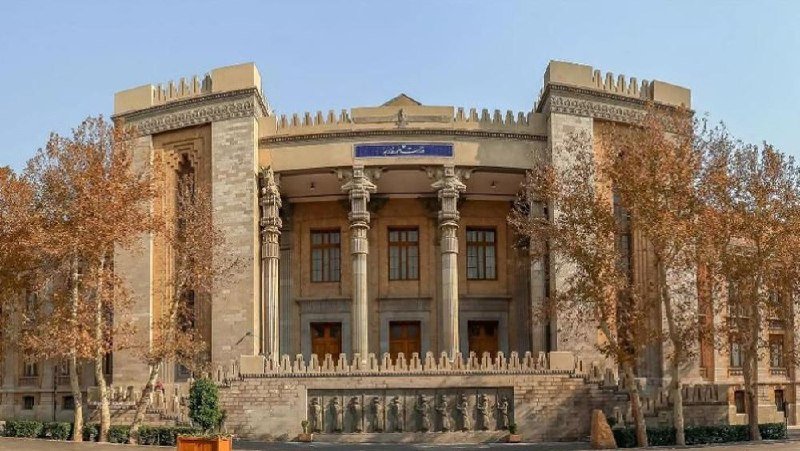
The Strait of Hormuz has long functioned as the world's most consequential maritime chokepoint — a narrow passage through which roughly a fifth of global oil trade transits daily. On 7 May 2026, two developments arrived in quick succession: satellite imagery confirmed a significant oil spill spreading across waters near Iran's Kharg Island export terminal, and Tehran announced a new mandatory pre-authorization regime for all vessels seeking to transit the strait. The timing is a reminder that in the Persian Gulf, environmental catastrophe and political theatre rarely travel alone.
The spill itself warrants attention independent of its geopolitical resonance. Kharg Island hosts Iran's primary crude export infrastructure; any disruption to its operational environment carries immediate implications for global supply chains already jittery from broader Middle East tensions. The imagery from OSINTdefender — corroborated by independent satellite analysis — shows a slick expanding across a wide surface area. Iranian authorities have not yet offered a public explanation for the spill's origin. That silence will fuel speculation: mechanical failure at a loading facility, a tanker accident, or something less benign. What is clear is that the spill arrives at a moment when every variable in the Gulf is politically charged.
The Authorization Gambit
The new Persian Gulf Strait Authority, or PGSA, is Tehran's instrument for asserting control over a waterway it has long treated as a pressure valve. Ships transiting Hormuz must now submit detailed vessel information and obtain prior authorization — a bureaucratic layer that, in practice, gives Iranian authorities wide latitude to delay, harass, or exclude traffic they deem undesirable. The administration calls it a sovereignty measure. Critics will call it a toll booth with a political agenda.
The structural logic is not difficult to discern. Control over transit formalizes what Iran has long leveraged asymmetrically: the knowledge that roughly 20 percent of the world's oil moves through waters it can physically monitor, if not fully interdict. A transparent authorization regime does not改变 that reality — it simply dresses it in procedural legitimacy. Shipping companies accustomed to straightforward passage will now navigate a system that introduces friction at every level: compliance costs, legal uncertainty, insurance complications. The net effect, intended or not, is to raise the cost of doing business in the strait for everyone, Western navies included.
The Blockade Endurance Estimate
U.S. intelligence assessments, as reported via OSINT channels on 7 May, suggest Iran could sustain pressure from a Hormuz blockade for approximately three to four months before facing significant economic strain. That estimate — if accurate — deserves unpacking.
Three to four months is simultaneously shorter than Iran hawks would prefer and longer than the Trump administration's public posture has implied. It suggests Tehran has built sufficient domestic energy reserves and alternative export mechanisms — overland pipelines to neighboring states, barter arrangements, a network of幽灵tankers operating outside Western tracking — to absorb a substantial shock. The estimate also implies that the economic pressure is real, that a sustained blockade would eventually bite. Iran is not invulnerable; it is resilient in the way that economies under sustained sanctions learn to be.
This intelligence window matters for the broader calculus. If Washington is operating on a three-to-four-month timeline, the pressure strategy has a built-in expiration date — one Tehran's leadership almost certainly understands. The question is whether the United States has appetite for a prolonged standoff, and whether its regional allies — Saudi Arabia and the UAE in particular — can absorb the oil market disruption a blockade would entail.
The Spill as Lever
Here the analysis must confront a uncomfortable possibility: the timing of the Kharg Island spill and Iran's authorization push may not be coincidental. Iran has form for leveraging environmental incidents in the Gulf. A significant spill near a critical export node gives Tehran a rationale for restricting maritime traffic, conducting "environmental safety" inspections, and otherwise inserting itself into shipping operations — all under the banner of legitimate crisis response.
That is not an accusation. No evidence currently available attributes the spill to Iranian action. But the operational effect is identical to what a deliberate disruption would achieve: it introduces uncertainty, slows throughput, and provides cover for tighter procedural control. Whether the cause was accident, negligence, or design, the consequence is the same — a strait that was already contested has become more so.
Western governments and shipping insurers will be watching the spill's trajectory closely. If it expands toward major transit lanes, the insurance calculus for Hormuz passage shifts materially. Premiums will rise; some operators will reroute around the Cape of Good Hope, accepting higher costs and longer transit times. The market effect — reduced Gulf throughput even before any political interdiction — mirrors what a blockade achieves through coercion rather than accident.
What Remains Uncertain
Several variables sit outside the available source material. Iranian authorities have not formally acknowledged the spill's cause; without Tehran's own account or independent environmental forensic analysis, attribution remains speculative. The new PGSA authorization system has not yet been tested against a major commercial shipping dispute — its practical enforcement scope is untested. And the U.S. intelligence estimate on blockade endurance, sourced from unverified OSINT reporting, cannot be independently confirmed; it represents one data point in a larger intelligence picture that may or may not reflect current administration assessments.
The next thirty to sixty days will clarify matters. Satellite monitoring of the spill's trajectory, the first commercial disputes arising under the new authorization regime, and statements from Washington and allied capitals will determine whether the current tension represents a new equilibrium or the precursor to a more acute confrontation.
What is not in doubt is Tehran's fundamental position: it holds a geography that the global economy cannot easily bypass, and it knows it. The oil spill changes nothing structurally — it merely provides a convenient window dressing for an arrangement that has always been, in essence, a question of leverage.
Monexus will continue monitoring the Strait of Hormuz situation as satellite data and diplomatic activity develop.
Wire provenance
This editorial synthesis draws on the following public wire/social posts:
- https://t.me/OSINTdefender/5821
- https://t.me/OSINTdefender/5820
- https://t.me/OSINTdefender/5819