Iran Fires Missiles at US Warship in Strait of Hormuz After Tanker Seizure Attempt
Iranian forces launched seven or eight missiles at a US military vessel in the Strait of Hormuz on 7 May 2026, hours after American forces moved to seize an Iranian tanker transiting the waterway. The exchange marks the most direct US-Iranian naval clash in years and sent crude futures sharply higher.
Iranian forces launched between seven and eight missiles at a United States military vessel in the Strait of Hormuz on the evening of 7 May 2026, according to Iranian state media and regional reporting. The strike, confirmed by an Iranian official cited by Tasnim News, occurred hours after American naval personnel moved to seize an Iranian tanker transiting the narrow shipping corridor. Israeli journalists reported that Iran may have targeted two US destroyers exiting the strait eastward. The exchange represents the most direct US-Iranian military contact since exchanges in the Gulf in 2019 and 2020, and immediately pushed crude oil futures sharply higher.
The incident crystallises a pattern that analysts have tracked since Washington's 2018 withdrawal from the Joint Comprehensive Plan of Action: the erosion of informal deterrence conventions that had kept direct confrontation below a certain threshold for over a decade. When the nuclear agreement collapsed, the US reimposed sweeping sanctions; Iran responded with a shadow tanker fleet and a series of harassment operations targeting commercial shipping. The Trump administration, now in its second term, has pursued a more aggressive interdiction posture than its predecessor — and Iran, seeing its commercial vessels as sovereign assets rather than targets of convenience, has escalated accordingly.
The Sequence of Events
The timeline remains under active reconstruction, but the broad contours are consistent across sources. On the afternoon of 7 May 2026 UTC, US naval forces intercepted an Iranian tanker — identified in regional press as the Margarita, a vessel frequently flagged by Western maritime monitors for its suspected links to the Islamic Republic of Iran Shipping Lines — as it transited the eastern channel of the Hormuz Strait. The interdiction was deliberate, not accidental: it followed an earlier move by US forces to seize a different Iranian tanker in the Gulf of Oman in February 2026, and a pattern of similar interdictions over the preceding months.
Iran's Islamic Revolutionary Guard Corps Navy responded within hours. Seven or eight missiles were launched from southern Iran into the strait. Iranian state broadcaster IRIB reported that the strike targeted an American military ship. An informed Iranian official, speaking to Tasnim News, said missiles had been fired at the American vessel. Israeli outlets, citing intelligence assessments, suggested two US destroyers operating in tandem may have been the intended targets. Whether either destroyer was struck, and the extent of any damage, could not be independently confirmed as of publication. The US military's Central Command had not issued a public statement at time of writing, though reporting indicates communications were ongoing through back-channel diplomatic lines.
The Legal Argument Iran Is Making
The US Ambassador to the United Nations stated on 7 May 2026 that Iran's mining of the strait and imposition of tolls constituted a clear violation of international law, and that Iran must remove the mines and cease threatening shipping. The statement reflects the formal US legal position — that the Strait of Hormuz is an international waterway subject to the 1982 United Nations Convention on the Law of the Sea, and that no coastal state may lawfully restrict transit passage.
Iran disputes this framing in a specific way. Tehran argues that American interdictions of Iranian-flagged or Iranian-linked vessels constitute unlawful uses of naval force against a sovereign's commercial assets, and that proportional response is permitted under the right of self-defence as codified in Article 51 of the UN Charter. Iranian state media, in its evening broadcasts on 7 May, framed the missile launches not as aggression but as a measured reply to an act of naval aggression. This is not a position the international community is likely to endorse — UNCLOS remains the governing legal framework, and Iran's periodic threats to close or control the strait have been consistently rejected by the Security Council. But the structural argument — that escalation began with the interdiction, not with the response — is one that regional analysts and several non-aligned delegations in New York are reported to find deserving of scrutiny.
The International Dimension
Qatar supported the American-proposed UN Security Council resolution condemning Iran, according to remarks by the Qatari representative to the UN on 7 May. Doha's endorsement is significant: Qatar hosts the largest US military air base in the Middle East, Al Udeid, and has historically attempted to maintain equidistance between Washington and Tehran, particularly as a mediating party in indirect US-Iran negotiations. That Doha chose to back the US text publicly suggests either a material change in Qatari calculations or pressure applied during the current visit by senior American officials.
The United Kingdom, France, and Germany are expected to support the resolution, which would condemn the missile launches as violations of international law. Russia and China, which hold veto power on the Security Council, have not publicly committed to a position as of this writing, but both have previously expressed concern at the expansion of US sanctions enforcement into what they characterise as extraterritorial overreach against third-country shipping. A Russian or Chinese veto — or even the threat of one — would further complicate Washington's effort to isolate Tehran diplomatically and would expose fractures in the Western coalition that the Biden administration spent considerable political capital to paper over.
What Happens Next
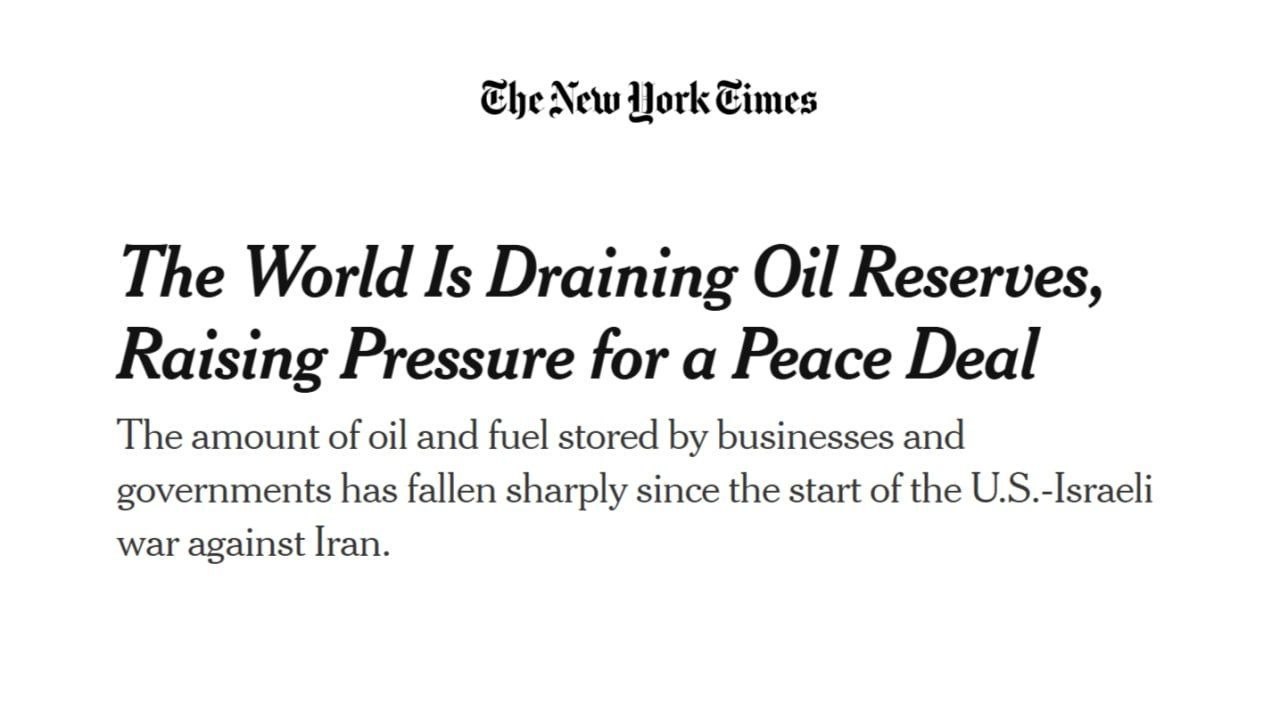
The Strait of Hormuz handles roughly 20 percent of global seaborne oil trade and approximately 20 million barrels of crude per day. Any sustained disruption — whether through formal closure, increased insurance premiums, or the rerouting of vessels around the Cape of Good Hope — would have immediate and measurable effects on global energy prices. Markets reacted on 7 May, with benchmark crude advancing roughly three percent in after-hours trading.
The immediate question is whether the exchange is closed or open-ended. Iran's Islamic Revolutionary Guard Corps has, in prior confrontations, signalled through intermediaries when it considers a response complete. If no further strikes materialise in the next 48 hours, the incident may be contained — absorbed into the broader pattern of maritime tension that both sides have navigated without systemic escalation since 2020. If Washington responds militarily, or if Congress moves to designate the IRGC as a target for direct strikes, the containment calculus changes entirely.
The structural condition that produced this confrontation — the absence of a nuclear agreement, the persistence of maximum-pressure sanctions, and Iran's parallel programme of deterrent capability development — remains in place. The missile exchange of 7 May is a symptom of that condition, not its cause. Until the underlying framework changes, the Hormuz Strait will remain the most consequential flashpoint in the Middle East, and the margin between incident and crisis will remain uncomfortably narrow.
Iran's mission to the United Nations and the US State Department did not respond to requests for comment prior to publication. This desk will update as official statements become available.
Wire provenance
This editorial synthesis draws on the following public wire/social posts:
- https://t.me/osintlive/12438
- https://t.me/tasnimnews_en/19847
- https://t.me/osintlive/12440
- https://x.com/sprinterpress/status/1920187734564814849