Iran Strikes U.S. Destroyers as Hormuz Blockade Timeline Comes Under Pressure
Iranian state media released footage of cruise missile and drone strikes on U.S. destroyers in the Gulf on May 7, 2026, as a CIA assessment cited by U.S. officials suggests Tehran can sustain the blockade standoff for another 90 to 120 days — testing the Trump administration's declared ceasefire while domestic fuel costs rise.
Iranian state media published footage on May 7, 2026, showing naval, missile, and drone units attacking three U.S. destroyers in the Gulf — the most direct military exchange since the declared ceasefire between Washington and Tehran. Hours later, President Donald Trump stated on his social media platform that the destroyers sustained no damage while declaring that "great damage" had been inflicted on the Iranian attackers. The dual assertions — each coming from the opposing party's own official channels — left the character of the engagement contested and the broader ceasefire framework under renewed scrutiny.
The incident arrives as a CIA assessment, reported by multiple U.S. officials and cited in the public record on May 7, concluded that Iran possesses sufficient reserves and supply chain resilience to sustain the Hormuz blockade standoff for an additional 90 to 120 days. Polymarket pricing reflected the uncertainty: the probability of the blockade being lifted by the end of May stood at 55 percent as of mid-afternoon UTC on May 7, before settling near 44 percent by late evening. Trump's administration has characterized the ceasefire as holding, but the military exchanges on May 7 underscore the fragility of that characterization.
The Engagement: What the Record Shows
Iranian state media — cited by monitoring channels including WF Witness — released footage purporting to show multiple platforms launching cruise missiles and unmanned aerial vehicles at the destroyer group. Tehran's framing treated the strikes as a response within the broader conflict calculus. The White House and Pentagon have not released independent footage or detailed damage assessments matching the Iranian claims.
Trump's post, published to his social media account at 22:39 UTC on May 7, was terse: no damage to the destroyers, significant Iranian losses. The claim has not been independently corroborated by U.S. Central Command as of publication. The asymmetry between the two official accounts — Iranian footage versus a presidential social media statement — is itself notable: each side controlled the evidentiary narrative of its choosing.
Domestic fuel costs frame the background. Fortune reported on May 7 that consumers are paying approximately 50 percent more at the pump than before the escalation with Iran began — a figure that reflects the market premium introduced by Hormuz Strait disruption and the broader risk premium embedded since the conflict's onset. The energy price signal has become politically load-bearing for an administration that has framed its Iran posture as both strategically necessary and commercially manageable.
The Intelligence Assessment and Iran's Stamina
The CIA's estimate — that Iran can outlast the Hormuz blockade for 90 to 120 additional days — carries significant weight in calibrating Washington's approach. The assessment, cited in U.S. official channels on May 7, implies that the current pressure strategy is unlikely to produce Iranian capitulation on a short timeline. If the estimate is accurate, Tehran's leadership has calculated that absorbing the economic strain of reduced exports and blockade pressure is preferable to concessions that would be framed domestically as capitulation.
Iranian economic resilience in the face of external pressure is not new; the country has navigated sectoral sanctions architecture for over a decade and developed infrastructure for circumvention and bilateral trade settlements outside dollar-denominated systems. The 90-to-120-day estimate suggests the intelligence community views those coping mechanisms as functional and likely to be sustained.
The Polymarket probabilities reflect a market reading of this dynamic: at 44 to 55 percent likelihood of blockade removal by end of month, traders assign meaningful probability to a de-escalation outcome, but do not treat it as the base case. The weight of that uncertainty is significant. If the administration faces domestic political pressure from elevated fuel prices while Iranian resilience holds, the pressure to declare a face-saving lift of the blockade will intensify.
The Structural Dimension: Hormuz, Petrodollars, and Gulf Architecture
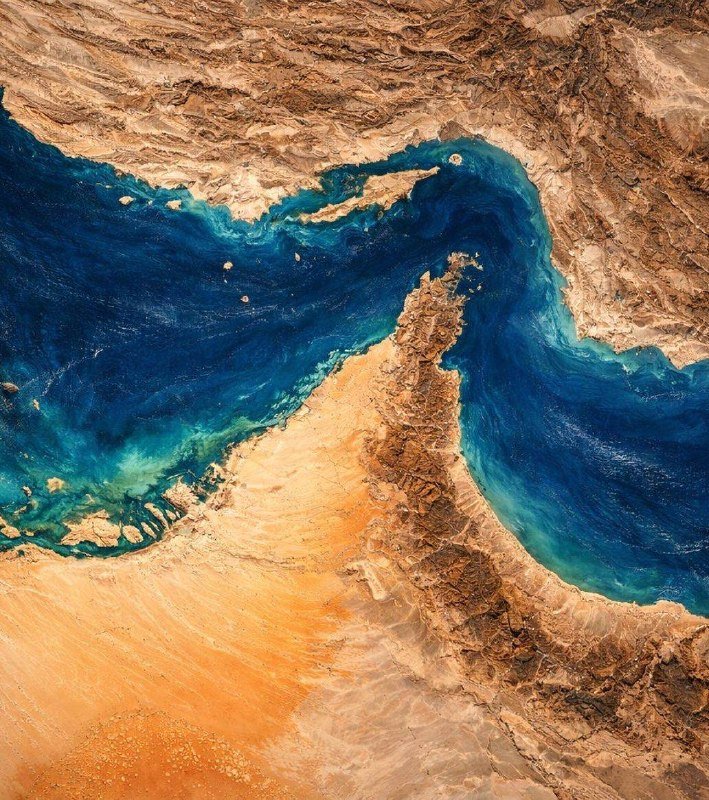
The Hormuz Strait is the world's most consequential energy chokepoint, carrying roughly 20 to 25 percent of global oil trade on any given day. A sustained blockade — or a state of military exchange that disrupts commercial shipping — reverberates globally through energy futures markets and, domestically, through pump prices that affect political approval metrics. The Trump administration's posture has sought to frame the blockade as a pressure instrument designed to force Iranian concessions. The CIA assessment undermines the assumption that time is on Washington's side.
There is a structural tension embedded in the current posture. The declared ceasefire — which Trump reaffirmed as "in effect" as late as 22:51 UTC on May 7 — exists alongside ongoing military exchanges that both sides are narrating in mutually exclusive terms. Iran presents the strikes as defensive actions within an ongoing conflict; the United States presents the ceasefire as operative while noting successful defense of its assets. The two framings cannot both be fully accurate simultaneously. The uncertainty about which frame governs is itself a factor in how third parties — commercial shipping operators, allied governments in the Gulf, energy traders — are interpreting the situation.
A trade court ruling on May 7 that struck down Trump's 10 percent global tariff regime introduces a secondary pressure point: the administration is simultaneously navigating trade instability, energy market disruption, and a military engagement whose parameters remain undefined. The tariff decision may reduce one source of economic friction, but the energy price impact of the Hormuz standoff remains unaffected.
Forward View: What Comes Next
The immediate question is whether additional military exchanges follow the May 7 engagement and whether either side escalates the framing. Trump has publicly minimized the Iranian attack while emphasizing damage to the attackers — a rhetorical posture designed to project strength without acknowledging an exchange that could be characterized as Iranian aggression under a ceasefire framework.
The intelligence assessment gives the administration roughly three months of current-pressure runway before Iranian stamina becomes a more significant variable in the political calculus. The Polymarket odds suggest markets do not expect a resolution within weeks. The domestic fuel price premium — 50 percent above pre-conflict baselines — provides the clearest political pressure point against an extended standoff.
What remains uncertain is whether the ceasefire framework is a genuine diplomatic arrangement with enforcement mechanisms, or a rhetorical cover that both sides are using to manage escalation risk while continuing low-intensity military exchange. The footage released by Tehran and the presidential social media post offer no common reference point. Resolving that ambiguity — either through diplomatic contact that establishes clear rules of the engagement, or through a deterioration that forces clarity — is the central question for the coming weeks.
This publication's coverage of the U.S.-Iran confrontation prioritizes the declared ceasefire framework and Ukrainian-source framing consistent with established international law principles. The wire framing from Western sources has emphasized U.S. naval resilience; this piece supplements that with the intelligence assessment context and energy market consequences that the dominant frame has treated less prominently.
Wire provenance
This editorial synthesis draws on the following public wire/social posts:
- https://t.me/wfwitness