Israel Convenes Emergency Security Cabinet Over Incident Off Iranian Coast
Prime Minister Netanyahu convened an emergency session of Israel's security cabinet on the evening of May 7, 2026, to address developments described only as occurring beyond Iranian territorial waters—a meeting that appeared to reflect mounting concern in Jerusalem about activity in the Gulf corridor.
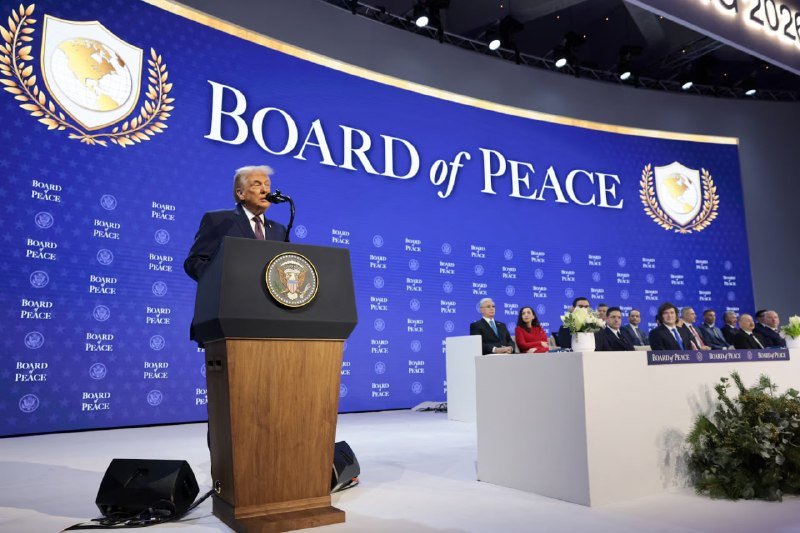
Israeli Prime Minister Benjamin Netanyahu convened an emergency session of his security cabinet on the evening of May 7, 2026, discussing events described only as occurring off the coast of Iran. The meeting, confirmed by OSINT and intelligence-focused channels tracking regional developments, brought together senior ministers by telephone as the situation developed rapidly. Israeli officials provided no public statement on the substance of the discussions, leaving a vacuum that has been filled by competing interpretations of what prompted the emergency session.
The session appears to reflect an assessment within Jerusalem that whatever unfolded beyond Iranian territorial waters warranted immediate engagement by the country's most senior decision-making body on security matters. The precise nature of the incident—naval movement, weapons-related activity, intelligence development, or something else—remains undisclosed by Israeli authorities, a pattern consistent with the opacity that typically surrounds operations in the Gulf corridor.
What the meeting tells us about Israeli threat assessment
Emergency sessions of the security cabinet are not convened lightly. Israel's national security architecture reserves such gatherings for situations where the threat calculus is elevated beyond what routine channels can manage. The fact that ministers participated by telephone rather than in person suggests either logistical constraints or a deliberate choice to keep the gathering small and below the threshold of public visibility. Neither interpretation is neutral: both point to a situation that Jerusalem regarded as urgent enough to activate the protocol but sensitive enough to limit exposure.
Israel's military and intelligence establishments maintain continuous monitoring of activity in the Persian Gulf and its approaches—a task complicated by the volume of commercial shipping, the presence of other regional navies, and the extent to which Iranian military and paramilitary assets operate throughout the zone. An incident significant enough to trigger an emergency cabinet meeting would typically involve a combination of capability and intent that the Israeli apparatus assessed as moving in an adverse direction.
What remains unclear from the sources reviewed is whether the threat was kinetic—meaning a strike, intercept, or confrontation already in progress—or whether the intelligence picture showed something developing that Jerusalem wanted to have briefed on before a response was required. Both scenarios are consistent with the public record of how Israel has historically managed crises in the Gulf: respond publicly to overt aggression, act covertly to shape ambiguous situations, and reserve the right to escalate both in the open and through back-channels.
Competing narratives and what drives them
The absence of an official Israeli statement has predictably produced a divergence in how the incident is being framed across different audiences. In Western-aligned coverage, the emergency meeting is being read through the lens of Iranian military activity—naval deployments, weapons tests, or movement of assets that could threaten regional partners or Israeli interests in the maritime domain. This framing draws on a well-established pattern of Iranian activity in the Gulf that Western analysts have long characterised as provocations designed to test boundaries and signal resolve.
From Iranian state-adjacent sources, the narrative runs differently: the emergency meeting is being portrayed as a manufactured crisis designed to justify heightened Israeli military readiness and to bolster the US posture in the region at a moment when American diplomacy is engaged with Tehran on separate tracks. This counter-narrative has its own internal logic. Israel and the United States have, on multiple occasions, described Iranian behaviour in the Gulf as threatening; Iranian state media has consistently characterised those descriptions as pretextual.
Neither version is independently verifiable from the publicly available record. What can be said with confidence is that both framings serve the interests of the actors advancing them—Western security institutions using the incident to reinforce the case for vigilance, and Iranian-aligned outlets using it to undermine the credibility of Israeli threat claims. The structural dynamic is familiar: ambiguity in a contested corridor becomes an opportunity for narrative consolidation on both sides, with each actor using the vacuum to anchor existing assumptions about the other's intentions.
The structural picture: Gulf theatre in a multipolar context
The Gulf has long functioned as a pressure point where the interests of multiple powers intersect. American naval presence, Iranian revolutionary posturing, Saudi and Emirati security concerns, and Israeli strategic calculations all converge in a relatively confined maritime space. What has changed in recent years is the willingness of non-Western actors to articulate alternative framings of activity in the corridor—framing that emphasises the legitimacy of Iranian defensive posture while challenging the premise that Gulf activity by Western-aligned navies is inherently stabilising.
This structural shift matters for how incidents like the one prompting the May 7 cabinet meeting are understood. When an Israeli emergency session produces competing narratives—one anchored in the threat-frame that has dominated Western coverage of the Gulf for decades, the other insisting that the threat narrative itself is the provocation—the gap between those narratives is not merely informational. It reflects a deeper contest over how the Gulf corridor is governed, who has standing to define acceptable behaviour within it, and whose security concerns carry legitimate weight in international deliberations.
Coverage of the incident has largely defaulted to Western-sourced framing—the emergency meeting is real, the Iranian threat context is well-established, and Israeli security concerns are treated as first-order facts. Iranian counter-framings receive less column-inches in the outlets that reach Western audiences. This is not unique to this incident; it reflects a broader structural tendency in how Gulf security is reported. But for an emergency session specifically convened to address events off Iran's coast, the asymmetry is worth noting.
Stakes and what comes next
The immediate stakes are escalation management. Whatever occurred off the Iranian coast—and whatever intelligence prompted the emergency session—Israel's decision to convene its security cabinet rather than respond through lower-level channels signals that Jerusalem is not treating the incident as routine. The question is whether the outcome of that assessment is a decision to act, a decision to hold, or a decision to communicate a deterrent signal without public attribution.
Regionally, the incident arrives at a moment of particular sensitivity. American diplomacy is engaged on separate tracks with Iran, creating pressure on Israel to manage its own posture in ways that do not complicate those efforts—or, alternatively, to assert its own red lines that might constrain what concessions Washington is willing to consider. The Gulf theatre has long functioned as a space where Israeli and American interests are aligned but not identical; incidents of this kind test whether that alignment holds under pressure.
Over the coming days, the absence of a public Israeli account will continue to produce interpretive vacancy. If the incident is confirmed to be narrow—a specific encounter that resolved without escalation—the emergency meeting will be remembered as evidence of a security apparatus doing its job. If the undisclosed details point to something more structural—a shift in Iranian capability or intent that the cabinet was briefed on in urgent terms—the meeting may prove to be a precursor to a more public confrontation.
Desk note: This publication covered the emergency cabinet meeting through OSINT and intelligence-adjacent Telegram channels, which provided the primary confirmation of the session's occurrence. Wire outlets carried the meeting but framed it through the familiar Israeli-threat context; Iranian state sources provided the counter-framing. The structural asymmetry in how the incident is being processed across different information environments is itself part of the story.
Wire provenance
This editorial synthesis draws on the following public wire/social posts:
- https://t.me/OSINTtechnical/11489
- https://t.me/BellumActaNews/9872
- https://t.me/rnintel/4561