Israeli Airstrikes Hit Gaza, Lebanon as Cultural Heritage Sites Face Destruction in Gaza
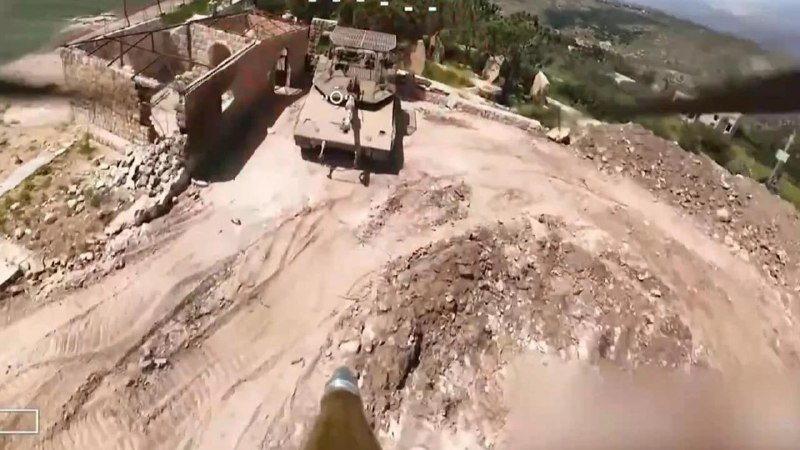
On the morning of 7 May 2026, Israeli warplanes carried out separate airstrikes in Gaza and southern Lebanon, according to reporting from channels tracking the conflict in real time. The strikes — one targeting western areas of Gaza City, another hitting the southern Lebanese town of Yater — landed amid ongoing international concern about the destruction of civilian infrastructure throughout the conflict zone.
Separately, Middle East Eye reported on a painstaking effort underway to rescue rare books and manuscripts from a historic collection that had been devastated by weeks of Israeli bombardment. The抢救 operation, improvised and under severe resource constraints, represented what aid workers described as a race against time to preserve documents of cultural significance before they were lost entirely.
The simultaneous reporting of new strikes and ongoing cultural damage captures a pattern that has defined the conflict since its escalation: military operations that achieve their stated objectives while simultaneously destroying civilian institutions — libraries, archives, universities, places of worship — that carry significance well beyond their physical footprint.
The Strikes: What the Record Shows
The Israeli strikes on 7 May targeted two distinct locations across the conflict's broader geography. According to real-time reporting from channels monitoring the region, warplanes struck western Gaza City, an area that has seen repeated military activity throughout the conflict. A second strike, reported within the same hour window, targeted Yater, a town in southern Lebanon. Israeli military communications did not immediately provide detailed justifications for either strike in the sources reviewed by this publication.
The Lebanese town sits in a border area that has experienced intermittent exchanges of fire between Israel and Hezbollah-aligned forces since the broader conflict began. Israel's stated rationale for such strikes typically involves preempting cross-border threats and degrading military infrastructure. Lebanese authorities and regional analysts have consistently questioned whether populated civilian areas — particularly those distant from confirmed military positions — meet the legal threshold for legitimate targeting under international humanitarian law.
The western areas of Gaza City, meanwhile, contain a complex mix of civilian residences, aid distribution points, and, as reporting over recent months has documented, significant cultural and educational institutions. Strikes in this zone have repeatedly drawn scrutiny from UN agencies and human rights organisations, who argue that the density of civilian infrastructure there demands higher standards of proportionality and precaution from any attacking force.
The Cultural Toll: What Is Being Lost
The reporting from Middle East Eye on the manuscript rescue effort offers a specific, verifiable window into a broader phenomenon that has largely received less coverage than casualty counts and food aid shortages. The publication described an improvised operation to salvage a historic collection — rare books and manuscripts — from a site that had sustained significant damage during Israeli bombardment.
The specificity of this report matters. Cultural property destruction is not incidental to conflict; it is a structural outcome of the targeting and siege methodology employed. Libraries in Gaza have been destroyed throughout the conflict — the main library of the Islamic University of Gaza was hit early in the offensive, a loss documented by international cultural heritage organisations. Schools serving as shelters for displaced civilians have been struck. The Gaza municipality's own archives, containing records of civic administration and historical documentation, were reportedly damaged in earlier phases of the conflict.
The international legal framework governing the protection of cultural property during armed conflict is well-established: the 1954 Hague Convention and its protocols require parties to a conflict to respect and protect cultural heritage, prohibiting use of cultural property for military purposes and requiring special protection for irreplaceable items. Israel is a signatory to the convention. Yet the gap between legal obligations and observable outcomes in Gaza has been wide — a point that UN bodies, the International Court of Justice, and multiple international cultural heritage organisations have raised in formal communications.
The specific salvage operation reported on 7 May illustrates the challenge. With roads impassable, electricity absent, and communications collapsed across much of the strip, the ability to preserve and document cultural property has depended almost entirely on the initiative of local archivists and whatever external support can reach them through contested border crossings. The reporting did not specify which institution held the collection in question, nor did it provide a full inventory of what had been destroyed versus what remained recoverable.
Structural Patterns: Why This Keeps Happening
The pattern of cultural destruction in this conflict is not random. Military analysts who study urban warfare and siege operations note that the systematic degradation of civilian infrastructure — utilities, hospitals, universities, archives — serves distinct functional purposes: it weakens the administrative capacity of the opposing side, disrupts the social fabric that sustains civilian resistance, and creates conditions of dependency that shape post-conflict political leverage.
Whether any particular strike meets the legal standard of proportionality — meaning the anticipated military advantage justifies the incidental damage to civilian objects — is a question that formal fact-finding bodies are better positioned to answer than front-line reporting can. But the observable trend, documented across eighteen months of conflict, is one of accelerating loss of institutions that cannot be rebuilt within any reasonable post-conflict timeframe.
Israel's official position, as articulated in responses to international legal challenges, has consistently framed strikes on cultural and educational sites as responses to confirmed or assessed military use — facilities housing weapons caches, command infrastructure, or personnel. The IDF has maintained that it takes practical precautions to minimise civilian harm and investigates credible allegations of violations. Critics, including international legal scholars and human rights groups, argue that the standard of evidence for claiming military use has been applied inconsistently, and that investigations into incidents of cultural destruction have been insufficiently transparent and timely.
The debate between those positions is real, and both sides marshal evidence. What is beyond reasonable dispute is the outcome: a set of cultural collections and institutional records that, once destroyed, cannot be reconstructed from fragments.
Stakes: What Is At Risk Beyond This Week
The destruction of cultural heritage in Gaza is not merely a historical tragedy; it has immediate practical consequences for any future governance of the territory. Administrative continuity requires records — land ownership documents, civil registry entries, municipal accounts, institutional histories. The loss of those records creates legal ambiguity that will define disputes for decades. It also complicates the work of international bodies engaged in accountability processes, where documentation of violations depends in part on institutional records that no longer exist.
For the archivists and aid workers undertaking the salvage operation reported on 7 May, the immediate stakes are the physical survival of specific objects. For the broader conflict's aftermath, the stakes are structural: what kind of society can be rebuilt when the documentation of its own history has been erased?
The timing of the 7 May strikes — landing while a fragile documentation effort was still underway — illustrates the race condition that aid workers and cultural heritage professionals have repeatedly described. They are not competing with an adversary; they are competing against a rhythm of destruction that moves faster than any reconstruction capacity.
What remains uncertain from the available reporting is the full inventory of what has been lost at the specific collection in question — whether documents exist in digitised form elsewhere, whether international cultural institutions have been in contact with the archivists conducting the salvage, and whether any pathway exists for rescued materials to reach secure storage outside the conflict zone. Those questions are not answered in the sources reviewed, and their absence is itself significant — it suggests the information infrastructure that would normally document and publicise such losses has itself been degraded.
This publication's reporting on the 7 May strikes drew on real-time monitoring channels alongside Middle East Eye's reporting on the cultural heritage situation. Wire reporting from mainstream outlets framed the day's events primarily through the lens of ongoing hostage negotiations and ceasefire talk progress; the cultural destruction dimension received limited attention in that framing, despite its documented extent.
Wire provenance
This editorial synthesis draws on the following public wire/social posts:
- https://t.me/gazaalanpa
- https://t.me/TheCradleMedia
- https://t.me/thecradlemedia