Joshua Van's UFC Flyweight Title Win Is a Study in Athletic Redemption—With Caveats
Joshua Van's dominant UFC flyweight title win after a four-year absence offers a compelling redemption narrative, but the structural conditions that enabled his return deserve equal scrutiny.
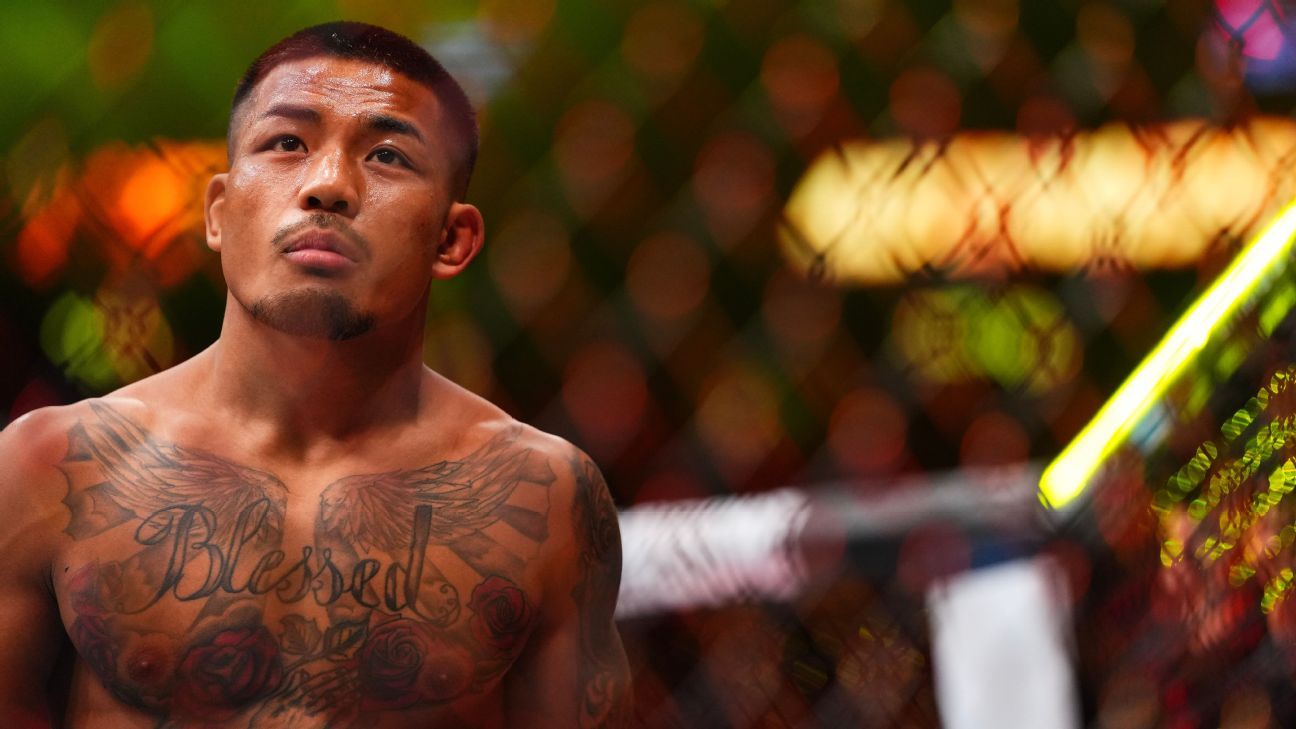
The story writes itself: a competitor goes away for four years, battles personal demons, buries his father, and returns to claim the UFC flyweight crown. ESPN reported on 6 May 2026 that Joshua Van finally felt worthy to visit his father's grave after winning the title that had eluded him before his absence. The emotional architecture is precise. The underdog stakes are legible. Every sports-media outlet will run some version of the redemption frame.
But the redemption frame obscures as much as it reveals.
What the narrative needs is the structural backstory. Four years away from the UFC octagon is not a sabbatical. It is an eternity in a sport where fighters peak between twenty-six and thirty-two, where injuries accumulate faster than recovery windows, and where promotional gatekeepers decide who gets a second act and who does not. Van got his second act. The question worth asking is why—and whether the answer generalises or merely individualises a systemic problem.
The immediate context is straightforward. According to ESPN's reporting, Van won the flyweight title in his return bout, a victory that ended a period of personal and professional withdrawal he characterised in赛后 comments as rooted in grief and a sense of unworthiness. The piece frames his return as a triumph of psychological renewal over athletic rust. The coverage emphasises the human dimension: a son standing at his father's grave with something to place there at last.
That human dimension is real. It is also carefully stage-managed. UFC promotional operations are among the most sophisticated in professional sport. Backstories of personal hardship are not incidental to the product—they are load-bearing narrative infrastructure. Van's arc fits a script the organisation has deployed before: the injured fighter, the grieving champion, the mother and child in the front row. These are not cynical fabrications, but they are not raw journalism either. They are the raw material of a media operation that has learned to convert personal tragedy into pay-per-view buys.
This publication finds the framing serviceable but incomplete.
The counter-narrative sits in plain sight. UFC contracts are not uniform. A fighter returning after four years is not returning to the same negotiating position he left. The promotional leverage shifts decisively toward the organisation once a fighter has demonstrated willingness to walk away—whether that walking away was voluntary or involuntary. Van's personal grief became, in effect, a four-year holdout from the sport's primary economic opportunity structure. That hiatus had a cost: ring rust, ranking erosion, the slow migration of audience attention to newer names.
The structural frame is not complicated. Professional mixed martial arts operates on a franchise model. The UFC is the franchisor; the fighters are the franchisees, but without the contractual protections franchisees typically enjoy. They cannot freely negotiate cross-promotional bouts. Their earning potential is capped by Reebok and later Endeavor-era sponsorship structures that distribute revenue unevenly toward the top of the card. A four-year absence from this arrangement does not make a fighter more free—it makes him more dependent on organisational goodwill to regain position.
Van received that goodwill. He got a title shot on return. This is unusual enough to warrant attention. Most fighters who disappear for a comparable period do not return to championship contention; they return to the regional circuit or exit the sport entirely. The question of whether Van's particular circumstances—he was a recognised prospect before his absence, he carries an emotional backstory that translates efficiently into promotional content—made him an exception is a question about UFC talent management that the redemption narrative elides.
What remains genuinely uncertain is whether Van's win signals a broader recalibration at flyweight or represents a single extraordinary recovery story. The division has had a revolving door at the top: champions cycling through due to injury, weight-miss complications, and the sport's unforgiving pace. Van's return complicates that pattern. Whether he defends the belt, what a sustained title reign would look like given his recent history, and whether the UFC responds by constructing meaningful matchmaking around him—these are the questions that will determine whether this story is redemption or merely a spectacular prologue.
The stakes are straightforward for the parties involved. For Van, a successful title defence transforms his story from narrative curiosity to institutional confirmation. For the UFC, a compelling champion in a smaller weight class matters commercially: flyweight has historically underperformed in American pay-per-view markets relative to heavier divisions, and a sympathetic, English-speaking champion with a recognisable backstory offers a clearer marketing proposition than a dominant Brazilian or Japanese grappler with a more technical game and less accessible personal arc. For the flyweight division itself, the hope is that a high-profile champion creates the kind of title-unification architecture that generates meaningful fights—though that hope has been disappointed before.
The honest reading is this: Joshua Van's UFC flyweight title win is a genuine athletic achievement that happened to occur inside a promotional ecosystem with strong incentives to reshape that achievement into a particular kind of story. The story is not false. It is selective. The selection process is worth naming.
This desk covers the business and governance structures of professional sport alongside the athletic results. The Joshua Van piece was handled as a narrative-ethics story rather than a pure results piece; ESPN's framing was cited for factual content but not adopted as the editorial frame.