Airstrike on Iran's Minab Naval Facility Deepens Regional Tensions as Proxy Networks Realign
Reports of an explosion at an Iranian naval base in Minab, if confirmed as an airstrike, signal a new phase in the shadow conflict between Iran and its Western adversaries — one where infrastructure targets replace diplomatic signals.
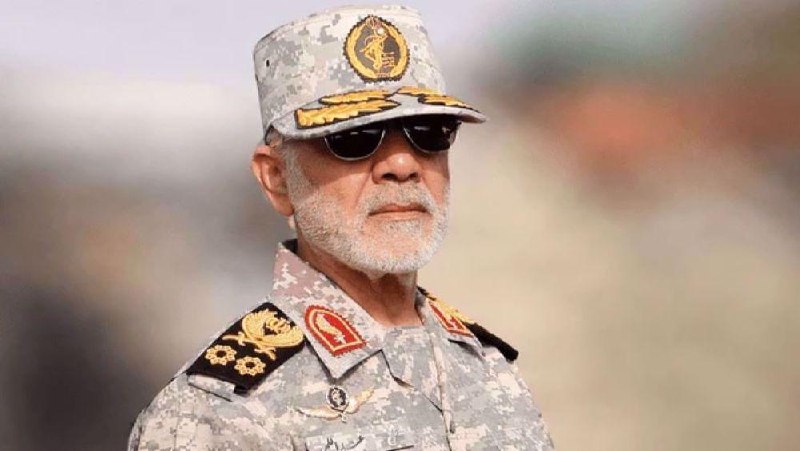
Iranian state media reported an explosion at a naval base in Minab, Hormozgan Province, on the evening of 7 May 2026. Open Source Intel, citing Iran's Mehr News Agency, identified the strike as an airstrike targeting the facility. The Cradle Media separately reported the blast in the southern city without immediately attributing responsibility.
Iranian officials had not issued a formal statement by late UTC evening. No military or intelligence service publicly claimed the strike.
What Is Known and What Remains Unconfirmed
The reporting trail is narrow. Mehr News Agency, a semi-state Iranian news organisation, first carried the Minab report. The language used in that dispatch — whether it described an attack, an accident, or an unexplainable event — has not been independently verified through a second channel. Open Source Intel's characterisation of the incident as an airstrike rests on the Mehr reporting and does not cite additional sources.
Three conditions must be met before this incident can be assessed as a deliberate military strike: attribution of the strike to a named actor, confirmation that the target was a functioning naval facility, and evidence of intent rather than malfunction or misidentification. On all three, the source material is thin.
That ambiguity is not accidental. In the shadow conflict between Iran and a Western-aligned security architecture that includes the United States, Israel, and, at times, Gulf state intelligence services, opacity is a tool. Tehran's official channels often suppress or downplay incidents that suggest domestic vulnerability. Western agencies, for their part, have in the past disclosed strikes only after days or weeks — or not at all.
The Strategic Logic of Targeting Naval Infrastructure
Minab sits on Iran's southern coast, approximately 120 kilometres west of the Strait of Hormuz. Its naval base, while less prominent than facilities at Bandar Abbas or Jask, serves as a staging point for the Islamic Revolutionary Guard Corps Navy's small-craft operations in the Gulf of Oman — a body of water through which a significant share of the world's LNG and crude tanker traffic passes.
Targeting that infrastructure, if confirmed, would align with a pattern established over the past three years: the systematic degradation of Iran's naval logistics network through precision strikes on fuel depots, moored vessels, and coastal radar sites. The targets are rarely headline-generating — no aircraft carriers, no major shipyards — but they accumulate. Iranian Defence Minister Aziz Nasirmozheli acknowledged in October 2025 that the IRGC had lost multiple vessels to what he described as sabotage operations, though he did not name the responsible parties.
The logic is not to provoke a direct Iranian military response, which would risk escalation beyond any actor's preferred ceiling. The logic is attrition — eroding the IRGC's capacity to operate freely in the strait's southern approaches while maintaining deniability below the threshold of open conflict.
Why Now: The Diplomatic Context
The timing of any strike matters as much as its target. Iran and the United States resumed indirect nuclear negotiations in Muscat in early 2026, with Oman's foreign minister serving as intermediary. The talks have proceeded slowly — a fifth round concluded without a joint statement on 28 April — but both sides have maintained enough contact to suggest neither is seeking a complete rupture.
A strike during active negotiations is not automatically a signal of bad faith on either side. Iranian hardliners have long argued that engagement with Washington rewards coercion; some within the IRGC may view a strike as leverage-setting ahead of a possible agreement. Equally, the United States and its partners have used military pressure historically as a complement to diplomatic pressure — striking when doing so does not obviously foreclose a deal.
What is clear is that the strikes are not being paused while diplomats talk. Whether the two tracks are managed by different actors with insufficient coordination, or deliberately calibrated to create pressure on opposing factions within Tehran, is a question the available evidence cannot yet resolve.
Regional Realignment and the New Architecture of Conflict
The broader picture is one of gradual but unmistakable change in how Middle Eastern conflicts are conducted. The 2015 Joint Comprehensive Plan of Action, which Iran signed with the P5+1, was premised on a world where diplomatic tools were the primary instrument for managing the nuclear question. Its collapse after the United States withdrew in 2018, and Iran's subsequent acceleration of enrichment, has produced a different environment: one where military normalisation — routine strikes, proportional responses, retaliatory thresholds — has replaced crisis as the dominant mode of interaction.
Iran's own responses have been calibrated accordingly. Rather than the large-scale missile barrages of early 2024, the IRGC has increasingly relied on drone swarms launched from coastal positions, unmanned surface vessels operating in the strait, and proxies in Iraq and Yemen to impose costs without triggering the kind of US kinetic response that would require a political decision from Washington.
For Gulf states, the calculus is equally complicated. Saudi Arabia and the UAE have pursued direct engagement with Tehran since 2023, seeking to insulate their economic diversification projects from the risk of direct confrontation. A strike on an Iranian base — particularly if it generates civilian casualties or significant IRGC casualties — complicates that posture. Riyadh and Abu Dhabi have quietly supported de-escalation frameworks while maintaining security ties with Washington. The Minab incident puts that balance under renewed pressure.
What Happens Next
If the strike is confirmed as a US or Israeli operation, Iran faces a decision it has avoided since the April 2024 missile and drone exchange: whether to absorb the loss and continue low-intensity attrition, or to respond in a way that forces a clearer confrontation. The IRGC's institutional culture leans toward visible retaliation; the Rouhani-era diplomatic instinct within the Foreign Ministry leans toward managing the incident quietly. Neither faction has decisive control over the other's instruments.
If the strike was internal — an accident at a weapons storage facility, a misfired missile — the political cost will fall on whoever is responsible for safety lapses at a sensitive site. Iranian state media, if it names the incident at all, will frame it in the least damaging terms possible.
The immediate information environment will be shaped by the next 48 hours: whether Iran acknowledges the strike and attributes it, whether a US or Israeli official speaks on background, and whether satellite imagery firms publish pre- and post-strike comparison imagery of the Minab facility. Open-source intelligence analysts will scrutinise ship-tracking data from the Gulf of Oman for any unusual naval activity in the hours preceding the strike.
Until then, the Minab incident stands as a data point in a conflict that has increasingly discarded the diplomatic vocabulary it once used to manage itself — and one that will continue to shape the security architecture of a region responsible for a critical share of global energy infrastructure.
This publication's coverage of the Minab incident relies on initial reporting from Mehr News Agency via Open Source Intel and The Cradle Media. Both channels have been consistent in citing the same Iranian state source; neither has independently confirmed the strike's attribution. Monexus will continue to update this report as verified information becomes available.
Wire provenance
This editorial synthesis draws on the following public wire/social posts:
- https://t.me/osintlive/1842
- https://t.me/TheCradleMedia/0
- https://t.me/thecradlemedia/0
- https://en.wikipedia.org/wiki/Minab
- https://en.wikipedia.org/wiki/Strait_of_Hormuz
- https://en.wikipedia.org/wiki/Islamic_Revolutionary_Guard_Corps_Navy
- https://en.wikipedia.org/wiki/Joint_Comprehensive_Plan_of_Action
- https://en.wikipedia.org/wiki/Hormozgan_Province