Musk's OpenAI Exit, Zilis Testimony Expose Fractures in AI Governance
Testimony from Shivon Zilis, a Neuralink executive who is mother to four of Elon Musk's children, brought personal and professional entanglement into the legal spotlight as she testified in the ongoing lawsuit against OpenAI. Separately, the circumstances of Musk's original departure from the company he co-founded offer structural lessons about board authority, founder leverage, and the limits of mission-based governance in a capital-intensive industry.
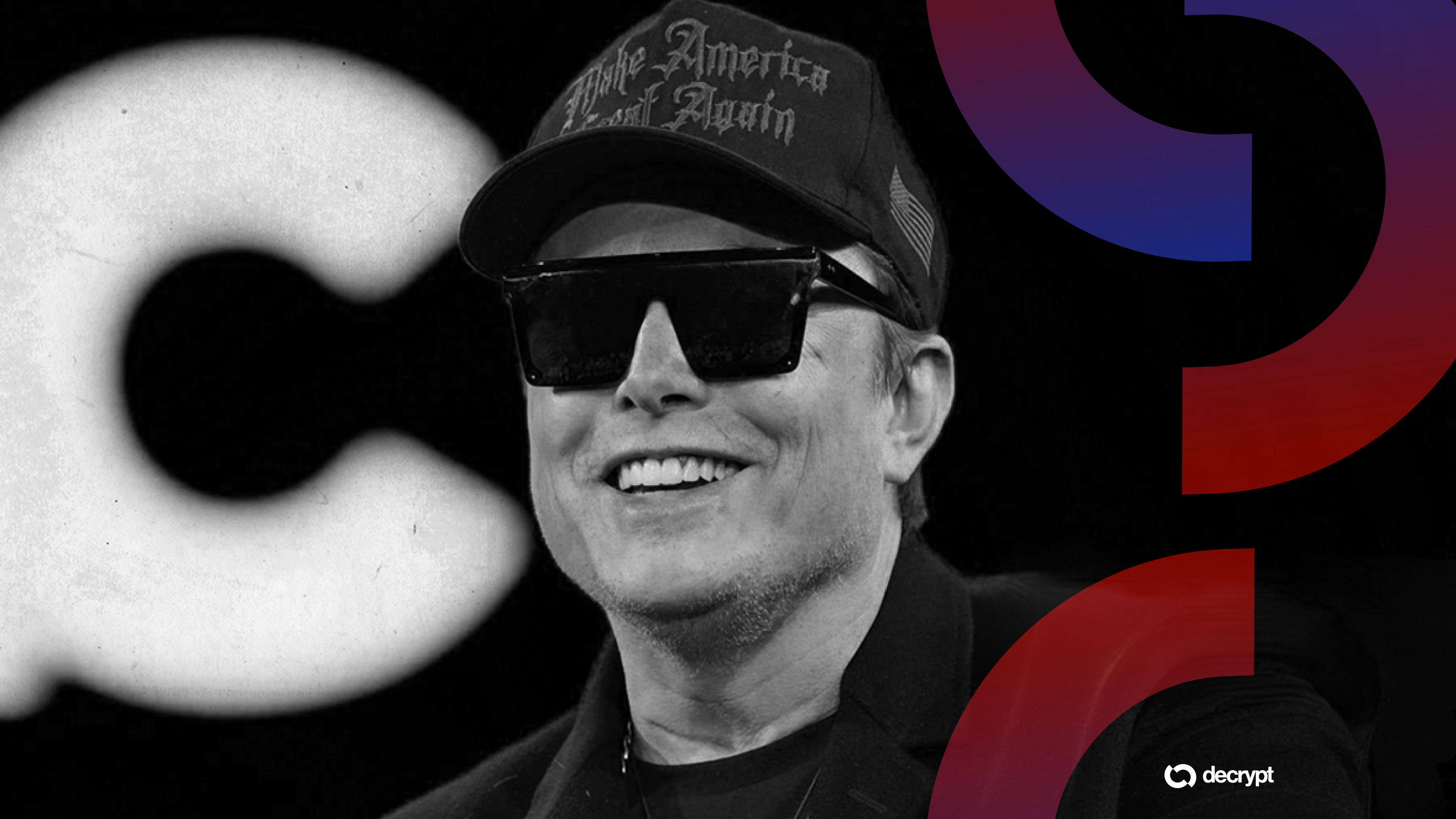
Elon Musk's contentious relationship with OpenAI — the company he helped found but now publicly critiques as "lieutenant" to Microsoft — entered a new and uncomfortable phase this week, as testimony in an ongoing lawsuit against the AI firm surfaced personal details alongside structural governance questions that go to the heart of how the most consequential technology company of the decade is run.
Shivon Zilis, a Neuralink executive and mother to four of Musk's children, appeared as a witness for the plaintiff in the lawsuit against OpenAI, where she served as a board member from 2020 to 2023. Separately, reporting this week revealed the mechanics of how Musk departed OpenAI — and a separate, unrelated claim by a former board member about a personal offer from Musk that has not been previously reported in this context.
Zilis testimony and the boardroom rupture
Zilis joined OpenAI's board in 2020 as a board member while simultaneously advising the company as a venture investor. Her testimony this week addressed internal board deliberations, specifically disagreements over Microsoft's expanding role inside OpenAI — a partnership she reportedly viewed as concentrating too much commercial influence with a single outside entity.
The board ultimately voted to remove Sam Altman in November 2023. Within days, that decision was reversed under intense pressure from staff and investors. The restructuring that followed left OpenAI with a three-person board; cofounder Greg Brockman was removed as a voting member, and two directors — Zilis and her fellow departing member — were replaced with new members including Quora CEO Adam D'Angelo. Zilis left the board in November 2023 following the Altman reinstatement.
Her testimony appears to corroborate elements of the plaintiff's argument that OpenAI's board was improperly pressured or circumvented in its oversight function. The case argues that OpenAI breached its founding agreement to develop artificial intelligence for broad human benefit rather than commercial return, and that the company's trajectory shifted toward serving Microsoft's interests. OpenAI has denied the allegations, with Altman stating publicly that the board operates independently and within legal bounds.
How Musk actually left OpenAI
The lawsuit is not the only front where Musk's history with OpenAI is receiving fresh scrutiny. According to an account published by Greg Brockman — still at OpenAI — Musk departed the company after proposing that OpenAI align itself with him as a condition of continued funding. The proposal was rejected by the board, and Musk left.
This version of events, confirmed across multiple reporting threads this week, clarifies a timeline that has been clouded by Musk's subsequent public campaigns against the company. Musk had committed approximately $1 billion to OpenAI's early operations but stopped funding around 2019, when OpenAI created a for-profit subsidiary structured to attract external capital. Musk, who had pushed for OpenAI to become a for-profit entity under his personal control — arguing it needed to compete with Google — reportedly left after the board declined his proposed terms.
The governance dispute between Musk and the OpenAI board anticipated many of the tensions now central to the lawsuit: who controls the direction of a dual-use technology with civilization-level implications, and what limits exist on founders who provide early capital but lose board confidence.
Brockman's account describes the internal friction candidly, noting that disagreements with Musk were "not productive" and that OpenAI had sought to move forward without continued personal conflict. The company, for its part, has maintained that its restructuring was legally sound and designed to sustain mission-driven work at a scale that philanthropic funding could not support.
The sperm donation claim
A separate, unrelated claim surfaced in reporting this week: that a former OpenAI board member alleged Musk made an offer of sperm donation to her while she served on the board. The claim was first reported by BBC News on 6 May 2026. The board member in question is also the mother of four of Musk's children, though the personal relationship predates and runs parallel to — rather than derives from — her board service, which began in 2020.
The relationship between Musk and the board member in question predates OpenAI's governance crisis and is not the subject of the lawsuit. Its public emergence adds a layer of personal complexity to an already tangled set of relationships: Musk, the funder who left over governance differences; Zilis, who served on the board while working at his brain-computer interface company; and Altman, whose reinstatement reshaped the board's composition.
Altman responded publicly that he was "sorry" for the board member in question, while declining to comment on the specifics of the claim. The claim does not touch directly on OpenAI's governance or the lawsuit's merits, but it has been raised in the context of Zilis's dual roles — employed at a Musk-affiliated company while serving as a board director at an entity Musk now publicly opposes. Whether that intersection constitutes a conflict of interest, or simply reflects the incestuous overlapping of talent in the AI sector, is a question the lawsuit may not directly resolve but certainly surfaces.
Stakes and structural implications
The lawsuit's outcome carries significant implications for the AI industry's governance model. If the plaintiffs succeed, it could establish precedent for how AI companies balance mission commitments with commercial obligations — a question that has no settled legal answer. OpenAI's conversion from a nonprofit research lab to a commercial entity backed by $13 billion in Microsoft investment occurred with board approval; whether that approval was informed, independent, and consistent with the founding agreement is precisely what the case will test.
Musk, for his part, has positioned himself as a primary opponent of OpenAI's current direction, founding a competing company, xAI, funding the litigation against OpenAI's restructuring, and publicly describing Altman as untrustworthy. That narrative serves his commercial interests; the lawsuit serves to challenge a competitor. Zilis's testimony, whatever its merits, exists at the intersection of Musk's personal life and his corporate campaigns.
The structural question — whether boards can constrain commercial pressure in AI development — will not be resolved by personal disclosures. But personal disclosures do shape the credibility of actors who might otherwise frame governance failures as abstract institutional failures rather than consequences of specific human choices. Musk simultaneously funds xAI, leads Tesla, SpaceX, Neuralink, and advises the Department of Government Efficiency — roles that create conflicts of interest requiring scrutiny independent of the lawsuit's outcome.
Whether the case succeeds or fails, the trial will continue to surface details that make the abstract question of AI governance concrete. OpenAI maintains it acted within its legal rights and board authority. The case continues.