OKC Thunder Eye 2-0 Lead as Shai Gilgeous-Alexander Redefines Elite Guard Play
The Thunder enter Game 2 against the Lakers on 7 May 2026 having already demonstrated their championship credentials, with Shai Gilgeous-Alexander's methodical evolution from overlooked prospect to reigning MVP reshaping what elite guard play looks like in the modern game.
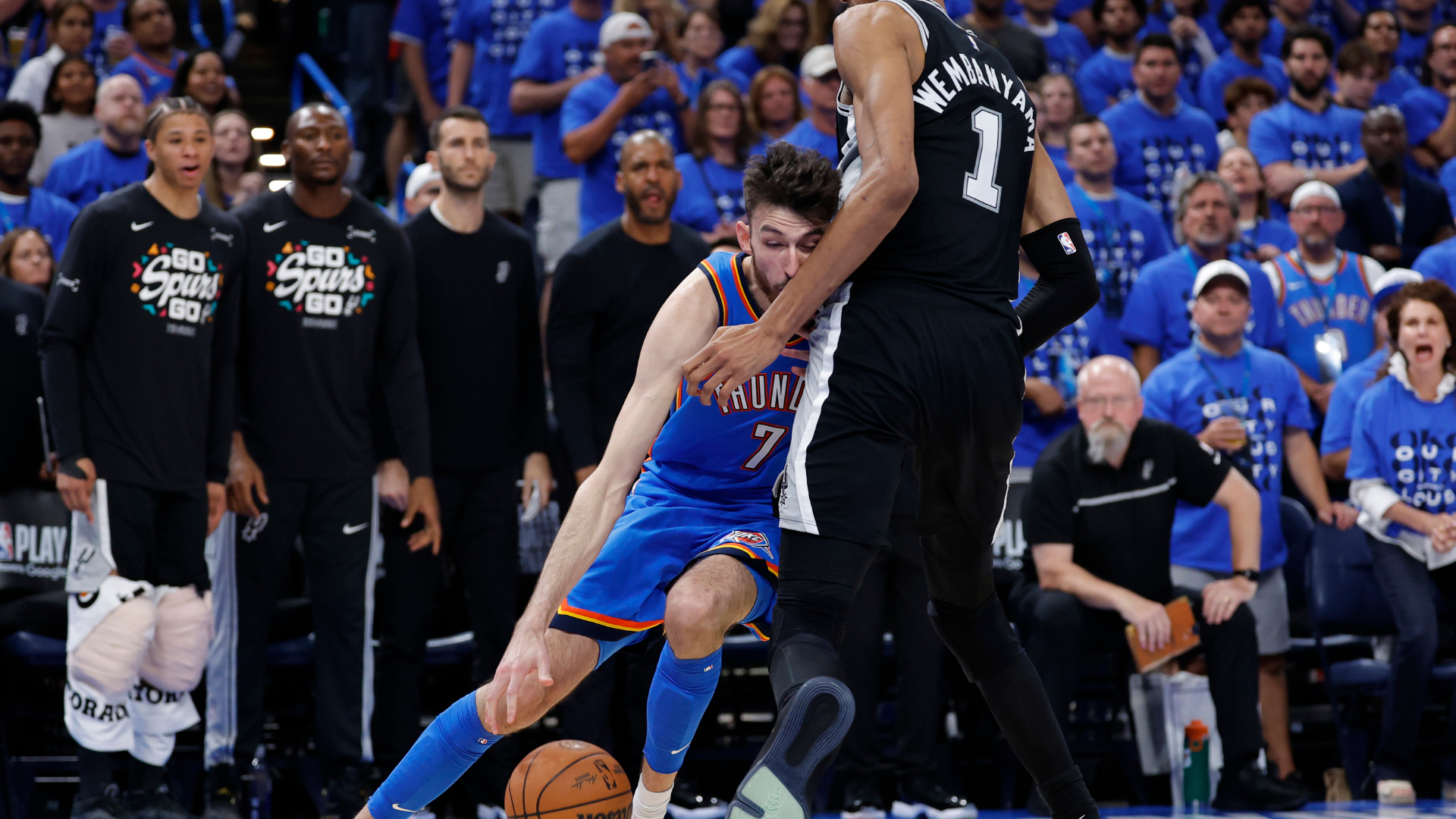
The Oklahoma City Thunder arrive at Crypto.com Arena on 7 May 2026 with an opportunity that franchises twice their size would trade everything for: a chance to take a 2-0 series lead against the Los Angeles Lakers in the Western Conference Semifinals. The game, scheduled for 9:30pm ET on Prime Video, represents more than playoff positioning. It is a referendum on whether a small-market franchise built through Draft picks and patient development can impose its will on a team assembled around the gravitational pull of one of the game's most recognizable figures.
Oklahoma City won Game 1 convincingly. The margin of victory told part of the story; the manner of it told the rest. The Thunder controlled pace, limited turnovers, and executed late-game situations with a composure that belied their collective youth. Shai Gilgeous-Alexander, the reigning Kia NBA MVP, was the catalyst — not through spectacular individual scoring outbursts, but through a systematic dismantling of whatever defensive alignment the Lakers presented. He scored when necessary, created for teammates when the defense collapsed, and made defensive plays that prevented Los Angeles from building any sustained momentum.
The Lakers enter Game 2 with LeBron James still producing at a level that defies conventional ageing curves, but the team has not yet solved the fundamental question of how to generate quality shots against a disciplined, switching defense. Anthony Davis has shown flashes of dominance in the paint, but the Thunder's ability to send timely double-teams while recovering to shooters on the perimeter has disrupted the half-court sets Los Angeles relies upon in close games. The Lakers' coaching staff faces a tactical adjustment that Game 1 suggested they have not yet identified.
What makes this series compelling extends beyond the immediate playoff stakes. The Thunder's roster construction — heavy on players selected in the Draft, light on established veterans acquired through free agency — represents a model that has become increasingly rare in an era where superstar movement routinely reshapes title contention. Oklahoma City's approach requires patience: players develop at different speeds, and the organizational commitment to continuity means accepting short-term volatility in exchange for long-term cohesion. That patience, cultivated through multiple rebuilds, has produced a team that functions as a unit rather than a collection of high-usage individuals.
Gilgeous-Alexander's personal trajectory illustrates this philosophy's logic. As documented in NBA Media content published to Telegram on 7 May 2026, he began high school at 5'6" and was cut from his junior varsity team. His response, as he described it, was to become cerebral — to study the game, to understand spacing, to develop an off-ball feel that would eventually complement his on-ball creation. By tenth grade he had grown to 6'2", but the mental architecture he built during those early years of physical disadvantage never changed. He plays with what can only be described as deliberate aggression: every penetration has a purpose, every pull-up is preceded by an evaluation of the help defense, every drive into traffic accounts for the rotations happening two passes away.
That approach has made him, statistically, one of the most efficient high-usage players in the league. It has also made him the type of player who wins in May. Scoring volume is a reliable predictor of regular-season success; playoff success, however, tends to reward players who can score efficiently while also making the teammates around them better. Gilgeous-Alexander's assist numbers have climbed each season not because he has deferred to teammates, but because the defense's response to his scoring threat creates passing lanes that did not exist when he was a secondary option. The Thunder's offensive rating in clutch situations reflects this: when the game is close in the final five minutes, Oklahoma City ranks among the league's best because its best player remains composed enough to make the right read rather than the spectacular one.
Los Angeles faces a different structural challenge. The Lakers are built around LeBron James, whose career timeline means the organization operates with an implicit urgency that shapes every personnel decision. The supporting cast is designed to complement his abilities, which means it skews toward players who can space the floor and make cuts when he drives. That construction works well in the regular season, when teams cannot prepare with the same specificity they bring to a seven-game series. In the playoffs, however, schemes tighten. The Lakers' offensive system becomes more predictable because the personnel constraints limit variation. Teams know where LeBron will attack, where the shooters will relocate, and when Davis will roll to the rim. Preparation reveals the gaps.
The Thunder do not have that problem. Oklahoma City's depth — the product of smart drafting and roster flexibility — means that the supporting cast can carry games when Gilgeous-Alexander is doubled into uncomfortable situations. The Lakers' inability to consistently execute against switching defenses in Game 1 is not a matter of effort; it is a structural limitation that their roster composition imposes. LeBron James remains capable of single-handedly solving those problems on any given night, which is why the Lakers are not being written off. But Game 2 requires more than legendary performance from their aging star. It requires the supporting cast to execute under pressure they have not faced together as a unit.
The stakes for the Lakers extend beyond this series. Los Angeles has assets, cap flexibility, and the draw of playing alongside LeBron James — but the Western Conference landscape has shifted. Oklahoma City, Minnesota, and Denver represent a cohort of teams built for sustained contention through Draft capital rather than superstar acquisition. If the Lakers exit in the Semifinals, the franchise faces a reckoning about whether the model of stacking aging stars around LeBron can still produce championship outcomes, or whether the league has evolved past the point where veteran presence alone can compensate for defensive limitations and offensive predictability.
For Oklahoma City, a 2-0 lead does not mean the series is over. The Lakers won a championship in 2020 by surviving early deficits and imposing their physical style in elimination games. But the Thunder's Game 1 victory demonstrated that this is not the same team that cycled through rebuilds in the early 2020s. The roster has matured, Gilgeous-Alexander has ascended to the tier of players who alter how opponents prepare, and the organizational patience that once looked like a concession to small-market limitations has produced a contender. Whether that contender can finish what it started will define the next two weeks of NBA basketball — and potentially the league's competitive landscape for the next several seasons.
This desk covers the NBA playoffs through a lens focused on team-building philosophy, roster construction, and the strategic nuances that determine postseason outcomes. Where the wire emphasized game previews and star narratives, this coverage foregrounds structural dynamics and tactical substance.
Wire provenance
This editorial synthesis draws on the following public wire/social posts:
- https://t.me/NBALive
- https://t.me/NBALive
- https://t.me/NBALive