The Quiet Revolution Operation Sindoor Wrought on India's Defence Doctrine
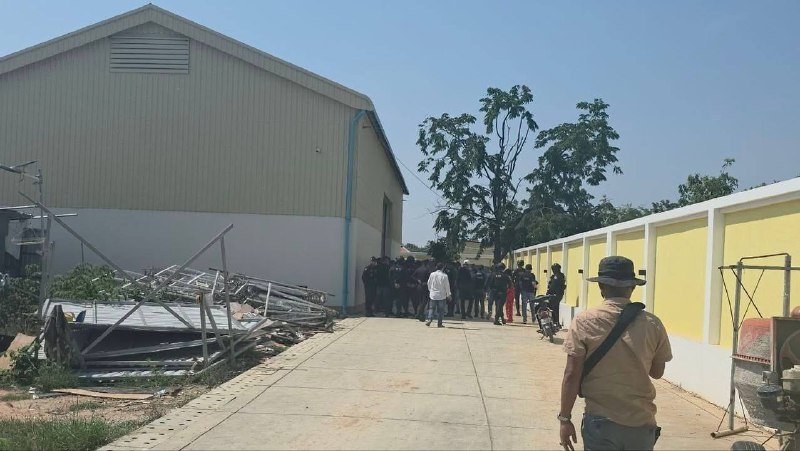
On the anniversary of Operation Sindoor, the families of those killed in the strikes and counter-strikes have not received a phone call from New Delhi. One man told reporters he lost both his parents in a drone attack and was injured himself — "my parents are gone, I am all alone in the world," he said. A father in Poonch whose twin children died in the same cycle of violence keeps asking why his family moved to the region. The strategic community, by contrast, has been busy drawing lessons. That asymmetry is the real story of this anniversary.
The Indian Express reported in May 2026 that the armed forces are fast-tracking priorities ranging from underground infrastructure to air defence architecture. That reorientation is the concrete strategic output of a twelve-month-old operation that was supposed to be precise, contained, and brief.
The lesson dominating official deliberation is not about territory, ceasefire lines, or diplomatic architecture. It is simpler and more unsettling: the next conflict will not look like the last one. The frameworks built over decades of counterinsurgency and conventional stand-off management are being questioned, not because they failed, but because the speed and character of drone-delivered violence exposed their incompleteness.
What Operation Sindoor Actually Tested
Operation Sindoor, as reported across Indian outlets in the original cycle of coverage, involved Indian military action against militant infrastructure on the other side of the Line of Control. The response was swift, cross-border, and included drone swarms that reached deeper than previous incidents. Civilian casualties followed — including the deaths in Poonch that continue to define how ordinary families in the region understand the operation a year later.
What the military understood, almost immediately, was that the counter-drone problem is not a procurement item — it is a doctrine problem. Getting shot at by small, inexpensive, numerous platforms that can saturate a layered defence system does not have a simple technology answer. The Indian Express analysis from 7 May 2026 noted that future conflicts will not resemble the past in precisely this sense: the threshold between peacetime monitoring and active engagement has compressed dramatically, and the cost of a single successful strike against a hardened target has dropped to the point where even modest state and non-state actors can execute operations that once required significant military infrastructure.
The Indian military's response has been to accelerate programmes that were already in the pipeline — underground command infrastructure, rapid-deployment anti-air systems, and network-centric sensor grids. These are not panic purchases. They represent a structural upgrade that outlasts any single government's tenure.
The Human Layer the Strategists Skipped
The first anniversary coverage has surfaced a dimension that does not appear in the classified reviews: the civilian aftermath.
The man who survived the drone strike that killed his parents described navigating government bureaucracy while still physically injured. His account — reported by The Indian Express in May 2026 — captures a gap between how the political class describes lessons learned and how families experience the operation's residue. The father in Poonch whose twins died has not received the level of institutional recognition that a year of official deliberation might suggest. Both cases point to a structural underinvestment in post-conflict civil communication that the strategic community has largely deferred to provincial government offices with limited resources.
This is not unusual. Governments that successfully manage short conflicts often declare victory on the basis of territorial or military metrics before completing the political communication work of acknowledging civilian harm. The families affected by Operation Sindoor — the deaths, the injuries, the displacement — are still waiting for that acknowledgment. That silence compounds the original loss.
The Doctrinal Shift India Cannot Afford to Miss
The Indian Express report on future conflicts is worth taking seriously not because it reveals classified information, but because it describes a trend that is already visible to any open-source analyst tracking military procurement cycles: the shift from platform-centric to network-centric defence investment.
India's stated priorities — underground infrastructure, integrated air defence, counter-UAV layers — are consistent with what Nato-aligned analysts have identified as the structural response to saturation-drone warfare. What makes the Indian case distinct is the geopolitical context. India operates in a space where it faces both state and non-state threats across a contested border, and it has historically resisted alliance architectures that would outsource its deterrence to external guarantors. The doctrinal shift therefore has to work within a self-reliant framework that limits technology-sharing arrangements with foreign suppliers.
That constraint is real, but it is also being used to justify procurement programmes that may be less efficient than partnerships the political class has so far resisted. The next twelve months of budget deliberation will test whether the doctrinal lesson of Operation Sindoor is being absorbed at the procurement level or merely referenced in the framing documents that accompany existing shopping lists.
What the Next Crisis Will Inherit
If the lesson of Operation Sindoor is absorbed structurally — not merely as a hardware upgrade cycle but as a genuine rethinking of the boundary between peacetime monitoring and wartime response — India will have converted a difficult episode into a strategic asset. The underground infrastructure, the faster air defence deployment timelines, and the institutional learning embedded in revised doctrine are durable investments that will shape the next crisis before they expire.
If the lesson is absorbed partially — new equipment purchased, old doctrines unchanged — the next crisis will arrive into the same institutional environment with marginally better hardware. The families still waiting for a phone call from New Delhi understand this distinction intuitively. They are not waiting for a new air defence system. They are waiting to be treated as part of the story rather than aftermath of it.
The operation achieved its tactical objectives. The strategic communication around it remains incomplete. That gap — between what the military tested and what the political class explained — is where the real lesson for the next twelve months lives.