Oxford's Ultimate Picture Palace Fights for Survival as College Cuts Lease
One of Britain's oldest purpose-built cinemas, the Ultimate Picture Palace in Oxford, faces an uncertain future after its landlord, Oriel College, declined to renew its lease — reigniting a debate about the responsibilities of university institutions toward cultural tenants.
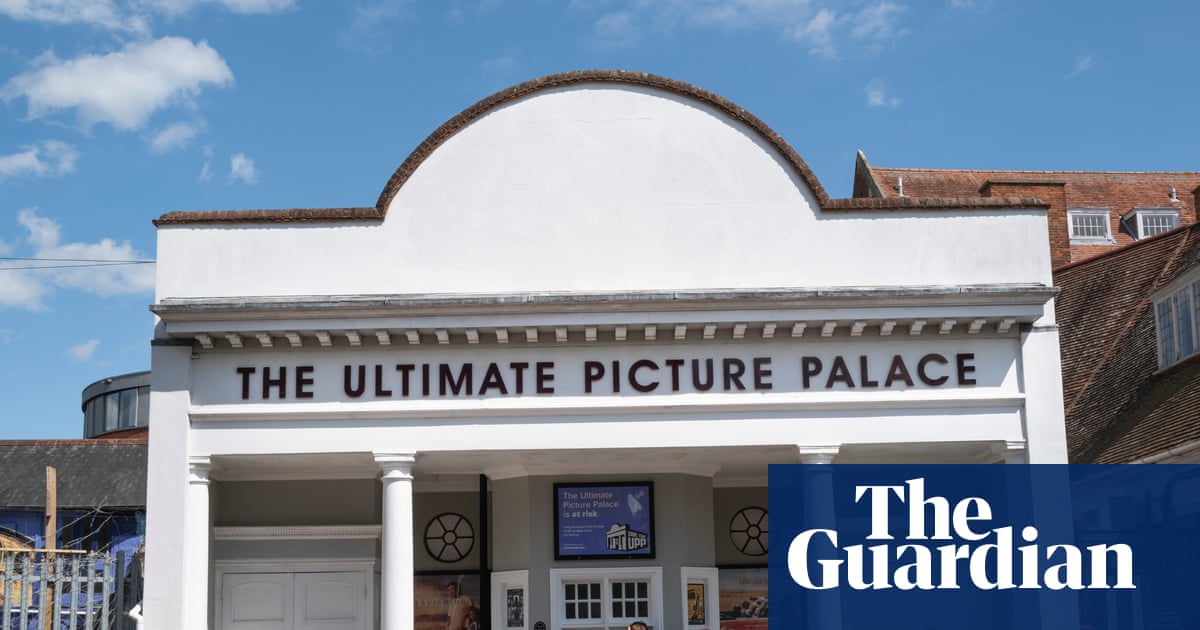
The Ultimate Picture Palace, Oxford's longest continuously operating cinema, opened its doors in 1911 — the same year the city sealed its historic Covered Market deal and four years before the area around Walton Well Road saw its first motor buses. For more than a century, the single-screen venue on Walton Street has survived two world wars, the rise and fall of multiplex chains, and a pandemic that shuttered cinemas across the country. Now, its future hinges on a decision made not in a planning office, but in the administrative chambers of Oriel College.
The college, one of Oxford University's wealthiest constituent institutions, has declined to extend the cinema's lease when it expires. The building is Grade II-listed, meaning any alteration requires Historic England consent, and the structure requires significant renovation work that the cinema's operators say they have funded partially from their own resources for years. The college, which owns the freehold, has offered no formal public explanation beyond acknowledging the decision is under review.
The case has drawn scrutiny beyond Oxford. Heritage bodies and arts campaigners argue that university colleges — many of which hold endowments worth hundreds of millions of pounds — have a particular obligation to protect cultural infrastructure embedded in their estates. The argument is straightforward: institutions with the resources to act hold the power to determine what survives. Absent that power, the framing goes, the responsibility dissolves into abstraction.
A Question of Institutional Identity
Oriel College's position is not without nuance. University estates operate under complex pressures — deferred maintenance on historic properties, competing demands from academic departments, and obligations to alumni donors who underwrite chairs and buildings. A Grade II listing creates legal constraints that many property-owning institutions find constraining rather than liberating. The college has not publicly opposed the cinema's survival; it has simply declined, so far, to be the entity that guarantees it.
The cinema's operators dispute this framing. They point to a history of self-funded improvements — new seating, updated projection equipment, accessibility modifications — that demonstrate operational competence and community commitment. The venue hosts independent releases, documentary seasons, and community screenings that commercial chains bypass entirely. For its patrons, the Ultimate Picture Palace is not merely a business but a civic institution: a place where Oxford's university and non-university populations overlapped, where film culture was curated rather than algorithmically selected.
Heritage and the Economics of Single-Screen Venues
The UK has lost more than half of its independent cinemas since 2000, according to figures compiled by the British Film Institute, though precise counts vary depending on how "cinema" is defined. The survivors tend to share certain characteristics: community ownership structures, local authority partnerships, or — increasingly — philanthropically engaged landlords willing to accept below-market returns in exchange for cultural profile. The Ultimate Picture Palace fits none of these models precisely, which makes it both vulnerable and, its supporters argue, representative of a broader pattern: venues that depend on a single leaseholder's goodwill are always one negotiation away from closure.
The building's Grade II status adds a layer of complication that is frequently misunderstood. Listing protects the structure from demolition or insensitive alteration but does not compel any party to fund its upkeep. The listed fabric — original plasterwork, early-twentieth-century decorative elements, the narrow rake of the auditorium floor — requires ongoing maintenance that a tenant operating on thin margins struggles to sustain without a clear tenancy horizon. Without a lease, the operators cannot justify major expenditure. Without expenditure, the building deteriorates. Without a viable alternative use, the college faces a property that generates little income and carries historic obligations.
The Oxford Context
Oxford's built environment is the product of overlapping authorities and competing interests — university colleges, the city council, conservation bodies, and private landowners — that do not always coordinate. The city has seen other heritage controversies: debate over the Strawberry Hill development, arguments about Cowley road pedestrianisation, the long-running question of affordable housing in Summertown. The Ultimate Picture Palace dispute fits a familiar pattern: an asset whose value is broadly recognised but whose preservation falls between the mandates of the bodies with power over it.
Some observers draw a parallel to decisions by Oxford's colleges to convert heritage buildings to student accommodation or commercial conference facilities. The colleges — Oriel among them — have faced criticism for treating their estates primarily as revenue-generating assets rather than as components of a city with broader cultural obligations. The counter-argument is that colleges are private charitable institutions whose primary duty is to their educational mission, and that imposing cultural preservation obligations on academic bodies risks distorting institutional priorities.
What Happens Next
The lease situation remains unresolved as of early May 2026. Campaigners have organised a petition and contacted Oxford City Council, though the council has limited direct leverage over a college's private lease decisions. Historic England has been made aware of the situation but has not indicated any formal intervention. The operators say they are exploring contingency options, though no alternative site has been publicly identified.
What is clear is that the next few months will determine whether Oxford — a city whose global reputation rests partly on its layered history — continues to host what its supporters describe as a rare example of purpose-built early-cinema architecture in continuous operation. The decision belongs to Oriel College. The question is whether the college, in considering its options, treats the Ultimate Picture Palace as a liability to be managed or as an asset worth preserving.
The cinema's operators are not optimistic but not resigned. "We've been here longer than most of the people making decisions about us," one said, speaking informally. "That's not nothing."
This publication notes that while wire coverage of the dispute has framed it primarily as a heritage story, the structural questions — about university governance, about who bears responsibility for cultural infrastructure in areas of high property values — have received less attention in the initial reporting.
Wire provenance
This editorial synthesis draws on the following public wire/social posts:
- https://t.me/TheMonexusWire/247