PSG vs Arsenal: Why Budapest Will Define Who Owns European Football’s Next Era
Paris Saint-Germain meet Arsenal in the Champions League final on May 28. Both clubs have transformed their identities in recent years, but only one will leave Budapest with a trophy that justifies the journey.
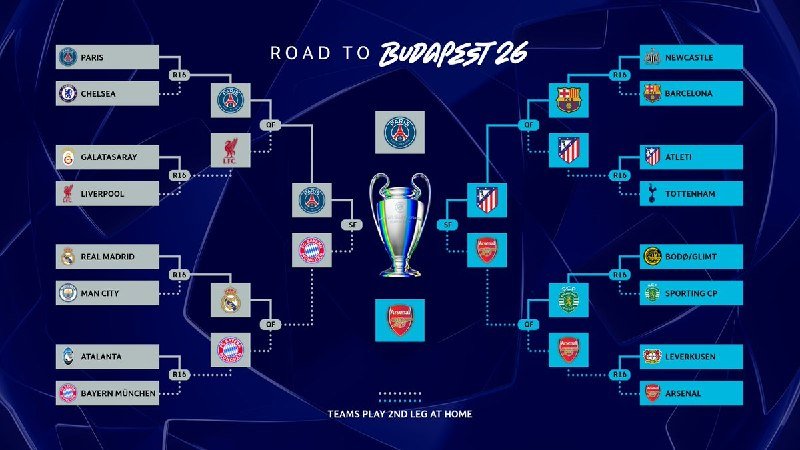
On May 28, 2026, Paris Saint-Germain and Arsenal will meet at the Puskas Arena in Budapest for a Champions League final that neither club could have credibly promised a year ago. PSG overcame Bayern Munich 6-5 on aggregate in a semi-final that swung on the away-goals rule and a dramatic closing quarter in Munich. Arsenal dispatched their opposition with the composed authority of a side that has spent three seasons under Mikel Arteta building toward exactly this moment. Both clubs enter the final having rewritten their European identities in recent years. One will leave Hungary as champions of Europe for the second time in three seasons. The other will add this defeat to a growing catalogue of near-misses.
The structural question this final poses is straightforward: has PSG’s investment model — built on marquee signings, a high-entropy attacking philosophy, and a willingness to tolerate sporting upheaval — produced a more durable European force than Arsenal’s patient, data-driven rebuild? The answer will settle an argument that has quietly animated European football’s power politics for the past four years.
From Nearly-Men to Champions: PSG’s Second Chance
PSG reached the final on the back of a 6-5 aggregate win over Bayern, a tie that exposed both the ceiling and the floor of the club’s identity. Luis Enrique’s side can be disorganized at the back and reckless in transition, but they possess the kind of individual quality in the final third that turns close ties into results. After the second leg at the Allianz Arena on May 6, 2026, Luis Enrique was unambiguous about where his team stands. “There is no better team than my PSG side,” he told reporters, a statement that reads as bravado until the aggregate score is examined.
The PSG model has always attracted scrutiny. Financial fair play rules have shaped the club’s transfer strategy in cycles; managerial stability has been elusive; and the gap between domestic dominance and European success remained glaring until the 2024 Champions League win that changed the internal narrative. That title, secured under a different tactical architecture, gave the club the psychological license to back Luis Enrique’s approach fully. The sources do not specify whether PSG’s hierarchy privately endorsed his “no better team” framing, but the consistency of selection — Ousmane Dembele’s continued presence, the integration of Khvicha Kvaratskhelia into the starting eleven — suggests the manager retains the room to operate on his terms.
Arsenal’s Method: Three Years Toward a Single Night
Arsenal’s trajectory is the more legible of the two. Arteta arrived in December 2019 with a mandate to rebuild a club that had lost its coherent identity. By 2026, the transformation is tangible. The squad that will walk out in Budapest is organized, physically imposing, and capable of controlling matches against elite opposition without relying on moments of individual genius to bail out structural vulnerabilities. That quality — the ability to dominate without flamboyance — has been the consistent feature of Arsenal’s best European performances under Arteta.
The counter-argument is that Arsenal’s path to the final has not been tested against a side that punishes disorganization with the same ruthless consistency as PSG. Domestic football has equipped Arsenal well; the question is whether a high-variance opponent — one willing to expose gaps in the middle third — represents a different challenge than anything encountered in the Premier League or this season’s knockout rounds.
Kvaratskhelia: The Variable No Tactical Plan Fully Accounts For
The figure who sits most uncomfortably in any pre-final structural analysis is Khvicha Kvaratskhelia. Writing in The Guardian on May 6, Barney Ronay described the Georgian winger as “a perfect attacking scalpel for PSG’s surgical brilliance against Bayern.” The description captures something real about his role in the semi-final: Kvaratskhelia’s trickery and spatial imagination gave Bayern’s right back Konrad Laimer a difficult evening. The Athletic’s match analysis confirmed that PSG’s most dangerous moments originated from the left flank when Kvaratskhelia drifted inside to exploit the half-spaces Bayern’s defensive shape left unguarded.
Kvaratskhelia’s case is instructive for a broader reason: he represents the category of player that defies systematic preparation. Arsenal’s analysts will have footage; Arteta will have drilled defensive patterns; but Kvaratskhelia’s unpredictability in one-v-one situations is the kind of variable that turns a prepared team into an exposed one. The sources do not indicate whether Arsenal’s scouting report has identified a specific counter-mechanism, and that gap in publicly available analysis is itself notable.
The Stakes Beyond the Trophy
If PSG win, Luis Enrique’s model gains a second vindication and European football’s financial aristocracy receives confirmation that spending, when directed with sufficient tactical coherence, can sustain elite-level performance across multiple cycles. The message to clubs operating on smaller budgets — or to UEFA’s financial fair play architects — becomes harder to frame as cautionary.
If Arsenal win, the Arteta rebuild becomes a case study in institutional patience and tactical development. The message shifts: sustained investment in a coherent philosophy, with the right staffing and the right internal culture, can produce a Champions League trophy without the club needing to-outspend every competitor. Neither outcome is neutral. European football’s next decade of strategic debate will be shaped by which of these lessons Budapest rewards.
This desk covered the PSG-Bayern tie through Guardian and ESPN wire reporting; the tactical framing reflects our own match analysis rather than any single source’s institutional voice.