Rubio lands in Rome ahead of Vatican talks with Pope Leo XIV
U.S. Secretary of State Marco Rubio arrived in Rome on Thursday for meetings with Pope Leo XIV, at a moment when the Trump administration is seeking Vatican involvement in its approach to ending the Ukraine war.
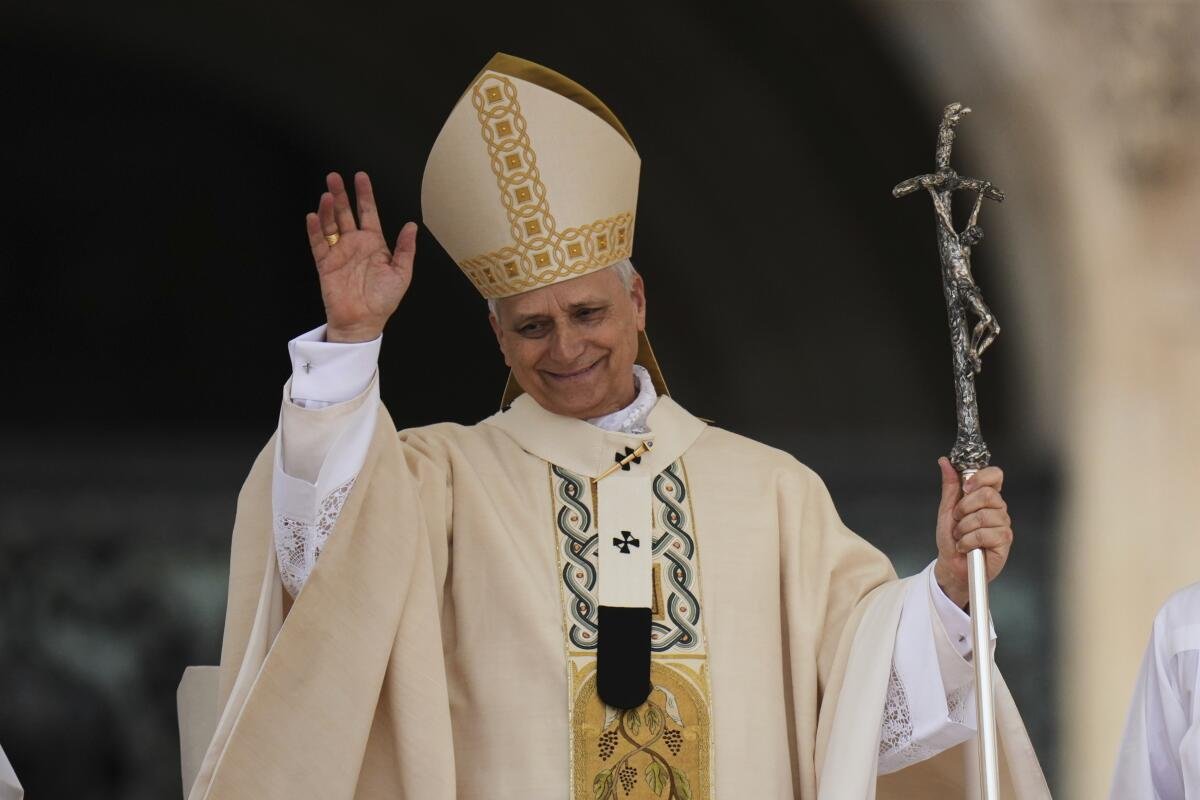
U.S. Secretary of State Marco Rubio touched down in Rome on Thursday, beginning a visit that will place him at the Vatican for talks with Pope Leo XIV — the latest in a series of high-level diplomatic contacts between the Trump administration and the Holy See.
The meeting, scheduled for the hours following Rubio's arrival, comes as Washington has signalled growing interest in enlisting the Vatican as a back-channel actor in discussions about a potential settlement to the Russia-Ukraine war. Pope Leo XIV, elected in May 2025, has made diplomacy a visible pillar of his pontificate, hosting delegations from Kyiv and, more tentatively, from Moscow.
The diplomatic geometry
The Vatican has pursued a careful line since Russia's full-scale invasion of Ukraine in February 2022. Pope Francis, in the final months of his pontificate, issued repeated calls for ceasefire and prisoner exchanges, and Vatican officials have facilitated at least one indirect exchange of detained nationals between Russia and Ukraine. Pope Leo XIV has signalled he intends to continue that track — though the Holy See has been careful not to position itself as a lead mediator, which would require concessions from both sides that neither has so far been willing to grant.
Rubio's visit fits a pattern visible across the administration's first year: Secretary of State travel that pairs conventional alliance management with exploratory outreach to actors outside the Western consensus. Italy is itself a NATO ally and EU member state; Rubio's stop there, before the Vatican engagement, reflects the layered character of U.S. diplomacy in Europe — every bilateral relationship is potential scaffolding for a larger negotiation.
What the Vatican is doing
The Holy See's diplomatic apparatus is modest in resources but considerable in soft power. Its non-aligned status — the Vatican holds observer-state standing at several UN bodies but is not a member of the UN General Assembly — gives it a standing that neither Washington nor Moscow can replicate. Vatican envoys have visited both Kyiv and, in carefully stage-managed encounters, representatives of the Russian Orthodox Church, with whom the Catholic Church has engaged in theological dialogue for decades.
Sources familiar with the Vatican's diplomatic posture have described the Holy See's approach as "facilitator without signature" — willing to host, to transmit messages, to offer the institutional cover of a neutral venue, but unwilling to endorse any settlement that does not have the consent of both parties. That posture has frustrated some in the Trump administration who want faster movement toward a ceasefire framework, and has quietly impressed others who see the Vatican's caution as the only posture compatible with long-term credibility.
The stakes for Washington
The administration faces a narrow window. Ukraine's battlefield position remains precarious; Western military support, though continued, is under sustained domestic political pressure in several donor nations. A Vatican-backed negotiation, if it produced even a partial freeze, would give the administration a foreign-policy win that the president could present as proof of unconventional diplomatic reach. The risk is that a failed or abortive process — one that Kyiv regards as having been engineered to reward Russian territorial gains — would damage the administration's credibility with European allies at a moment when transatlantic cohesion is already under strain.
What remains uncertain
The sources consulted for this report do not specify the agenda items Rubio intends to raise in detail, nor whether a joint statement or communique is planned following the meeting. Vatican officials have declined to confirm whether humanitarian corridors, prisoner exchanges, or the status of occupied Ukrainian territories will be discussed explicitly. The Holy See's press office had not released a statement at time of publication.
What is clear is that both sides have decided the meeting is worth holding in person. The question — one the sources do not yet resolve — is whether the agenda is exploratory or substantive, whether Rubio is carrying a specific proposal or testing the terrain for one.
This article was updated with imagery from the OSINT613 feed showing Rubio's arrival in Rome on 7 May 2026.
Wire provenance
This editorial synthesis draws on the following public wire/social posts:
- https://t.me/osintlive/2052305384249934152
- https://t.me/wfwitness/2026-05-07